Remembering Ambassador Fakhruddin Ahmed

A diplomat needs to be well-informed of the current and past situation coupled with negotiation expertise. Under no circumstance a diplomat loses temper while on a negotiating table. A diplomat could conduct any issue in a somewhat genteel atmosphere, unconstrained by the passions of public opinion. He must be suave and place his points of view in the context of the interests of the country he or she represents. Having said so, I felt Fakhruddin Ahmed represented Bangladesh as a diplomat par excellence as he possessed all the good qualities that a diplomat should possess.

Born in 1931 in Faridpur District of Bangladesh Fakhruddin Ahmed joined Pakistan Foreign Service in 1954 having obtained Master’s degree in International Relations from Dacca University. He had the privilege in serving in different capacities at Pakistan diplomatic missions in Jeddah, New York, Tehran, Accra and at the Pakistan foreign ministry office in Islamabad. It was a matter of coincidence that I met him first in 1970 some time in October in Pakistan foreign office in Islamabad where he was working as Director (personnel) to find out my position in the examination for the post as Information Officer in CENTO headquarters. Ambassador Humayun Kabir, who served as Ambassador in Bangladesh embassies in Iran, US and United Nations, was the invigilator. At that time he was serving as Deputy Chief of Protocol in Pakistan foreign office while I was working in the External Publicity Wing of Pakistan’s Ministry of Information and National Affairs in Islambad. I was the lone Bengali officer working in external publicity wing and the rest were from West Pakistan. Mr Fakhruddin Ahmad replied that it would take another three weeks or so to take a decision. By now Fakhruddin Ahmad had acquired praises from the Bengali community in Islamabad who pushed through Bengalis of East Pakistan origin in the menial posts in the administration without any hesitation. That showed his courage to promote the interest of erstwhile East Pakistani personnel.

Just before War of Liberation had begun in East Pakistan by marauding Pakistan army, Fakhruddin Ahmad was posted in Dacca branch of Pakistan foreign office in 1971 as Director-General, but he could not join because of an army crackdown on innocent people of East Pakistan. He was prevented from going to Dacca from Karachi. On return to Islamabad his mind did not rest and he had sought avenues to get out of Pakistan some way or other. Finally he along with his family slipped out of Pakistan via Kabul and Delhi. It was really dangerous adventure to sneak out of Pakistan at a time when Pakistan became hostile towards newly born Bangladesh because of prisoners of war held by Bangladesh and India jointly.

In 1973, Fakhruddin Ahmad joined the Ministry of Foreign Affairs as an Additional Foreign Secretary. Initially he was given the responsibility to look after the administration of the Ministry. Enayet Karim joined the Foreign Ministry as Foreign Secretary on return from Pakistan embassy in Washington DC where he was posted as Minister. Both Enayet Karim and Fakhruddin Ahmad jointly made the foreign office active, lively and interesting to work at. During the formative period the foreign office witnessed a flurry of activities, including visits of as many as 12 heads of states and renowned writers and journalists. On most of the time my services were requisitioned by Chief of Protocol Nazrul Islam to become host officer to visiting heads of states or reputed writers and journalists by Director-General of External Publicity Division of Foreign Office, Humayun Kabir. Foreign Secretary Enayet Karim concentrated so much energy on the nitty-gritty of diplomacy that he succumbed to sudden heart attack while he was working in the office. In fact, Enayet Karim had been suffering from heart ailment since his diplomatic assignment in Washington DC in 1970-1971. Immediately after sudden demise of Enayet Karim Fakhruddin Ahmad was made acting foreign secretary and by December of 1974 Fakhruddin Ahmed was made foreign secretary.

Fakhruddin Ahmad had direct access to the charismatic leader of Bangladesh Sheikh Mujibur Rahman but Fakhruddin Ahmad stood boldly against the decision of Sheikh Mujibur Rahman to make officers of the Ministry of Foreign Affairs join the Bangladesh Krishak Sramik Awami League (BAKSAL) following the passage of fourth amendment to the Constitution. Fakhruddin Ahmed succeeded in resisting BAKSAL officers to join the Ministry of Foreign Affairs. I was directed by Fakhruddin Ahmad to watch who are the officers joining office of BAKSAL. Fakhruddin Ahmed served till November, 1975 as Foreign Secretary. In fact, Fakhruddin Ahmad was removed from this prestigious position by Khandakar Mushtaque Ahmad government as he did not comply with illogical and undemocratic decisions to make foreign postings of some disgruntled army officers who were involved in assassination of the President of Bangladesh. He was uncompromising with regard to principles. He was replaced by Tabarak Hossain who was until 1971  Director-General in Pakistan foreign office.

Fakhruddin Ahmed was an amiable and sociable personality. To corroborate his amiable personality I would like to narrate a story. It so happened that one day I was instructed to find out Syed Amirul Islam known as Hamdu bhai who had command over French language. Fakhruddin Ahmad gave some points to prepare notes, but Islam had lost the notes. Fakhruddin did not say anything. Incidentally, both of them were staying in central circuit house. I had been there for my personal affairs. Syed Amirul Islam was suffering from severe nature of disease for which no treatment was available in the country at that time. Fakhruddin Ahmed posted him to the newly established Bangladesh mission in Berlin on compassionate ground for his treatment.

From 1976 to 1986 Fakhruddin Ahmed served Bangladesh as Ambassador to Italy, Yugoslavia and as High commissioner to the United Kingdom. His contributions for the improvement of bilateral relations with the countries he served were commendable. During his tenure as High Commissioner in the UK the Queen Elizabeth along with her husband Duke of Edinburgh paid a visit to Bangladesh in the second week of November of 1983. It was a memorable visit of the British Queen, which paved the way for further improvement of bilateral relations between traditional friends of Bangladesh and the Great Britain. In this connection, I cannot resist temptation to narrate an anecdote. During her visit Queen Elizabeth was scheduled to go round a village at Sripur to know the way of lives of the rickshaw pullers and fishermen in the village. High Commissioner Fakhruddin Ahmed went along with the British entourage while I accompanied the British news media. A special train was arranged for transportation of the entourage and news media to Sripur from Dhaka and the Queen had the glimpse of the villages on both sides of the railways. At Sripur village the houses, trees and roads were beautifully decorated and the nearby pond there were plenty of fishes, which caused annoyance to High Commissioner Fakhruddin Ahmed. While walking along the pond Fakhruddin Ahmed shared with me the whole idea of showing a real village life of the people to the British Queen. The Duke of Edinburgh visited, on the other hand, two British tea estates in Sylhet. A number of host officers along with spouse, including this writer were present before the Queen and the Duke of Edinburgh on the concluding day of the visit. On the conclusion of the visit of the Queen I was presented a letter of appreciation along with signed photograph of the Queen by her Press Secretary which said, “I am commanded by The Queen to write to thank you for all the hard work which you have carried out in connection with the arrangements for Her Majesty’s state visit to Bangladesh with the Duke of Edinburgh. They are sorry that they did not have an opportunity to thank you personally, but have asked me to send the enclosed photograph.”

It was unique in diplomatic history of Bangladesh that Fakhruddin Ahmed had had the privilege in serving the Ministry as Foreign Secretary second time from 1986-1887, but  could not continue to serve the Ministry as a result of displeasure between the President and Foreign Secretary. He went on a leave before retirement from the service ending a long checkered career of diplomatic service.

During the period of first non-government caretaker government of Justice Shahabuddin Ahmed after the fall of military-led government of Gen Ershad, Fakhruddin Ahmed was assigned as an adviser to serve the Ministry of Foreign Affairs in 1991-1992. As an adviser his speech at the certificate giving ceremony of the newly recruited foreign service officers was illuminating and inspiring for the officers indeed.

As a member of election observer group Fakhruddin Ahmed observed elections in Sri Lanka, Pakistan, Nepal, India and Zambia and Guyana and also participated in UN observer mission in South Africa.

After retirement Fakhruddin Ahmed concentrated on writings. His article on the foreign policy of Sheikh Mujibur Rahman, Ziaur Rahman and Ershad governments was illuminating and unbiased indeed which will be helpful to research-oriented students. His book: Critical Times: Memoir of a South Asian diplomat, makes an interesting reading which reflects an insight of a diplomatic role he played at difficult times of our history.

Last but not the least, my hats are off to the Ministry of Foreign Affairs for designating a Memorial Hall in honour of Ambassador Fakhruddin Ahmed where present Foreign Minister A H Mahmood Ali, who was first diplomat in America to declare his allegiance to the exile Bangladesh government in India, unveiled on the 1st of January of 2015 the cover of a book: Regional Cooperation and Globalization: Bangladesh, South Asia and beyond. The book, a compilation of articles written in memory of Ambassador Fakhruddin Ahmed and Professor Zillur Rahman Khan, was edited by Dr Meghna Guhathakurta. Here both Foreign Minister Mahmood Ali and former foreign secretary Farooq Sobhan spoke of successful diplomatic services offered by Ambassador Fakhruddin Ahmed during his career.

Incidentally, Ambassador Fakhruddin Ahmed expired in foreign land at the residence of his daughter at Pittsburgh, Pennsylvania on 02 November of 2001 after having suffered for long two years from cancer.

Published in the November 14, 2015 Edition of the Financial Express
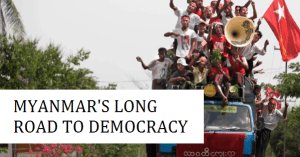
Myanmar on the road to democracy

myanmarThe people of Myanmar gave their verdict in the November 8 general election and have brought into being the process of democracy in 25 years through a free and fair election marked by sporadic violence, intimidation and voting fraud. As announced by the Election Commission, the National League for Democracy (NLD ) of Suu Kyi, a Nobel laureate for peace, won landslide victory in the lower house of parliament. Since the assassination of Gen Aung San in 1947, founder of modern Burma, who succeeded to liberate Burma from the subjugation of Imperial Japan and the British, the country had plunged into the hands of military junta. Gen Aung San was the father of Suu Kyi.

The first free and fair election in 1990 had seen the NLD winning the polls but the military junta did not recognise its results. The country went back to square one and leader of NLD Suu Kyi was interned in the house for an indefinite period. Several hundred political activists of the party were jailed. Freedom of speech and free press remained suspended. Torture on minority communities in Myanmar continued unabated. Persecution of Muslim Rohingya, one of the oldest minorities in Myanmar, was unprecedented.

In mid-80s, Suu Kyi joined politics to bring back democracy in Myanmar. She became a vocal critic of the military junta but without any effect.

Suu Kyi is a fragile but a very determined personality. Dr Michael Aris, her husband, could not join her wife in Rangoon when his cancer  was detected because the Burmese authorities did not give him visa. Similarly, Suu Kyi did not accept their offer to go to London. She thought that the military junta would not allow her to enter Yangon. Her husband expired in 1999.That was a great sacrifice by Suu Kyi for democracy. She enjoyed the pinnacle of glory when she was declared recipient of the Nobel Peace Prize in 1991 and her husband received the award in Norway on her behalf.

Having seen the results, the ruling Union Solidarity and Development Party congratulated Suu Kyi’s party for its landslide victory and assured that they would join the NLD for talks towards national reconciliation next week. It is heartening to hear that the military-backed government assured ‘to respect the country’s election results. Practically, the NLD would have a difficult time to change any law in parliament because the amended constitution of Myanmar of 2008 reserves 25 per cent seats for the military in the upper and lower houses. It also bars Suu Kyi from becoming President of Myanmar.

The country of 51 million had long been isolated from the international community under the repressive military junta. The credit for holding the present free and fair election in Myanmar goes to the US administration of President Barack Obama. The US was practically bent upon seeing the county become liberated from the military junta and conduct political reforms. In 2010, the military junta, led by Gen Thein Sein, released Suu Kyi from house arrest and other political prisoners gradually and relaxed restrictions on internet accesses and censorship. This was followed up by the visit of US secretary of state Hillary Clinton and President Obama as well. In fact, Obama visited Myanmar two times. The US administration also withdrew economic sanctions and provided $500 million in aid.

It would be interesting to watch reconciliation talks between the NLD and the ruling Union Solidarity and Development Party. Freedom of speech, free press and offering citizenship to persecuted Rohingya Muslims must be ensured and all political prisoners should be released without any condition. We hope the situation of 1990 would not be repeated this time and the country would be back to the path of democracy.

Published in the Friday, November 13, 2015 Financial Express

Weakness in Political System of Bangladesh

There is no denying the fact that road to democracy is an arduous task in the third world countries, particularly in South Asia. Democracy is synonymous with good governance and rule of law. Democracy generally means “government of the people, by the people and for the people” where people irrespective of caste, creed and colour have access to government and all citizens enjoy freedom and liberties. The government is accountable to people and transparent in governing the country.

As of now democracy has flourished in India and government in India is elected by the people and the people are governed according to rule of the game since partition of the British India in 1947. Possibly India had faced difficult times during emergency rule by former Prime Minister Indira Gandhi. State of emergency was imposed in India on 25 June, 1975 until 1977 during which the Prime Minister ruled by decree. Fundamental rights were suspended, political leaders arrested and a heavy censorship was imposed on the news media. That was black chapter in history of India. Here too guard of the political parties are changed following general election to the Parliament. The exception is the Indian National Congress whose leadership is shared by Nehru’s dynasty. Presently Indian National Congress is dominated by wife of Rajiv Gandhi, son of Indira Gandhi while Vice-Presidentship lies with Rahul Gandhi, son of Rajiv Gandhi. That means leadership goes to Rahul Gandhi ultimately. It means Nehru dynasty remains in the Party.

On the other hand, Pakistan has had turbulent history in democracy. Practically democracy remained absent in Pakistan for last 60 years until Benazir Bhutto got elected in Pakistan as Prime Minister through popular votes in 1988 who served two non-consecutive terms in 1988 to 1990 and 1993 to 1996. Major part of Pakistan’s history was under Martial law of the military regimes. Only recently transition to administration by elected representatives has been peaceful indeed. Incidentally, there has been no change in the hierarchy of the political parties in Pakistan. Nawaz Sharif has been the chief of Muslim League (Nawaz) for long time while chief of People’s Party has been maintaining dynasty.

In Sri Lanka, a neighbour of India, democracy remained on the dock under the leadership of President Rajapaksa who ruled the country for the last ten years ruthlessly. Practically, he was running dynasty, to say the least. Political guard in Sri Lanka has been changed during presidential election in January, 2015. Maithripala Sirisena won the election defeating Rajapaksha ending dynastic rule in Sri Lanka. Newly elected President declared to bring Sri Lanka under Parliamentary system and President would remain titular head. It is hoped that democracy will prevail in Sri Lanka in future.

In Maldives, which is located in South Asia and member of South Asian Association for Regional Cooperation, has been involved in dirty politics since the departure of authoritarian president Maumoon Abdul Gayoom after three decades of ruling. Abdullah Yameen, half brother of Abdul Gayoom, took power as President through conspiracy by ousting President Mohamed Nasheed. Now Gasim Ibrahim, resort tycoon and leader of the Jumhooree party and Mohamed Nazim, defence Minister until last month were subjected to harassment by the regime of Abdullah Yameen while Chief Justice of the Supreme court Ahmed Faiz Hussain was removed on charge of incompetence. Now immediate past President Mohamed Nasheed has been sentenced to 13 years in prison on charge of terrorism. The word “terrorism” has become political weapon in South Asia to crush political opponent.

Landlocked between India and China, two giants in Asia, Nepal has been passing through a critical history following the abolition of Kingship of King Gyanendra through United movement of 2006. Since dissolving the constitution assembly on 28 June, 2012 because of its failure to produce constitution of Nepal the country has been plunged in darkness of history. However, successful general elections on November, 2013, which was conducted by caretaker government headed by Chief Justice of Nepal, Khil Raj Regmi as interim Prime Minister, could possibly usher in democratic trend in Nepal. Titular head of Nepal President Ram Baran Yadav appointed Chief Justice as chief of caretaker government. Nepal congress and Communist party of Nepal-United Marxist-Leninist party along with Maoist formed a coalition government with Sushil Koirala as Prime Minister on 11 February, 2014.

Incidentally, no political parties in Bangladesh follow democratic norms in their own organizations. In 2008, leaders of Bangladesh Nationalist Party have declared Begum Khaled Zia as life long chair of the Party. By all means the decision by the members of the standing committee of BNP negates basic principles of democracy. The decision did not reflect the opinion of the general members of the party if any as such.

It is inherent weakness in the political system in Bangladesh. There is no need to bring any resolution either by the standing committee of BNP or presidium of Awami League to declare lifelong chief of the Party. In the existing system the top leaders of the parties will continue to preside over the destiny of the party until death. There is no provision to groom the next chief of the Party from among the dedicated and sincere activists. Therefore, chiefs of political parties will remain chiefs until they are incapacitated. None of the political parties hold election to elect Chairperson, president or Ameer and other members of the executive committee through secret ballot. Therefore, selection system itself is undemocratic. Neither Secretary-General of Awami League nor acting Secretary-General of Bangladesh Nationalist Party is member of the grassroots level of the Party. Secretary-General of Awami League has been spending most of the time in London who possibly never travel to district or upazila to organise the party. As of now there is no regular Secretary-General of BNP since the departure of M. A. Mannan. Acting Secretary-General of BNP had been under arrest. Only recently he has been granted bail.

At least on three counts Bangladesh Nationalist Party was severely criticised. First, selection of National Executive Council and standing committee were left with newly elected chairperson: Khaleda Zia instead of electing them through voting. Secondly, electing Tareq Rahman as Senior Vice-Chairman of the party which means designed him to become head of the party in the near future. That means he is being groomed as Zia dynasty. Thirdly, deletion from party’s charter of the provision against war criminals barred from joining BNP and contest election was severely under attack.

Another political party: Jatiya Party of Gen. Hussein Mohammad Ershad held its council convention of the Party in 2009.
Boycotting of the session of Parliament is undemocratic indeed which Bangladesh Nationalist Party did in the recent session of ninth Parliament. By boycotting sessions of the Parliament BNP betrayed the faith of voters in them. Both Awami League and Bangladesh Nationalist Party were oath bound to President Jimmy Carter. Both parties violated the commitment to President Jimmy Carter. President Jimmy Carter visited Bangladesh to promote democracy in Bangladesh and held talks with Sheikh Hasina and opposition leader of Bangladesh Nationalist Party in August, 2001. Both the leaders have committed to Jimmy Carter to renounce the use of hartals, violence and intimidation. In his statement following general election on first October, 2001 Jimmy Carter was  on record by saying “political leaders, including former Prime Minister Sheikh Hasina, also pledged not to boycott the next Parliament and to help ensure that the opposition plays a meaningful role in the new legislature, no matter which party formed the government. I have called on Khaleda Zia to respect fully the pre-electoral agreements to ensure a full and legitimate role for the opposition under the new government, especially in Parliament and with respect to the role of Speaker.”

General election took place on first October, 2001 under a neutral caretaker government which was declared by international observer as peaceful, free and fair election. Despite commitment to President Jimmy Carter Sheikh Hasina of Awami League boycotted the Parliament and made things undesirable in political arena. The same trend was followed by BNP leader Khaleda Zia during the ninth Parliament. Tit for tat game is not appreciable in political arena which means interest of the country does not receive priority by the political parties.

Having seen chaos in the countries in South Asia it is suggested that reform in political parties have become a priority issue. There is no alternative to reform. All political parties must reform themselves to be truly democratic. Chief of the political parties should not remain at the hierarchy for more than four years. When such person is nominated as the Prime Minister or President he or she should relinquish party post immediately to govern the country neutrally on non-party basis. In this case, Prime Minister and President of the country should be accountable to the people he or she represents, not to a political party he or she represents. Election to the party cadres should be held through ballot. A four or five member election commission should be constituted from retired or elderly personalities of the political parties to conduct election who will be barred from contesting any post.

Independence of judiciary is sine qua non to ensure justice and rule of law in the country.  Judiciary should be separated from executive branch. Article 22 of the Constitution spells out about separation of the judiciary from the administration, but no government in Bangladesh since independence of the country did so. The country needs a good government which follows rule of law and governs the country in a democratic manner.

Without reforming political parties, people cannot expect a good and honest government. Therefore, leaders of all political parties should resolve to restore confidence of the people in the parties. At the same time people should be educated about democracy, civil societies should be strengthened, and law enforcement agencies should maintain neutrality and human rights should be ensured. These are the basic requirement to strengthen democracy.  If the leaders do not behave in a democratic manner, the people of the country will themselves bring about drastic changes for their survival.  This writer concludes by quoting from President Woodrow Wilson, scholar-President of America, “Society, it must always be remembered, is vastly bigger and more important than its instrument, Government. Government should serve Society, by no means rule or dominate it. Government should not be made an end in itself; it is a means only, a means to be freely adapted to advance the best interests of the social organism. The State exists for the sake of Society, not Society for the sake of the State.” State machinery of Bangladesh government should take note of this to conduct its business.

A trip down memory lane: Dr Annemarie Schimmel

by Mohammad Amjad Hossain – published in the Daily Sun on 15 June, 2013

Today I would like to touch on a linguist-educationist woman whom this writer met more than once during a tour of duty as a diplomat from Bangladesh to Germany from 1996-1999. She is Dr Annemarie Schimmel who had obtained two doctoral degrees in Islamic languages and civilisation and also in history of religion and turned out to be an eminent scholar on Islam being a protestant German Christian.

It is difficult to understand her state of mind that was fluent in Arabic, Persian, Turkish, French and Urdu, apart from English and German. At age 7 Annemarie studied Arabic leaving aside piano lesson. Having obtained doctorate in Islamic languages and civilisation from the University of Berlin, when she was 19 she moved to teach at the University of Marburg, one of the oldest universities of the world, from there Annemarie did secure another doctoral degree in the history of religions. At age 23 she became a professor of Arabic and Islamic studies. A turning point in her educational career came when she was appointed as Professor of History of Religions at the University of Ankara, Turkey in 1954. During her 5-year stay in Turkish University she came to know more about Sufism. Islamic Sufism has been spread from Old Persian and Turkish to South Asian Subcontinent. Sufism has been defined by classical scholars on Sufism ‘as a science whose objective is the purification of heart and turning away from all else but Allah’. Sufism reflects the name for the “inner or esoteric dimension of Islam which is supported and complemented by onward or exoteric practices of Islam”. Zhigir, for example, in the name of Allah falls in the category of Sufism. I would like to quote poem from Jalal-Din-Mohammad Balkhi in Persia, who is popularly known as Rumi, but in Turkey he is known as Mevlana Rumi who laid to rest at Konya in Turkey. The poem said: Oh! Supreme lover! Let me leave aside my worries/ The flowers are blooming with the exultation of your spirit/ By Allah! I long to escape the prison of my ego and lose myself in the mountains and the desert. The poem was translated by Deepak Chopra, an Indian journalist settled in California.

First I met this great linguist and celebrated expert on Sufism at a seminar in Bonn in 1997 where she gave a lecture extemporaneously for an hour or so shutting down her eyes. It was sponsored by an Islamic Institute in Mannheim. Here too Annemarie quoted extensively from Rumi and Allama Mohammad Iqbal. I was amazed and mesmerised to listen to Annemarie speech. I have had very short meeting with her as she was surrounded by a lot of admirers of her. Annemarie also wrote a number of poems based on spirit of medieval Muslim mystics.

Another meeting took place in 1998 at a seminar at Grand Mosque of Bonn established by Saudi Arabia where I have had the privilege to hand over my article on status of women in Islam which Netz’s — a German non-government agency — carried in their journal. Netz had translated the article in German. In February, 1999 I have had the pleasure to enjoy the company of Annemarie Schimmel at our official residence along with Dr. Novak, former and retired ambassador of Germany to Saudi Arabia, Dr Jurgen Gehl, former ambassador of Germany to Bangladesh, and Doctor Mohammad Imran, First Secretary of Bangladesh embassy in Bonn, who is now Bangladesh Ambassador to Uzbekistan. She confided to this writer that she had been to Bangladesh two times to meet Pallikabi Jasimuddin where she met with his illustrious daughter Hasna Moudud. She was delighted to enjoy Bangladeshi cuisine and requested my wife Momtaz Hossain to send her recipe. On receipt of recipe Annemarie wrote to my wife thanking her by saying “I apologise for the delay in writing to you. I was constantly on lecture tours in England, Sweden, and Germany, and so it goes on”. The letter was dated 2.6.99. We had an extensive discussion on her career which mostly served as an ambassador of Islam to foster a better understanding of Islam and the Muslim world in the west. She also thanked me for meeting Dr Novak after 30 years. Lastly I bade my farewell call on her to her residence at Lennestr 42 in October 1999 on completion my tour of duty in Germany. She was in the midst preparing to visit Rawalpindi but postponed because of emergency situation arose in Pakistan. She had been to Pakistan several times and translated Allama Iqbal’s Javednama into German. She received three honorary degrees from different universities of Pakistan. She was decorated with the coveted civil award of Tamgha-i-Imtiaz by the Pakistan government.

Annemarie is on record by saying that “I have never seen anything in the holy Quran or in the traditional writings that called for or even allowed terrorism or hostage-taking”. On Salat, which is very important element in Islam, Annemarie Schimmel commented by saying: “belief in the purifying power of ritual prayer is intense. The Prophet (peace be upon him) compared it to a stream of water that washes off sins five times a day. The performance of prayer at the prescribed time constitutes ideally a means of educating Muslims to punctuality, cleanliness and since there is no ranking in the mosque, equal participation in the life of the community. Prayer can also lead to ecstasy experiences and when one observes a praying Muslim who is oblivious of anything and he seems to have drawn himself, as it were out of this world to stand humbly before the Lord, one realises best whence Islam thrives its vital strength”. I have never come across such explanation about Salat.

To her credit go 105 books, including translations. She was recipient of many international awards. She was the first female President of the International Association of the Study of Religion in 1980, a member of the American Academy of Arts and Sciences, a recipient of the Grosses Bundesverdientskreuz. After retirement as a professor of Indo-Muslim culture from Harvard University, Annemarie Schimmel became Honorary Professor of Bonn University. Annemarie Schimmel chair for Indo-Muslim culture was established on her 75th birth day in 1997 at Bonn University. She used to reside near Bonn University. She breathed her last on January 26, 2003 at the age of 80. A commentator in writing obituary in the Guardian of London on February 6 wrote that she was a gifted teacher, sensitive interpreter of Islam and a bridge for intercultural dialogue.