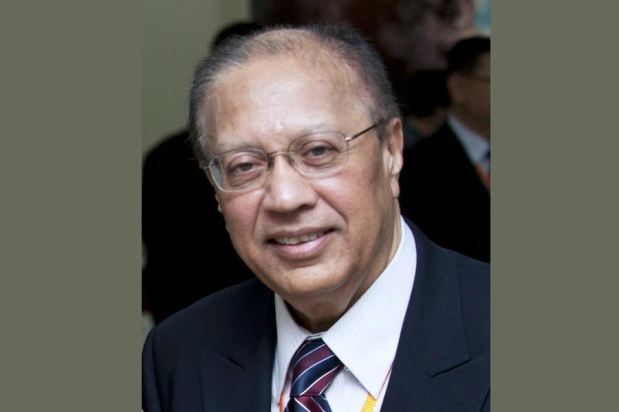
Silk road project of China vis-a-vis Bangladesh

unnamed (2)

Published in the Financial Express on November 12, 2018

The People’s Republic of China has emerged a leading economic power house in the world in the 21st century thanks to it’s the Belt and Road initiative, a signature project of President Xi Jinping. President Xi Jinping’s Belt and Road initiative in fact is the revival of ancient Chinese Silk Road and Trade which got going during the period of Han dynasty from 207BCE (Before Common Era) to 220 BC (Before Christ). At the initial stage the Han dynasty through explorer Ambassador at large, Ziang Qian, expanded the Silk route in Central Asia.

Trade through the Silk route actually played a significant part in establishing civilisation of China. Chinese Buddhist monk Fa Xian, Hui Zi and Hui Da came to ancient Bengal during the fifth century of Han dynasty to learn Buddhist scriptures. Ancient Bengal was also a place the Chinese trade ships sailed to.

During Song and Yuan dynasties Chinese foreign trade further developed. Large quantities of Chinese silk and porcelain were shipped to India, Sri Lanka and Bengal.

In fact, trade had expanded through navigational routes to South and East Asia and East Africa from 1405 to 1433 during the Ming dynasty. Admiral Zheng He, a Chinese Muslim (Cheng Ho) – mariner, explorer and diplomat – had made seven voyages during his lifetime. Zheng He earned appreciation of Emperor Yongle of the Ming dynasty. During the Ming dynasty there were frequent exchanges of envoys between China and Bengal. In 1408 Sultan Ghiyasuddin Azam Shah dispatched an envoy to establish relations with China. The envoy was accorded warm reception by the central government of the Ming dynasty. In 1415 the government of the Ming dynasty dispatched Hou Xian as an envoy to visit Suvarnogram, now Sonargaon near Dhaka, with credentials from Chinese emperor Zhu Di. While calling on the Sultan, the Chinese envoy presented the Queen and the Ministers of Suvarnogram with generous gifts from the Chinese emperor. Zheng He’s voyage team carried from China things including embroidery umbrellas, silk and Satin, porcelain, camphor, gold, silver, copper, etc. Zheng He’s voyage team visited Ceylon, Calicut, the Maldives, Cochin, Koyamyadi and Bengal in 1430. Zheng He did not visit Bengal but his envoy Hong Bao paid a visit to Chattogram and Sonargaon by small boats from Sumatra and presented the Chinese emperor’s imperial manifesto. This writer was associated with a group of journalists of China Pictorial during their visit in 1993 to publish a special supplement on the visit of Zheng He to this part of the world. Journalists from China Pictorial visited Chattogram, Sonargaon and met Chairman of Bangladesh Parjatan Corporation to know about expedition of Zheng He to this part of the world. All arrangements were made by this writer. The team was led by Madam Bian Youfen, Deputy Director of China Pictorial. A special supplement was published on Zheng He voyages in 1994.

From Han to Tang and Ming dynasties there had been trade between China and all South Asian parts plus Central Asia. Chinese silk, silk cloth, paper, Chinese porcelain were very much liked by peoples of this region. As a matter of fact, Chinese beautiful porcelain was preserved at a small museum of Lalbagh Fort in Dhaka which this writer noticed in mid 60’s. UNESCO designated the Chang’ an-Tian Shan corridor of the Silk route as a world heritage site.

China has been emerging economic power house in the world in the twenty first century from an opium-addicted nation in the nineteenth century. It was introduced by the imperial British Raj of East India Company in 1825 by supplying opium and raw cotton in exchange for tea, porcelain and silk.

In 1793, China was known for sophisticated culture and rich history. In 1839 Qing emperor ordered destruction of the large supply of opium stored in China. Commissioner Lin Zexu undertook an expedition to destroy illicit opium and detained the entire foreign community in Guangzhou which in fact led to an “Opium war” between the Chinese and the imperial British. The Chinese lost the war and were compelled to sign the Treaty of Nanjing in 1842. Under this treaty China ceded the Island of Hong Kong to the British while opened five ports to British residence. This treaty was humiliation to China. The treaty was unequal in nature. The Island of Hong Kong was handed over to China on 1st July of 1997 ending 156 years of rule by the British.

The National Committee of the Chinese People’s Political Consultative Conference held in Beijing in June 2017, however, emphasised an anti-corruption campaign in China and building a moderately prosperous society while deepening reform and advancing rule of law and strictly governing the party. China’s economy is targeting a reasonable range of growth between 6.0 and 7.0 per cent.

China President Xi Jinping unveiled the Silk Road Economic Belt concept in September of 2013 during his visit to Kazakhstan wherein he proposed that China and Central Asia cooperate to build a silk road economic belt. The ancient silk route included Samarkand, Bukhara and Ghazni in Central Asia. Therefore, President Xi unveiled his dream project in Kazakhstan. During ancient time, trade caravans moved through cities of Kazakhstan from the border of China and moved to Persia as well.

President Xi Jinping has not only now revived the old silk route but also expanded it to cover Europe as well. International cooperation in the economic field and connectivity were pledged at the two-day Belt and Road forum on May 13-14 in 2017 in Beijing. Twenty nine countries, including Bangladesh participated in the forum despite India’s objection. India which is a part of BCIM- Economic corridor of China delivered an implicit criticism against China because its state-owned companies are working in Pakistan-held Azad Kashmir, the Himalaya region claimed by both sides. It is not understood why the Prime Minister of Bangladesh did not participate in the forum where leaders from Myanmar, Malaysia, Pakistan, Turkey and Russia participated. China in fact has become a major donor country to Bangladesh since establishing diplomatic relations in January of 1976. During the first visit of Chinese President Xi Jinping in 30 years, a loan agreement amounting to $24 billion was signed with Bangladesh in 2016. Prime Minister Sheikh Hasina also visited China three times by now. Bangladesh and China shared defence, economic, political and people to people ties.

President Xi in his keynote paper has spoken of openness, inclusiveness of nations, mutual learning through exchange of knowledge and mutual benefit through flow of goods and people as well. President Xi is of the opinion that China does not want to dictate others but he emphasised economic integration and cooperation in financial regulation, anti-terrorism and security. By implication it means China would play a dominant role. The Chinese President said, “We should foster a vision of common, comprehensive cooperation and sustainable security”. The President announced a total of $113 billion earmarked for the project of Belt and Road. That includes lending $55 billion by two non-commercial Chinese state banks of the amount, $14.5 billion was earmarked for the Silk and Road fund, set up in 2014. Chinese government has also committed to provide financial aid worth $8.7 billion to developing countries and international organisations as well. China established the Asian Infrastructure Investment Bank in 2014 to finance ports, highways and other projects. China had begun construction of railways in some part of Africa, including Bangladesh.

China was awarded a $3.1 billion project contract in 2016 to build a rail network to connect Dhaka with Jashore, a distance of 168 kilometres. It is being designed to run at a speed of 120 kilometre per hour. The rail link project included construction of 66 main bridges, 244 minor bridges plus 14 new railway stations while procuring 100 passenger coaches. China was also awarded a contract to build the Padma Bridge in 2014. The 25-metre-wide and 10-kilometre-long bridge over the River Padma will be built by China’s Major Bridge Engineering Company Ltd at a cost of $1.55 billion in four years’ time. These projects are part of the Belt and Road Initiative. By implication, China maintains the carrot-and -stick policy while doing business under the Belt and Road project.

Political analysts and diplomats are of the opinion that China is trying to create a political clout and an economic network to push the United States out of the region.

Mohammad Amjad Hossain, retired diplomat from Bangladesh and former President of Nova chapter of International Toastmaster club of America, writes from Virginia, USA.
Dilly-dallying with repatriation of Rohingya refugees

Dilly-dallying with repatriation of Rohingya refugees

Published in the Financial Express on February 17, 2018

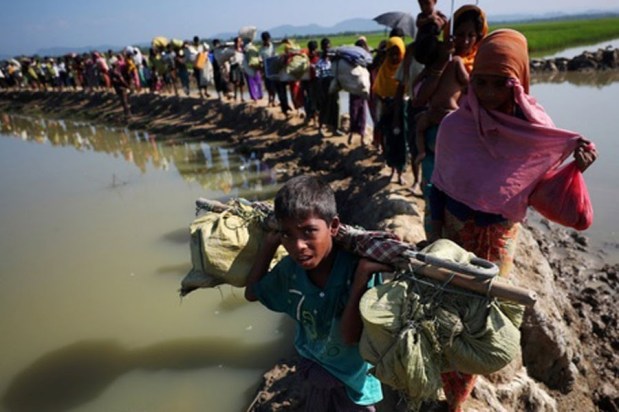
The ethnic cleansing operation carried out by the Myanmar security forces against the Rohinyas since August, last year caused the fastest growing humanitarian crisis that the United Nations has ever faced. Nearly 0.7 million Rohingyas have fled their homes in Rakhine state to take shelter in Bangladesh.

A ray of hope for the solution of the refugee crisis emerged when Myanmar and Bangladesh signed a bilateral agreement on November 23 last year for starting the repatriation process within two months.

The signing of the deal on the basis of 1992 pact has raised many questions as it did not address the issue of citizenship status of the refugees. It just stipulated that Rohingyas will be taken back on the basis of residency. This pact has stated that Myanmar would not take back anyone without proper document and secondly, those who are not willing to go back could not be forced to return to Myanmar.

Since 1993, all documents and identity cards of Rohingya were seized by the government in Myanmar. Their houses were destroyed by the military Junta and there does not exist any sign now to prove their residency.

On November 25, 2017 the first-ever conference of Bangladesh Ambassadors and High Commissioners and Permanent Representative in UN was held in Dhaka where retired Ambassadors were also present. While inaugurating the conference Prime Minister Sheikh Hasina has said, the government wants to resolve the crisis by keeping good relation with neighbouring countries. Foreign Minister Abul Hassan Mahmood Ali in his speech emphasised to seek support from international community to send Rohingyas back to Myanmar.

By now most of the countries have spoken against inhuman treatment meted out against Rohingyas in Myanmar while the United Nations and the Amnesty International have described the atrocities perpetrated against Rohingya as “ethnic cleansing”.

Meanwhile, many leaders from around the world, including Indonesian President and President of Switzerland visited Bangladesh to praise the government for offering shelter to Rohingya refugees.

Another heart-rending incident was revealed recently by an AP report which confirmed the existence of at least five mass graveyards in a village in Rakhaine State.

Now it become clear why Myanmar’s Ministry of Foreign Affairs, headed by Nobel laureate for Peace Aung San Suu Kyi, denied visa to fact-finding mission established on March 24, last year by the UN Human Rights council to investigate human rights abuses in Myanmar.

Significant development recently took place in Myanmar when Bill Richardson, a member of the Advisory Commission on Rakhine state headed by former Secretary General of the United Nations Kofi Annan had resigned on 25 January this year from the committee by saying “the commission was formed as an eye wash to deceive international community.”

Bill Richardson also blamed Aung San Suu Kyi “for furious response” to help releasing two Reuters Journalists while reporting on the Rakhine State. Bill Richardson was of the opinion that “Commission was likely to become cheerleading squared for government policy as opposed to proposing genuine policy changes that are desperately needed to assure peace, stability and development in Rakhine state.”

Richardson was former UN Ambassador of the United States and former Secretary of Energy under President Bill Clinton who travelled to Dhaka, Kabul and Pyongyang as an emissary to release imprisoned Americans in other countries. At his request an American girl Eliadah Mc Cord was released from Dhaka jail after serving four and a half years. Eliadah was convicted for smuggling of heroin.

In December last year, the US government imposed economic sanctions against 52 individuals, including Myanmar Army General Maung Maung Soe for abusing human rights.

China and India – both neighbours of Bangladesh – and Russia are not forthcoming to put public pressure on Myanmar government to resolve the Rohingya crisis. These countries have stakes in Myanmar. Japan has also pledged to strengthen ties with Myanmar. India is eager to develop relations with Myanmar. On September 06 last year, India and Myanmar signed eleven agreements during the visit of India’s Prime Minister Narendra Modi. India is assisting Myanmar armed forces as well.

The plan of sending Rohingya refugees from five transit camps of Bangladesh to Rakhine state of Myanmar without consultation with refugees, was not appreciated by Secretary-General of the United Nations. He is in fact in favour of ‘huge effort of reconciliation between two countries involving United Nations High Commission for Refugees.’ The US government also holds the same opinion on this matter.

Government of Bangladesh may consider direct talks with China and Russia to take initiatives so that Myanmar refugees can be sent back to their homes in Rakhaine State with proper safety and dignity and their citizenship can be restored.

The writer is a former diplomat of Bangladesh. He lives in Virginia and can be reached at – amjad.21@gmail.com

André Malraux supported our Liberation War

André Malraux supported our Liberation War

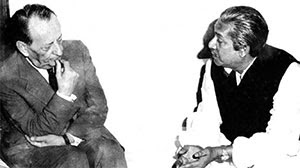
THE PEOPLE of Bangladesh should forever remember André-Georges Malraux, an intellectual giant and humanist of the twentieth century, for his outstanding contribution towards the Liberation War of Bangladesh. André Malraux was given honorary citizenship by Bangabandhu Sheikh Mujibur Rahman, then Prime Minister of Bangladesh, during his visit from 23 – 24 April, 1973.

The French philosopher, novelist, warrior and statesman was also received by President Justice Abu Sayeed Chowdhury, who in praise of Malraux’s humanitarian role said that “Malraux’s love for humanity and cherished ideals never admitted any geographical barrier and his bold voice was heard across the world whenever human dignity was in danger.” Chief of Protocol Arshad-Uz-Zaman, a linguist, organized his trip to Chittagong and Rajshahi.

A civic reception was organized in Chittagong while the Rajshahi University coferred Doctorate of Literature on Malraux. This writer accompanied André Malraux to Chittagong in a helicopter on 21 April. Apart from according civic reception André Malraux had the pleasure of opening art gallery of the Chittagong University where French speaking renowned artist Rashid Choudhury was a professor.
Civic reception was conducted by Dr Mahmud Shah Qureshi, a Professor of Bengali at Chittagong University who was fluent in French. André Malraux had a cruise in Kaptai Lake on a house boat of industrialist and former Minister of Pakistan for industry A. K. Khan, who gave a lunch in his honor on the boat.

Andre Malraux aboard a helicopter in
Chittagong with writer of the article.

On his return to Dacca André Malraux also met a cross section of people from civic society, including freedom fighters who were wounded during the war of liberation. André Malraux met them at Suhrawardy Hospital where he became emotional. This writer also accompanied him to the hospital. André Malraux was also treated to lunch by Foreign Minister Dr.Kamal Hossain at his official residence on 22 Aprilwhere among others, writer-poet Abu Zafar Mohammad Obaidullah Khan, then Joint Secretary, was present.

Bangladesh was his second homeland
In his Rajshahi trip my colleague Esrajul Alam and Akramul Qader (who became Bangladesh Ambassador to the US in 2011 after retirement having served as Ambassador to Thailand and South Africa) accompanied him. In Rajshahi, at a special convocation André Malraux said, “On your own tombs there are perhaps souvenir of the words justice and liberty with which the generals of the revolution had put Europe to flame.” During conversation with this writer Malraux described Bangladesh as his second homeland.

Malraux favoured guerilla war
Monsieur André Malraux in a letter to esteemed Indian leader Jay Prakash Narayan, a Gandhite and revolutionary politician said, “What matters is the military organization of Bangladesh. Either it will accept pitched battles with Pakistan and will be wiped out or it will organize its guerillas and Pakistan will be defeated”. This letter was in response to an invitation to attend international conference on Bangladesh held in New Delhi from 16-17 September of 1971.

Malraux also wrote a letter to President Richard Nixon immediately after Pakistan army massacred the innocent people in Bangladesh to exercise his good offices on Pakistan to stop genocidal killings. Apart from this, Malraux proposed formation of an international brigade to fight for the cause of oppressed people in erstwhile East Pakistan but did not materialized as he was successful in forming such International Brigade during Spanish civil war in 1930 along with European intellectuals and ordinary people as well.

Literary and political career
Novelist, art historian, and statesman who became an active supporter of Gen. Charles de Gaulle and, after de Gaulle was elected president in 1958, (1901 – 1976) served for 10 years as France’s minister of cultural affairs. His major works include the novel La Condition humaine (1933;Man’s Fate); Les Voix du silence (1951; The Voices of Silence), a history and philosophy of world art; as well as Le Musée imaginaire de la sculpture mondiale(1952–54; Museum Without Walls).

As a story goes Novel: Georges by Alexandre Dumas and Macbeth of Shakespeare influenced his mind. As a bohemian Malraux was seen in cinema, theater halls, exhibitions and museums and developed a fascination for music. He also had the privilege of meeting renowned artistes like Picasso, Braque, Mark Siegal with whom he built up friendship over the years. Malraux had a name for entertaining his friends in a restaurant where discussion on arts, music, cinema and politics dominated. Malraux was also contributor to such newspaper which were branded as left-leaning, but incidentally he did not subscribe to views of those newspapers. Politically he was non-committal while absorbed philosophical thinking and giving aesthetic solutions to problems. Gradually he developed friendship with celebrated writes of his time.
André Malraux has had difficult time during his visit along with fiancé Clara Goldschmidt, a Jewish by birth, to Florence in Italy to see rich cultural heritage from where Clara Goldschmidt sent a message to her mother that she was betrothed.
In Saigon Malraux brought a newspaper along with Paul Monin, a lawyer, to denounce colonial attitude of French government. While editing newspaper Malraux wrote a number of articles on occidental culture and left Saigon on 30 December of 1925. During second world war Malraux joined French army and fought in the battle field but captured twice by the enemy. Incidentally, Malraux escaped from the hands of the enemy. He was awarded the French military decoration” Croix de guerre” for his heroic act involving combat operation against enemy.

Malraux’s mistreatment in jail by the French colonial authorities turned him into a fervent anticolonialist and an advocate of social change. While in Southeast Asia he organized the Young Annam League (the precursor of theViet Minh, or Viet Nam League for Independence), became a leading writer and pamphleteer, and founded a newspaper, L’Indochine Enchaînée (“Indochina in Chains”). Crossing to China, he apparently participated in several Chinese revolutionary incidents and may possibly have met Mikhail Borodin, the Russian communist adviser to Sun Yat-sen and then to Chiang Kai-shek.

Malraux was to return to East Asia several times. In 1929 he made important discoveries of Greco-Buddhist art in Afghanistan and Iran. In 1934 he flew over the Rub al-Khali in Arabia and discovered what may have been the site of theQueen of Sheba’s legendary city. Though he was captivated Paris with his exceptional intelligence, lyrical prose, astonishing memory, and breadth of knowledge, it was not generally appreciated that his true life was elsewhere than in the literary salons or on the committee of La Nouvelle Revue Française or at literary congresses.

As fascism, in the shape of Nazism, rose in the 1930s, Malraux recognized its threat and presided over committees pressing for the liberation of the international communists Ernst Thälmann and Georgi Dimitrov from their imprisonment under the Nazis. He simultaneously eschewed a rigid Marxism, participated in the Ligue Nationale Contre l’Antisémitisme (National League Against Anti-Semitism), and in 1935—before the world in general had learned that concentration camps existed—published Le Temps du mépris (Days of Wrath), a short novel describing the brutal imprisonment of a communist by the Nazis. At the same time, he began to write his Psychologie de l’art (3 vol., 1947–50; The Psychology of Art), an activity that bore a relationship to his other interests, for to Malraux aesthetic ideas, like the philosophy of action expressed in his own novels, would always be part of man’s eternal questioning of destiny and his response to it.

Upon the outbreak of the Spanish Civil War in 1936, Malraux went to Spain, joined the Republican forces, and organized for them an international air squadron, becoming its colonel. After flying numerous aerial missions at the front, he visited the United States in order to collect money for medical assistance to Spain. His novel L’Espoir (Man’s Hope), based on his experiences in Spain, was published in 1937. A motion-picture version of L’Espoir that Malraux produced and directed in Barcelona in 1938 was not shown in France until after the country’s liberation at the end of World War II.

His first novel that appeared in 1928 was “Conquerors” followed by another novel: “The Royal way” in 1930.In fact both novels depicted his experiences in Cambodia. In 1933 Malraux was honored with Prix Goncourt for his masterpiece novel: La Condition Humaine. French President General De Gaulle appointed him as Minister for Information in 1945 and he became Minister for Cultural affair in 1958.
Malraux during his long charismatic chequered career associated himself with the field of literature, war, adventure, politics, cinematorgraphy and came into contact with noted personalities like Gorki, Einstein, Mao Tse Dong, Léopold Sedar Senghor—-President and Poet of Senegal and Pandit Nehru.
The world lost a humanist and an intellectual giant at his death at the age of 73 on November 23 of 1976. At his death the Government of Bangladesh commented: “The death of Monsieur Malraux removed from the world scene a literary giant, a humanist par excellence, who championed and fought for the cause of the oppressed. We in Bangladesh will always cherish his memory; his clarion call in defense of our war of Independence was heard around the globe.”

This writer suggests that a road be dedicated in his name where Pakistan’s vanquished army surrendered on 16 December of 1971.

The portrait of an ambassador: Anwarul Karim Choudhury

The portrait of an ambassador: Anwarul Karim Choudhury

Published in the Financial Times:  December 9, 2017

Although I have had met Ambassador Anwarul Karim Choudhury on two occasions, I held him in high esteem for his sagacity to pursue diplomacy doggedly and for his personal amiable behaviour. Anwarul Karim Chowdhury had become a spokesperson for the government in exile of Bangladesh in Calcutta following his shifting of allegiance to the latter after quitting the post of third secretary at the Deputy High Commission of Pakistan in Calcutta along with Pakistan Deputy High Commissioner Hossain Ali on April 18 in 1972. For all practical purposes the Deputy High Commission had served as the office of the government in exile of Bangladesh led by Tajuddin Ahmed. The Pakistan government lodged a strong protest with the Indian government following hoisting Bangladesh’s flag at the Deputy High Commission by Ambassador Hossain Ali.

On his return to Bangladesh Anwarul Karim Chowdhury served as Director at the Ministry of Foreign Affairs in mid 70’s along with another stalwart Bangladeshi diplomat K.M. Shehabuddin. Shehabuddin also shifted his allegiance to the government in exile of Bangladesh quitting his post of Second Secretary at the Pakistan High Commission in New Delhi even before the government in exile was formed on April 17, 1972. It was my pleasure to invite both of them, apart from Mr. Akramul Qader, Section Officer who became Ambassador to Thailand and South Africa, to my residence at the city’s Bailey Road to join a farewell dinner before departing for Kuala Lumpur in Malaysia in April of 1977 to join the Bangladesh embassy there as third secretary under High Commissioner Maj Gen K.M. Shafiullah. That was my first interaction with Ambassador Anwarul Karim Chowdhury.

It is really heartening to note that Ambassador Anwarul Karim having served as Bangladesh’s emissary to under-developed countries in Africa was elevated to the position of Permanent Representative of the country to the United Nations from 1996 to 2001. During his tenure at the United Nations, Ambassador Anwarul Karim served as a coordinator of Least Developed Countries for about ten years. As coordinator of the Least Developed Countries he joined the five-member Bangladesh delegation to the G-8 Summit held in Cologne of Germany on June 7-8, 1999. The delegation was led by then Bangladesh Foreign Minister Abdus Samad Azad. This scribe also was one of the members of the delegation from the Bangladesh embassy in Bonn, including Ambassador Kazi Anwarul Masud. During presentation of the viewpoints of LDCs Abdus Samad Azad skipped some important points. Ambassador Anwarul Karim immediately pointed out the lapses. As a troika of the Least Developed Countries, Bangladesh put forth some points seeking commitments from industrially-developed countries to exempt debt burdens of the LDCs. It was a very successful effort as some under-developed countries in Africa were exempted from their debt burdens. The then US President Bill Clinton attended the G-8 summit.

After the summit, the foreign minister accompanied by members of the delegation along with newly-married wife visited the biggest historical cathedral in Cologne and the hilly region of Bonn in Petersburg plateau to have the glimpse of the romantic Rhine Valley of Bonn. Ambassador Anwarul Karim Chowdhury accepted the invitation to have lunch at my official residence in Bonn. The wife of the Foreign Minister was feted by my wife, because the wife of Ambassador Anwarul Masud was away to Bangladesh. That was the second time I interacted with Ambassador Anwarul Karim Chowdhury.

Ambassador Anwarul Karim Chowdhury also served as President of the Security Council, when Bangladesh became a non-permanent member of the Security Council from 2000 to 2001. We got commitment from the German government to support Bangladesh’s candidature for membership of the Security Council. This was the second time Bangladesh became a non-permanent member of the Security Council. From 1979 to 1980 Bangladesh became a non-permanent member of the Security Council for the first time by defeating Japan.

As President of the Security Council Ambassador Anwarul Karim Chowdhury succeeded in establishing the landmark resolution 1325 which reaffirmed the important role of women in prevention and resolution of conflicts, peace negotiation, peace building, peace keeping, humanitarian response and in post-conflict reconstruction and stressed the importance of their equal participation and full involvement in all efforts for maintenance and promotion of peace and security.

Being an amiable personality as a diplomat, Anwarul Karim Chowdhury has made tremendous impact on the international body which was reflected in his appointment as Chairman of the Second Council Committee on Sierra Leone and President of the UNICEF executive board. His leading role resulted in proclaiming by the United Nations the year 2000 as International Year for Cultural Peace and the period of 2001-2010 as the International Decade for a culture of peace and non-violence for the children of the world. Ambassador Anwarul Karim also led as a UN culture of peace emissary in May of 2010, because peace efforts continuously failed until people embraced humanity’s oneness.

Ambassador Anwarul Karim Chowdhury also served as High Representative of UN for the Least Developed Countries, Land Locked developing countries, Small Island developing states in March of 2002. From 1990-1993 Ambassador Anwarul Karim served as Director of UNICEF in Japan, Australia and New Zealand. Possibly Ambassador Anwarul Karim Chowdhury is the only Bangladeshi diplomat who got the honour of receiving the U Thant peace award, UNESCO Gandhi Gold medal for culture of peace while the Japan government conferred on him an honorary doctorate degree for his work on women’s issue, child rights and culture of peace and strengthening the United Nations. The government of Burkina Faso decorated him with the country’s highest honour L’ordre Nacionale on January 18 2007 for championing the cause of the most vulnerable countries.

Ambassador Anwarul Karim received Doctor of Humane Letters honoris causa degree from Saint Peter’s University of the United States of America in 2012 and served as an adjunct professor at the school of diplomacy at Seton Hill University of the USA. He is the founder of the New York-based Global Movement for culture of peace while he is the founding Co-Chair of the International Ecological Safety collaborative Organisation (IESO) with its headquarters in China.


Humayun Kabir, a consummate diplomat

Published in the Weekly Holiday – August 4, 2017

Distinguished diplomat Ambassador Humayun Kabir, scion of the renowned Syed Mohallah of Fakirhat in Bagerhat district, has had a distinguished career as a student of Dacca University in its heyday.

During his student career in English department of Dacca University fellow students from different colleges and faculties of Dacca University flocked to English department to listen to debates participated by Humayun Kabir. His presentation and intonation in the debate was charming and illuminating indeed, apart from his handsome manly figure.
According to Ambassador Arshad-Uz Zaman, who served as first Director-General of External Publicity Division in the Ministry of Foreign Affairs and Assistant Secretary General of OIC in Jeddah,Humayun Kabir entered competitive examination in 1961 and came out with flying colour and completing his training in Fletcher School of Diplomacy in the United States, he joined Pakistan Foreign Service and was posted at Paris and London.

Ambassador Humayun Kabir also obtained post-graduation from Harvard University in 1962. Although this writer has had privilege to serve under him about two years in the External Publicity Division of Bangladesh Foreign Ministry as Assistant Director, but I met him in Pakistan Foreign office in Islamabad in December of 1970 in examination hall where I was among the thirty examinees for a post of Information officer in CENTO. Humayun Kabir’s assignment there was as invigilator. At that time he was serving as Deputy Chief of Protocol.

Having arrived in Bangladesh from Pakistan Humayun Kabir replaced Ambassador Faruk Ahmed Chowdhury as Chief of Protocol in 1972.Shortly Humayun Kabir replaced Arshad-Uz Zaman as Director General of External Publicity Division. During the period of 1972-1973 Bangladesh was humming with hectic days as many foreign dignitaries and foreign journalists were arriving to see charismatic leader Bangabandhu Sheikh Mujibur Rahman and problems being faced following massive destruction of the country during the Liberation War. Ambassador Humayun Kabir turned out to be the best public relations personality in handling the international media personalities.

War ravaged country and unfounded rumour
Apart from reconstruction of the war ravaged country Bangladesh was faced with canards of killing Bihari on massive scale and famine in Bangladesh as a result of food crisis. Editor V.G Verghese of the Hindustan Times did not spare us from this canard. Both Ambassador Arshad-Uz Zaman and Ambassador Humayun Kabir in collaboration with Chief of Army Staff Maj-General K.M. Shafiullah briefed foreign journalists and took them to Bihari camps at Mohammadpur in Dhaka city. This writer undertook writings on the problem of Biharis which the Morning News carried out on 30 June of 1972, apart from briefing foreign journalists. Having published his impression V.G Verghese returned my article. His article which appeared on 8 July of 1972 mentioned that “Mujib government’s approach to it was a sad departure from the high idealism and humanitarianism that surrounded the birth of this new nation.”

This writer was assigned by Director-General Humayun Kabir to meet the needs of visiting foreign journalists, apart from organizing appointments with hierarchy, including Prime Minister Sheikh Mujibur Rahman, Vice-Chairman of Planning commission, Food secretary and Home secretary.

Andre Malraux and Robert Payne
I would like to narrate briefly visits of three important personalities to Bangladesh. One was an intellectual giant and humanist of the century Andre Malraux of French philosopher, Novelist, warrior and Cultural Minister , another celebrated writer and novelist Robert Payne and Deputy Foreign Editor of London Times Richard Harris .
I was assigned to accompany Andre Malraux to Chittagong where he was given civic reception following according honorary citizenship by Bangabandhu Sheikh Mujibur Rahman for his contribution towards Bangladesh Liberation War. Industrialist A.K. Khan entertained Andre Malraux at Kaptai Lake at his Yacht while Foreign Minister Dr.Kamal Hossain threw a gala dinner party in his honour at his official residence.

I spent two weeks with Robert Payne who interviewed Prime Minister Sheikh Mujibur Rahman. Robert Payne also interviewed Professor Nurullah of Dacca Engineering and Technology University which was previously named after Nawab Ahsan Ullah. Nurullah recorded on film the massacres of students and teachers at Jaganath Hall of Dacca University.

This writer accompanied Robert Payne in his meeting with eminent nuclear scientist Dr. Anwar Hossain, who later on became Chairman of the Bangladesh Atomic Energy Commission, and Deputy Chief of army Major General Ziaur Rahman.

I also accompanied with Robert Payne to meetings with different personalities, apart from visiting Kushtia which was described as thousand My Lai by World Bank and prison cell of Dhaka central Jail where Sheikh Mujibur Rahman spent most of his time during Pakistan regime. Major-General Ziaur Rahman, however, met Robert Payne at the office of Director-General Humayun Kabir in the Ministry of Foreign affairs. As directed by Foreign Secretary Enayet Karim I handed over book: Massacres by Robert Payne to Deputy Chief of Bangladesh army Major-General Ziaur Rahman two days ahead of meeting. Deputy Foreign Editor of London Times has had meeting with Prime Minister Sheikh Mujibur Rahman while he was travelling to Gopalganj by helicopter and Professor Abdur Razzak of Dhaka University, an intellectual giant and Foreign Secretary Enayet Karim and Director-General Humayun Kabir as well. On his return to London Richard Harris wrote a letter to Director-General Humayun Kabir in which he praised my assistance in organizing meetings and trips.

My assigned booklets
I was assigned to prepare two important booklets, “Bangabandhu Speaks” and “Operation: Death and Destruction” to handle war crime trial. The last booklet was withdrawn following tripartite agreement which was signed in New Delhi on 9 April of 1974 among Bangladesh, India and Pakistan. Two more books, each on Road to Freedom and Geography of Bangladesh in collaboration of Geography department of Dacca University were published during the tenure of Director-General Humayun Kabir. Incidentally, Mr. Humayun Kabir became speech-writer of Foreign Minister Abdus Samad Azad.

During the visit of Dr. Henry Kissinger, Secretary of State under President Ford, to Bangladesh from 31 October to 1 November of 1974 a large number of journalists arrived to cover his visit. Director General Humayun Kabir hosted a dinner for the visiting news media at Hotel Intercontinental. As host officer I had to check preparation and receiving journalists. And for Humayun Kabir it was a grim situation for he lost his father on the same night while the party was still in progress.

Prime Minister of Pakistan Zulfiqar Ali Bhutto visited Bangladesh in 1974 at the invitation of Prime Minister of Bangladesh Bangabandhu Sheikh Mujibur Rahman.Prime Minister hosted dinner in honour of Pakistan’s Prime Minister at Bangabhavan.And Humayun Kabir had the opportunity to demonstrate his brilliancy when he was asked by the Prime Minister to translate his after dinner speech. Humayun Kabir did it instantly. The audience including the visiting Prime Minister was spell bound at the way Humayun Kabir rendered the Bengali version of the speech in eloquent and articulate English. In 1974 Director-General Humayun Kabir possibly did not sleep well at night.

On many occasion this writer received telephone calls at midnight from Director-General Humayun Kabir about arrangement made for foreign correspondents to fly to North Bengal to see famine situation. On one occasion this writer joined them on helicopter flight to Khulna.

He presented credentials wearing Lungi, Panjabee and cane hat
Ambassador Humayun Kabir had established stunt in diplomatic arena by presenting credential to Imam Khomeini, supreme leader of Islamic Republic of Iran, as Bangladesh Ambassador. Instead of wearing western suit Humayun Kabir presented credential in 1979 wearing Lungi, Panjabee and cane hat to Imam Khomeini while presetting his credential to UN Secretary-General Perez de Culler in that dress in 1993. Ambassador Humayun Kabir drew the attention of western media widely while he faced criticism at home.

It may be worthwhile to mention that Bangladesh became non-permanent member of the UN Security Council by defeating Japan during the period of Bangladesh Nationalist Party under President Ziaur Rahman and as Deputy Permanent representative of Bangladesh Humayun Kabir covered Latin America to seek support for Bangladesh while Ambassador Arshad-Uz Zaman visited African states because both of them were linguist.
During the reign of Jatiya Party of Gen.Ershad, Humayun Kabir was made ineffective on personal grudge, so to say. Principal Humayun Kabir of Foreign Service Academy was made officer on special duty and academy was merged with Bangladesh Civil Service Academy at Shahbag in 1985. Humayun Kabir was made Bangladesh’s Permanent Representative to UN in 1993 during the period of Bangladesh Nationalist Party. His last assignment was Ambassador to the United States of America during the rule of President Bill Clinton. He had a mark in projecting favourable image of Bangladesh and in the process developed friendly relations with President Bill Clinton.

Ambassador Humayun Kabir was an amiable personality and friendly who was a brilliant linguist. He used to speak French and Spanish. Possibly he was the only diplomat who was decorated with Order of Civil Merit by the Government of Spain.
Since his retirement Ambassador Humayun Kabir dedicated himself to the alleviation of poverty of the tribal people at Bandarban and involved himself in the programme of afforestation and self-reliance project for them. This writer understands he was planning to establish a cottage at Cox’s Bazar. Ambassador Humayun Kabir died of cerebral malaria on 16 June in 2001 at Chittagong Medical college hospital. May Allah grant eternal peace unto him in heaven.

[Mohammad Amjad Hossain, retired diplomat from Bangladesh and former President of Nova chapter of Toastmaster International Club of America, writes from Virginia. Email: amjad.21@gmail.com]

Down the memory lane: Remembering Ambassador Nazrul Islam

A brilliant officer of Pakistan foreign service cadre joined Bangladesh foreign ministry on repatriation from Pakistan as Chief of Protocol in 1973 to replace Arshaduzzaman who was appointed Ambassador to Algeria. During his tenure as Chief of Protocol large number foreign dignitaries visited Bangladesh to see the newly emerged independent country following a bloody war of liberation.

The most important of those visitors was President Josef Broz Tito of Yugoslavia, who was one of the founder members of Non-Aligned Movement along with Pundit Jawaharlal Nehru of India, Soekarano of Indonesia and Gamal Abdel Nasser of Egypt. Yugoslav president was accompanied by a 90 member delegation, including foreign minister, defence minister and political secretary to the president. Josef Broz Tito and his personal staff members stayed in Bangabhavan while his ministers and other members of the delegation stayed in the state guest houses. The visit took place from 24-29 January 1973. This writer was in the foreign ministry’s external publicity division as an Assistant Director and his services used to be requisitioned by the Chief of Protocol when such dignitaries visited Bangladesh. During the visit I was located at Padma guest house as host officer to look after the delegation’s needs. I came to know from the Yugoslav defence minister that Tito’s birth day was on 26 January. To give him a surprise I arranged with guest house caretaker Harris to send a bouquet of flowers through the Yugoslav President’s political secretary Alexander Sarkorak next morning while he left for the Bangabhavan to say to the Yugoslav a happy birth day. For a few second he kept quiet and thanked me profoundly and invited me to visit Belgrade as his guest.

This event was reported to Chief of Protocol Nazrul Islam by Yugoslav President’s political secretary. After the departure of Yugoslav delegation Nazrul Islam gave briefings on the conduct of officers and arrangement made by the government. Nazrul Islam praised me eloquently for my initiative to give the bouquet of flowers to the most powerful man in Tito’s administration.

During the visit Tito invited Prime Minister Sheikh Mujibur Rahman to attend Non-Aligned summit in Algeria from 5-9 September of 1973.

The second important visitor was Pakistan’s prime minister Zulfiqar Ali Bhutto, who came at the invitation of Bangladesh Prime Minister. During his visit I was again requisitioned by the Chief of Protocol and was posted at Bangabhavan. At one time the Chief of Protocol rushed to my allotted room and instructed to book a call to Sylhet Deputy Commissioner and ask him to find Kaiser Rashid Chowdhury, former foreign service officer who served as Private Secretary to Mr. Zulfiqar Bhutto when he was the foreign minister and send him to Dacca to participate in the talks with Bangladesh as instructed by Prime Minister Sheikh Mujibur Rahman. Kaiser Rashid Chowdhury was attending the Kul Khani of his mother in Sylhet.

However, Kaiser Rashid Chowdhury flew to Dacca by next available Biman flight. Talks between Bangladesh and Pakistan were not successful on the question of asset sharing and taking back the Biharis from Bangladesh who opted for Pakistan.
Another important visitor was President Leopold Senghor of Senegal, a well known poet and statesman, from May 26—29 of 1974. I was placed as Protocol officer at Banghabavan as I spoke French. In his speech President Senghor praised Sheikh Mujibur Rahman for his steadfast courageous role for Bangladesh which had made him an institution. During state banquet I was assisting Madam Senghor. At the end of the visit President Leopold Senghor presented me a copy of his book: Nocturnes.

Chief of Protocol Nazrul Islam initiated letter of appreciation by Foreign Minister Dr. Kamal Hossain for working as protocol officers during the visit of a number of foreign dignitaries. I was one of the officers received appreciation letter from Foreign Minister Dr.Kamal Hossain. Nazrul Islam was in the habit of inviting me to accompany for lunch at his residence. On reaching the house his first duty was to enquire about his ailing mother if she was given medicine on time.

Incidentally, Nazrul Islam was a very good chess player. A chess board always remained on his desk in the office and whenever he managed some free time he tried to concentrate on a game of chess.

While serving as Ambassador in Kuwait, he was called back to headquarters to serve as Foreign Secretary in place of Mr. Fakhruddin Ahmad, who was in disagreement with President Gen. Ershad. Nazrul Islam joined on 9 May of 1987 as Foreign Secretary. During his tenure I was posted as First Secretary to Bangladesh embassy in Bucharest, Romania in July of 1987. In 1987 I was assigned to work in West Asia desk of Foreign Ministry because President Ershad decided to merge external publicity division of the foreign ministry with the ministry of information. That was another ill advised decision by President Ershad and it was reversed after he was deosed.

While I was serving as Deputy Director in Civil Service cum Foreign Service academy in Shahbagh in 1992, Nazrul Islam retired from foreign office. Actually, President Ershad had merged Foreign Service Academy with Civil Service Academy because of his personal grudge against then Principal of the Foreign Service Academy.

I decided to invite Ambassador Nazrul Islam for a talk on foreign policy for the benefit of the newly recruited foreign service officers. Nazrul Islam accepted my invitation and the officers who attended had appreciated his style of discussions. There was an evaluation system of guest lecturers by the newly recruited officers in the academy. This was strictly followed during the administration of Dr. Sadat Hossain, Director –General of Academy who retired as Chairman, Public Service Commission of Bangladesh.

While at the academy, I organized a seminar on climate change for the benefit of newly recruited foreign service officers in consultation with Dr. Fazlul Hasan Yusuf, Diector-Gerneral of the Academy who incidentally worked in Foreign Ministry at initial stage of the Ministry. Professor M. Aminul Islam of Geography Department of Dacca University presented the key note paper while Professor Dr. Ainun Nishat of Bangladesh University of Engineering and Technology and Dr. Atiq Rahman, Director, Bangladesh center for advanced studies were the discussants. Ambassador Nazrul Islam, former Foreign Secretary, presided.

While serving as Director in Europe desk in 1994 Ambassador Nazrul Islam used to drop in my office to have a chit chat over a cup of tea. Possibly in his mind he was thinking of serving as the country’s foreign minister which may have prompted him to join the Bangladesh Nationalist Party like Ambassador Rezaul Karim. Nazrul Islam had been maintaining a close liaison with his constituency when he was the foreign secretary. Similarly, Ambassador Rezaul Karim also maintained close touch with his Kushtia District after retirement.

Unfortunately, neither Ambassador Rezaul Karim, nor Ambassador Nazrul Islam succeeded in getting nominations from the BNP to contest election. Ambassador Nazrul Islam expired on 23 April of 1999. Although some of his colleagues in the Ministry called him an eccentric but he was humane and in fact was a humorous person. May Allah bless him in heaven.

Diplomats’ role during liberation war of Bangladesh

Published in the Weekly Holiday on April 07, 2017.

Diplomacy is the first defence while war is the second defence of the country’s sovereignty. The role of diplomats played in mobilizing public opinion around the world from April of 1971 following Pakistan army’s crackdown on unarmed people in erstwhile East Pakistan which is separated from Western part of Pakistan about 1200 miles over Indian territory. The role played by diplomats would be written in red letter the history of Independent Bangladesh.
Defection of Bangladeshi diplomats in Pakistan embassies around the world mobilized public opinion against Pakistan’s atrocities and genocidal activities in what was then East Pakistan. Even American diplomat, in particular, Archer Blood, American Consul-General in Dacca, who relentlessly highlighted the events in Bangladesh in his diplomatic cables though they were met with deafening silence in Washington.

Defections of Bengali diplomats
Eventually Blood lost his job in the State Department at the instigation of Henry Kissinger, National Security advisor under President Richard Nixon and Secretary of State to President Gerald Ford. Gary J Bass in the book: ‘The Blood Telegram’ which reflected the moral bankruptcy of US leaders, pointed out that Archer Blood was not allowed to protest to the Pakistan authorities but started sending in a blistering cables tagged selective genocide, urging his bosses to speak out against atrocities being committed by the Pakistani military regime.

On 6 April most staff members of the Dhaka American Consulate practically revolted against the Nixon administration by sending telegram “for silence in the face of atrocities”. Archer Blood is no more in this world but US embassy in Dhaka established a library in Archer Blood’s name to show respect. He was source of information to BBC and other news agencies for disseminating information at a time when Military government of Pakistan bundled 36 foreign correspondents out of Dhaka on 28 March 1971. He was recalled a few months later.

This is one side of story of the diplomats. On the other hand, Pakistan’s President Gen. Yahya Khan’s faith retaining unified Pakistan was shattered when 14 diplomats posted in Pakistan embassy in Washington, including present Finance Minister AMA Muhith, declared allegiance on 5 August, 1971 to the government of Bangladesh in exile. The declaration of allegiance had caused serious repercussions in Islamabad. That was reflected in the briefing session of the officers by Dr. Maqbool Bhatti, Director-General of External Publicity and National affairs on 16 August where this writer was present.

How Kolkata mission created
The Director General only regretted and wished them well as some Senior Bangladeshi diplomats were his batch mate in foreign service, and said that situation would be normal soon in East Pakistan. I was the only Bengali officer amidst the Punjabis and Sindhis present. Another Bengali officer Ezrajul Alam from Press Information department was appointed on an ad hoc basis a few months early. This writer left Islamabad on 27 August on leave via Karachi and Colombo in Sri Lanka because India had disallowed air traffic to overfly to Dhaka. This writer did not join after expiry of leave in November, 1971.

In fact the ball began to roll at the Pakistan Deputy High Commission in Calcutta (now Kolkata) when as many as 60 diplomats and non-diplomats under the leadership of Pakistan’s Deputy High Commissioner Hossain Ali declared allegiance to Bangladesh government in exile on 18 April. It happened just a day after the Bangladesh government in exile was formed under the leadership of Mr. Tajuddin Ahmad, an unsung hero.

Deputy High commissioner Hossain Ali’s decision was important as it facilitated Bangladesh government in exile to use the High Commission office as its secretariat. Hossain Ali also made history by hoisting Bangladesh flag in the chancery. Both Deputy High commissioner and third secretary Mr. Anwarul Karim Chowdhury worked tirelessly as spokespersons of Bangladesh government in exile. Pakistan government lodged protest to Indian government and sought assistance for repatriation of diplomats to Pakistan but without any success.

This was an all-time record in the history of diplomacy when diplomats and officials defected en masse to an emerging country. Second secretary Mohiuddin Ahmed from London defected on April 10 who was the first diplomat from London’s Pakistan embassy.

Top Bengali ambassadors joined
The name of Khwaja Mohammad Kaiser may be mentioned in this context who served as Pakistan Ambassador to China who remained in his post at the advice of the Bangladesh government in exile who repatriated to Bangladesh some time in 1972. Ambassador Kaiser was a close friend of Chinese Prime Minister Chou En Lai who gave him farewell dinner in his honor. Ambassador Abul Fateh was in Iraq as Pakistan Ambassador. Ambassador K.K. Panni from Manila and Ambassador Abdul Momen from Argentina defected as well. Pakistan government sent warrant of arrest against Ambassador Abul Fateh, who withdrew entire amount of twenty five thousand pounds from Embassy’s bank account and gave to Bangladesh government in exile through Indian Ambassador in Iraq.
The first in the series of defection began with K.M. Shehabuddin, Second Secretary and Amjadul Haq, Assistant Press Attache in New Delhi followed by A.H. Mahmood Ali in New York who is now serving as Foreign Minister of Sheikh Hasina’s Awami League government.

Among the high ranking diplomats, who declared their allegiance for Bangladesh, names of Abdul Fatah, Abdul Momin, K.K Panni and Abdul Momen are worth mentioning. All of them were holding Ambassadorial assignments.
Officially, the first Bangladesh mission was set up in Calcutta on 18 April, 1971 when Bengali diplomats stopped normal functioning at Pakistan Deputy High Commission and converted it into Bangladesh mission. It was followed by an Information Centre in New Delhi on 26 April with K.M.Shehabuddin as its chief.

Abu Sayeed Chowdhury, others
On December 06, 1971 Bangladesh government in exile decided to open trade missions in USSR, Romania, and Czechoslovakia etc. to establish commercial relations with different countries until Bangladesh is recognized by international community. The Government of India gave green signal to operate Bangladesh Trade Mission from Calcutta. That was indeed a success story of diplomacy in pre-liberation days.

The role played by Justice Abu Sayeed Choudhury, after quitting the position of head of Pakistan delegation to the United Nations Human Rights Commission in Geneva, was very effective indeed. Justice Abu Sayeed along with Bengali diplomats in different parts of the world played a significant role in mobilizing public opinion against genocide and in favour of recognition of Bangladesh. The role of first Foreign Secretary Mahbubul Alam Chashi, who resigned in protest from Pakistan Foreign service during the regime of Gen. Ayub Khan, has many caps to his credit in dealing with foreign policy during crucial days of Bangladesh. It would be unfair to ignore the role of Iqbal Ather, a Pakistani diplomat, who resigned in protest from Ambassadorship in Italy against repressive measures in erstwhile East Pakistan. Iqbal Ather joined the diplomatic corps of the newly independent Bangladesh and contributed towards improving the image of Bangladesh along with Ambassador Ataur Rahman in Arab and African countries.

Remembering Nurjahan Begum

Published in the Financial Express on May 31, 2016

Born in East Bengal in 1925 during the British rule of India, Nurjahan Begum began her education in Calcutta in mid 40’s when her father Mohammad Nasiruddin brought out weekly journal Sawgat to inspire the writers and poets from Muslim community. Having graduating from Lady Brabourne College of Calcutta in 1944, Nurjahan Begum developed her  writing skills by contributing to Sawgat and helping her father in running the affairs of the journal. Sawgat earned fame in India by that time by introducing colourful pictures of events along with news. My father was its regular subscriber and I had the opportunity of reading those issues at our home in Kumarkhali.

Mohammad Nasiruddin brought out Weekly Begum from Calcutta (now spelt as Kolkata) to inspire the Muslim women to join the literary circle in July of 1947. Editor of the Begum was our legendary Poet Sufia Kamal. When Poet Sufia Kamal had left for Dhaka after partition of British India in August 1947 along with her husband Kamaluddin Ahmed, Nurjahan Begum was made the editor of Weekly Begum. Weekly Begum also followed the footprints of Sawgat by publishing photographs of women writers.
During her stay in Calcutta, Nurjahan Begum came in touch with Rebel Poet Kazi Nazrul Islam. Nasiruddin gave the poet a room in their house to lighten his financial crisis.
In Calcutta, Nurjahan Begum was involved as a volunteer in refugee camps during Hindu-Muslim riot in 1946.

The family of Nasiruddin moved to Dhaka in 1950 and settled at Sharat Gupta Road in Narinda. The weekly Begum began to be published from Patuatuli of old Dhaka. The weekly was instrumental in establishing women of our society as writers and poets. Begum club was established in 1954 and immediately became a hub for social and cultural activities of women in Dhaka. Poet Sufia Kamal was its adviser.
Nurjahan Begum was involved in social activities in independent Bangladesh as can be seen from her involvement at Narinda Mahila Samity as well as Wari Mahila Samity.
Nurjahan Begum was married to Rokonuzzaman Khan in 1952, who was feature and mufassil page editor of Daily Ittefaq. They were happily married and had two daughters: Flora Nasreen Khan (Shathi) and Rina Yasmin (Bithi).

Incidentally, I met Nurjahan Begum in November of 1962 when we were travelling to different parts of Sylhet along with a 18-member team of Central Kochi-Kachar Mela headed by founder-director of Central Kochi-Kanchar Mela Rokonuzzaman Khan. That was a memorable trip.

My family felt honoured by the invitation of Rokonuzzaman Khan at Sarat Gupta Road residence of his father-in-law where Nurjahan Begum entertained us on the eve of our departure to join my first diplomatic assignment in Bangladesh embassy in Kuala Lumpur, Malaysia in 1977.

Following the death of Rokonuzzaman, Nurjahan  Begum was invited by Central Kochi-Kanchar Mela to participate in its different functions. Of these functions this writer, as Joint Director of Central Kochi-Kanchar Mela, invited Nurjahan Begum to join the 46th anniversary of Central Kochi-Kanchar Mela on October 05, 2002 where she gave an inspirational speech for the members of Central Kochi-kanchar Mela to march forward with the ideals of Rokonuzzaman Khan, who was popularly known as Dadabhai. Minister Khurshid Jahan Haque presided over while Barrister Mainul Hosein was one of the special guests.

Nurjahan Begum also participated as a special guest on the occasion of 48th founding anniversary of Central  Kochi-Kanchar Mela while the chief guest was Mr. Morten Giersing, Representative of UNICEF in Bangladesh. Nurjahan Begum was invited by Central Kochi-Kanchar Mela on the occasion of its 50th founding anniversary to receive an award on behalf of Rokonuzzaman Khan.

Nurjahan Begum allowed this writer and artist Hashem Khan to bury Rokonuzzaman Khan inside the premises of Central Kochi-Kanchar Mela at Shegun Bagicha. Rokonuzzaman died in December of  1999 at the age of 74.

Nurjahan Begum was the chief guest at a function related to media and women organized by Bangladesh Centre for Development of Journalism and Communication at the Planning and Development Academy on October 24, 2003. It was presided over by Dr. Geeti Ara Nasrin. Here Nurjahan Begum emphasised on commitment and professionalism to carry out duties in the media. She pointed out that weekly Begum could complete its 56 years of publication amid many hindrances because of unwavering professional zeal. She said the history of women journalists in the country was quite long and urged the women in media to go ahead with a modern outlook with the changing needs of time. Nurjahan’s commitment to Weekly Begum was tremendous as had been reflected in 2003 when she was confronted with financial crisis. She had sought this writer’s assistance to pay back workers in printing press. I gave ten thousand taka to pay back workers which she paid back later. That showed her commitment to her journalistic career.

Weekly Begum is published now on the occasion of Eid only. Nurjahan Begum declared Mohammad Nasiruddin Smriti Bhavan as trust. She was awarded with Rokeya Padak in 1997 and Ekushey Padak by Bangladesh government in  2011.

Nurjahan Begum had been suffering from respiratory problem during winter for a long time. She was admitted to Square Hospital on May 04 with respiratory problem along with pneumonia and doctors gave up hope as this writer was told by her daughter Rina Yasmin. Nonagenarian Nurjahan Begum left this world on May 23 leaving behind two daughters, grand children and scores of admirers to mourn her death. May Allah grant her eternal peace.