Silk road project of China vis-a-vis Bangladesh

unnamed (2)

Published in the Financial Express on November 12, 2018

The People’s Republic of China has emerged a leading economic power house in the world in the 21st century thanks to it’s the Belt and Road initiative, a signature project of President Xi Jinping. President Xi Jinping’s Belt and Road initiative in fact is the revival of ancient Chinese Silk Road and Trade which got going during the period of Han dynasty from 207BCE (Before Common Era) to 220 BC (Before Christ). At the initial stage the Han dynasty through explorer Ambassador at large, Ziang Qian, expanded the Silk route in Central Asia.

Trade through the Silk route actually played a significant part in establishing civilisation of China. Chinese Buddhist monk Fa Xian, Hui Zi and Hui Da came to ancient Bengal during the fifth century of Han dynasty to learn Buddhist scriptures. Ancient Bengal was also a place the Chinese trade ships sailed to.

During Song and Yuan dynasties Chinese foreign trade further developed. Large quantities of Chinese silk and porcelain were shipped to India, Sri Lanka and Bengal.

In fact, trade had expanded through navigational routes to South and East Asia and East Africa from 1405 to 1433 during the Ming dynasty. Admiral Zheng He, a Chinese Muslim (Cheng Ho) – mariner, explorer and diplomat – had made seven voyages during his lifetime. Zheng He earned appreciation of Emperor Yongle of the Ming dynasty. During the Ming dynasty there were frequent exchanges of envoys between China and Bengal. In 1408 Sultan Ghiyasuddin Azam Shah dispatched an envoy to establish relations with China. The envoy was accorded warm reception by the central government of the Ming dynasty. In 1415 the government of the Ming dynasty dispatched Hou Xian as an envoy to visit Suvarnogram, now Sonargaon near Dhaka, with credentials from Chinese emperor Zhu Di. While calling on the Sultan, the Chinese envoy presented the Queen and the Ministers of Suvarnogram with generous gifts from the Chinese emperor. Zheng He’s voyage team carried from China things including embroidery umbrellas, silk and Satin, porcelain, camphor, gold, silver, copper, etc. Zheng He’s voyage team visited Ceylon, Calicut, the Maldives, Cochin, Koyamyadi and Bengal in 1430. Zheng He did not visit Bengal but his envoy Hong Bao paid a visit to Chattogram and Sonargaon by small boats from Sumatra and presented the Chinese emperor’s imperial manifesto. This writer was associated with a group of journalists of China Pictorial during their visit in 1993 to publish a special supplement on the visit of Zheng He to this part of the world. Journalists from China Pictorial visited Chattogram, Sonargaon and met Chairman of Bangladesh Parjatan Corporation to know about expedition of Zheng He to this part of the world. All arrangements were made by this writer. The team was led by Madam Bian Youfen, Deputy Director of China Pictorial. A special supplement was published on Zheng He voyages in 1994.

From Han to Tang and Ming dynasties there had been trade between China and all South Asian parts plus Central Asia. Chinese silk, silk cloth, paper, Chinese porcelain were very much liked by peoples of this region. As a matter of fact, Chinese beautiful porcelain was preserved at a small museum of Lalbagh Fort in Dhaka which this writer noticed in mid 60’s. UNESCO designated the Chang’ an-Tian Shan corridor of the Silk route as a world heritage site.

China has been emerging economic power house in the world in the twenty first century from an opium-addicted nation in the nineteenth century. It was introduced by the imperial British Raj of East India Company in 1825 by supplying opium and raw cotton in exchange for tea, porcelain and silk.

In 1793, China was known for sophisticated culture and rich history. In 1839 Qing emperor ordered destruction of the large supply of opium stored in China. Commissioner Lin Zexu undertook an expedition to destroy illicit opium and detained the entire foreign community in Guangzhou which in fact led to an “Opium war” between the Chinese and the imperial British. The Chinese lost the war and were compelled to sign the Treaty of Nanjing in 1842. Under this treaty China ceded the Island of Hong Kong to the British while opened five ports to British residence. This treaty was humiliation to China. The treaty was unequal in nature. The Island of Hong Kong was handed over to China on 1st July of 1997 ending 156 years of rule by the British.

The National Committee of the Chinese People’s Political Consultative Conference held in Beijing in June 2017, however, emphasised an anti-corruption campaign in China and building a moderately prosperous society while deepening reform and advancing rule of law and strictly governing the party. China’s economy is targeting a reasonable range of growth between 6.0 and 7.0 per cent.

China President Xi Jinping unveiled the Silk Road Economic Belt concept in September of 2013 during his visit to Kazakhstan wherein he proposed that China and Central Asia cooperate to build a silk road economic belt. The ancient silk route included Samarkand, Bukhara and Ghazni in Central Asia. Therefore, President Xi unveiled his dream project in Kazakhstan. During ancient time, trade caravans moved through cities of Kazakhstan from the border of China and moved to Persia as well.

President Xi Jinping has not only now revived the old silk route but also expanded it to cover Europe as well. International cooperation in the economic field and connectivity were pledged at the two-day Belt and Road forum on May 13-14 in 2017 in Beijing. Twenty nine countries, including Bangladesh participated in the forum despite India’s objection. India which is a part of BCIM- Economic corridor of China delivered an implicit criticism against China because its state-owned companies are working in Pakistan-held Azad Kashmir, the Himalaya region claimed by both sides. It is not understood why the Prime Minister of Bangladesh did not participate in the forum where leaders from Myanmar, Malaysia, Pakistan, Turkey and Russia participated. China in fact has become a major donor country to Bangladesh since establishing diplomatic relations in January of 1976. During the first visit of Chinese President Xi Jinping in 30 years, a loan agreement amounting to $24 billion was signed with Bangladesh in 2016. Prime Minister Sheikh Hasina also visited China three times by now. Bangladesh and China shared defence, economic, political and people to people ties.

President Xi in his keynote paper has spoken of openness, inclusiveness of nations, mutual learning through exchange of knowledge and mutual benefit through flow of goods and people as well. President Xi is of the opinion that China does not want to dictate others but he emphasised economic integration and cooperation in financial regulation, anti-terrorism and security. By implication it means China would play a dominant role. The Chinese President said, “We should foster a vision of common, comprehensive cooperation and sustainable security”. The President announced a total of $113 billion earmarked for the project of Belt and Road. That includes lending $55 billion by two non-commercial Chinese state banks of the amount, $14.5 billion was earmarked for the Silk and Road fund, set up in 2014. Chinese government has also committed to provide financial aid worth $8.7 billion to developing countries and international organisations as well. China established the Asian Infrastructure Investment Bank in 2014 to finance ports, highways and other projects. China had begun construction of railways in some part of Africa, including Bangladesh.

China was awarded a $3.1 billion project contract in 2016 to build a rail network to connect Dhaka with Jashore, a distance of 168 kilometres. It is being designed to run at a speed of 120 kilometre per hour. The rail link project included construction of 66 main bridges, 244 minor bridges plus 14 new railway stations while procuring 100 passenger coaches. China was also awarded a contract to build the Padma Bridge in 2014. The 25-metre-wide and 10-kilometre-long bridge over the River Padma will be built by China’s Major Bridge Engineering Company Ltd at a cost of $1.55 billion in four years’ time. These projects are part of the Belt and Road Initiative. By implication, China maintains the carrot-and -stick policy while doing business under the Belt and Road project.

Political analysts and diplomats are of the opinion that China is trying to create a political clout and an economic network to push the United States out of the region.

Mohammad Amjad Hossain, retired diplomat from Bangladesh and former President of Nova chapter of International Toastmaster club of America, writes from Virginia, USA.
Dilly-dallying with repatriation of Rohingya refugees

Dilly-dallying with repatriation of Rohingya refugees

Published in the Financial Express on February 17, 2018

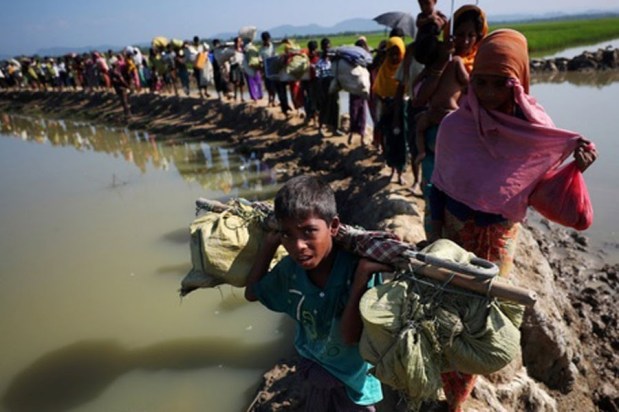
The ethnic cleansing operation carried out by the Myanmar security forces against the Rohinyas since August, last year caused the fastest growing humanitarian crisis that the United Nations has ever faced. Nearly 0.7 million Rohingyas have fled their homes in Rakhine state to take shelter in Bangladesh.

A ray of hope for the solution of the refugee crisis emerged when Myanmar and Bangladesh signed a bilateral agreement on November 23 last year for starting the repatriation process within two months.

The signing of the deal on the basis of 1992 pact has raised many questions as it did not address the issue of citizenship status of the refugees. It just stipulated that Rohingyas will be taken back on the basis of residency. This pact has stated that Myanmar would not take back anyone without proper document and secondly, those who are not willing to go back could not be forced to return to Myanmar.

Since 1993, all documents and identity cards of Rohingya were seized by the government in Myanmar. Their houses were destroyed by the military Junta and there does not exist any sign now to prove their residency.

On November 25, 2017 the first-ever conference of Bangladesh Ambassadors and High Commissioners and Permanent Representative in UN was held in Dhaka where retired Ambassadors were also present. While inaugurating the conference Prime Minister Sheikh Hasina has said, the government wants to resolve the crisis by keeping good relation with neighbouring countries. Foreign Minister Abul Hassan Mahmood Ali in his speech emphasised to seek support from international community to send Rohingyas back to Myanmar.

By now most of the countries have spoken against inhuman treatment meted out against Rohingyas in Myanmar while the United Nations and the Amnesty International have described the atrocities perpetrated against Rohingya as “ethnic cleansing”.

Meanwhile, many leaders from around the world, including Indonesian President and President of Switzerland visited Bangladesh to praise the government for offering shelter to Rohingya refugees.

Another heart-rending incident was revealed recently by an AP report which confirmed the existence of at least five mass graveyards in a village in Rakhaine State.

Now it become clear why Myanmar’s Ministry of Foreign Affairs, headed by Nobel laureate for Peace Aung San Suu Kyi, denied visa to fact-finding mission established on March 24, last year by the UN Human Rights council to investigate human rights abuses in Myanmar.

Significant development recently took place in Myanmar when Bill Richardson, a member of the Advisory Commission on Rakhine state headed by former Secretary General of the United Nations Kofi Annan had resigned on 25 January this year from the committee by saying “the commission was formed as an eye wash to deceive international community.”

Bill Richardson also blamed Aung San Suu Kyi “for furious response” to help releasing two Reuters Journalists while reporting on the Rakhine State. Bill Richardson was of the opinion that “Commission was likely to become cheerleading squared for government policy as opposed to proposing genuine policy changes that are desperately needed to assure peace, stability and development in Rakhine state.”

Richardson was former UN Ambassador of the United States and former Secretary of Energy under President Bill Clinton who travelled to Dhaka, Kabul and Pyongyang as an emissary to release imprisoned Americans in other countries. At his request an American girl Eliadah Mc Cord was released from Dhaka jail after serving four and a half years. Eliadah was convicted for smuggling of heroin.

In December last year, the US government imposed economic sanctions against 52 individuals, including Myanmar Army General Maung Maung Soe for abusing human rights.

China and India – both neighbours of Bangladesh – and Russia are not forthcoming to put public pressure on Myanmar government to resolve the Rohingya crisis. These countries have stakes in Myanmar. Japan has also pledged to strengthen ties with Myanmar. India is eager to develop relations with Myanmar. On September 06 last year, India and Myanmar signed eleven agreements during the visit of India’s Prime Minister Narendra Modi. India is assisting Myanmar armed forces as well.

The plan of sending Rohingya refugees from five transit camps of Bangladesh to Rakhine state of Myanmar without consultation with refugees, was not appreciated by Secretary-General of the United Nations. He is in fact in favour of ‘huge effort of reconciliation between two countries involving United Nations High Commission for Refugees.’ The US government also holds the same opinion on this matter.

Government of Bangladesh may consider direct talks with China and Russia to take initiatives so that Myanmar refugees can be sent back to their homes in Rakhaine State with proper safety and dignity and their citizenship can be restored.

The writer is a former diplomat of Bangladesh. He lives in Virginia and can be reached at – amjad.21@gmail.com

André Malraux supported our Liberation War

André Malraux supported our Liberation War

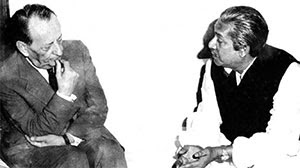
THE PEOPLE of Bangladesh should forever remember André-Georges Malraux, an intellectual giant and humanist of the twentieth century, for his outstanding contribution towards the Liberation War of Bangladesh. André Malraux was given honorary citizenship by Bangabandhu Sheikh Mujibur Rahman, then Prime Minister of Bangladesh, during his visit from 23 – 24 April, 1973.

The French philosopher, novelist, warrior and statesman was also received by President Justice Abu Sayeed Chowdhury, who in praise of Malraux’s humanitarian role said that “Malraux’s love for humanity and cherished ideals never admitted any geographical barrier and his bold voice was heard across the world whenever human dignity was in danger.” Chief of Protocol Arshad-Uz-Zaman, a linguist, organized his trip to Chittagong and Rajshahi.

A civic reception was organized in Chittagong while the Rajshahi University coferred Doctorate of Literature on Malraux. This writer accompanied André Malraux to Chittagong in a helicopter on 21 April. Apart from according civic reception André Malraux had the pleasure of opening art gallery of the Chittagong University where French speaking renowned artist Rashid Choudhury was a professor.
Civic reception was conducted by Dr Mahmud Shah Qureshi, a Professor of Bengali at Chittagong University who was fluent in French. André Malraux had a cruise in Kaptai Lake on a house boat of industrialist and former Minister of Pakistan for industry A. K. Khan, who gave a lunch in his honor on the boat.

Andre Malraux aboard a helicopter in
Chittagong with writer of the article.

On his return to Dacca André Malraux also met a cross section of people from civic society, including freedom fighters who were wounded during the war of liberation. André Malraux met them at Suhrawardy Hospital where he became emotional. This writer also accompanied him to the hospital. André Malraux was also treated to lunch by Foreign Minister Dr.Kamal Hossain at his official residence on 22 Aprilwhere among others, writer-poet Abu Zafar Mohammad Obaidullah Khan, then Joint Secretary, was present.

Bangladesh was his second homeland
In his Rajshahi trip my colleague Esrajul Alam and Akramul Qader (who became Bangladesh Ambassador to the US in 2011 after retirement having served as Ambassador to Thailand and South Africa) accompanied him. In Rajshahi, at a special convocation André Malraux said, “On your own tombs there are perhaps souvenir of the words justice and liberty with which the generals of the revolution had put Europe to flame.” During conversation with this writer Malraux described Bangladesh as his second homeland.

Malraux favoured guerilla war
Monsieur André Malraux in a letter to esteemed Indian leader Jay Prakash Narayan, a Gandhite and revolutionary politician said, “What matters is the military organization of Bangladesh. Either it will accept pitched battles with Pakistan and will be wiped out or it will organize its guerillas and Pakistan will be defeated”. This letter was in response to an invitation to attend international conference on Bangladesh held in New Delhi from 16-17 September of 1971.

Malraux also wrote a letter to President Richard Nixon immediately after Pakistan army massacred the innocent people in Bangladesh to exercise his good offices on Pakistan to stop genocidal killings. Apart from this, Malraux proposed formation of an international brigade to fight for the cause of oppressed people in erstwhile East Pakistan but did not materialized as he was successful in forming such International Brigade during Spanish civil war in 1930 along with European intellectuals and ordinary people as well.

Literary and political career
Novelist, art historian, and statesman who became an active supporter of Gen. Charles de Gaulle and, after de Gaulle was elected president in 1958, (1901 – 1976) served for 10 years as France’s minister of cultural affairs. His major works include the novel La Condition humaine (1933;Man’s Fate); Les Voix du silence (1951; The Voices of Silence), a history and philosophy of world art; as well as Le Musée imaginaire de la sculpture mondiale(1952–54; Museum Without Walls).

As a story goes Novel: Georges by Alexandre Dumas and Macbeth of Shakespeare influenced his mind. As a bohemian Malraux was seen in cinema, theater halls, exhibitions and museums and developed a fascination for music. He also had the privilege of meeting renowned artistes like Picasso, Braque, Mark Siegal with whom he built up friendship over the years. Malraux had a name for entertaining his friends in a restaurant where discussion on arts, music, cinema and politics dominated. Malraux was also contributor to such newspaper which were branded as left-leaning, but incidentally he did not subscribe to views of those newspapers. Politically he was non-committal while absorbed philosophical thinking and giving aesthetic solutions to problems. Gradually he developed friendship with celebrated writes of his time.
André Malraux has had difficult time during his visit along with fiancé Clara Goldschmidt, a Jewish by birth, to Florence in Italy to see rich cultural heritage from where Clara Goldschmidt sent a message to her mother that she was betrothed.
In Saigon Malraux brought a newspaper along with Paul Monin, a lawyer, to denounce colonial attitude of French government. While editing newspaper Malraux wrote a number of articles on occidental culture and left Saigon on 30 December of 1925. During second world war Malraux joined French army and fought in the battle field but captured twice by the enemy. Incidentally, Malraux escaped from the hands of the enemy. He was awarded the French military decoration” Croix de guerre” for his heroic act involving combat operation against enemy.

Malraux’s mistreatment in jail by the French colonial authorities turned him into a fervent anticolonialist and an advocate of social change. While in Southeast Asia he organized the Young Annam League (the precursor of theViet Minh, or Viet Nam League for Independence), became a leading writer and pamphleteer, and founded a newspaper, L’Indochine Enchaînée (“Indochina in Chains”). Crossing to China, he apparently participated in several Chinese revolutionary incidents and may possibly have met Mikhail Borodin, the Russian communist adviser to Sun Yat-sen and then to Chiang Kai-shek.

Malraux was to return to East Asia several times. In 1929 he made important discoveries of Greco-Buddhist art in Afghanistan and Iran. In 1934 he flew over the Rub al-Khali in Arabia and discovered what may have been the site of theQueen of Sheba’s legendary city. Though he was captivated Paris with his exceptional intelligence, lyrical prose, astonishing memory, and breadth of knowledge, it was not generally appreciated that his true life was elsewhere than in the literary salons or on the committee of La Nouvelle Revue Française or at literary congresses.

As fascism, in the shape of Nazism, rose in the 1930s, Malraux recognized its threat and presided over committees pressing for the liberation of the international communists Ernst Thälmann and Georgi Dimitrov from their imprisonment under the Nazis. He simultaneously eschewed a rigid Marxism, participated in the Ligue Nationale Contre l’Antisémitisme (National League Against Anti-Semitism), and in 1935—before the world in general had learned that concentration camps existed—published Le Temps du mépris (Days of Wrath), a short novel describing the brutal imprisonment of a communist by the Nazis. At the same time, he began to write his Psychologie de l’art (3 vol., 1947–50; The Psychology of Art), an activity that bore a relationship to his other interests, for to Malraux aesthetic ideas, like the philosophy of action expressed in his own novels, would always be part of man’s eternal questioning of destiny and his response to it.

Upon the outbreak of the Spanish Civil War in 1936, Malraux went to Spain, joined the Republican forces, and organized for them an international air squadron, becoming its colonel. After flying numerous aerial missions at the front, he visited the United States in order to collect money for medical assistance to Spain. His novel L’Espoir (Man’s Hope), based on his experiences in Spain, was published in 1937. A motion-picture version of L’Espoir that Malraux produced and directed in Barcelona in 1938 was not shown in France until after the country’s liberation at the end of World War II.

His first novel that appeared in 1928 was “Conquerors” followed by another novel: “The Royal way” in 1930.In fact both novels depicted his experiences in Cambodia. In 1933 Malraux was honored with Prix Goncourt for his masterpiece novel: La Condition Humaine. French President General De Gaulle appointed him as Minister for Information in 1945 and he became Minister for Cultural affair in 1958.
Malraux during his long charismatic chequered career associated himself with the field of literature, war, adventure, politics, cinematorgraphy and came into contact with noted personalities like Gorki, Einstein, Mao Tse Dong, Léopold Sedar Senghor—-President and Poet of Senegal and Pandit Nehru.
The world lost a humanist and an intellectual giant at his death at the age of 73 on November 23 of 1976. At his death the Government of Bangladesh commented: “The death of Monsieur Malraux removed from the world scene a literary giant, a humanist par excellence, who championed and fought for the cause of the oppressed. We in Bangladesh will always cherish his memory; his clarion call in defense of our war of Independence was heard around the globe.”

This writer suggests that a road be dedicated in his name where Pakistan’s vanquished army surrendered on 16 December of 1971.

Emerging tourism industry in Bangladesh

Emerging tourism industry in Bangladesh

Published in the Financial Express on November 30, 2017

There is any doubt that tourism has become industry in the 21st century in the world. Tourism has assumed one of the world’s fastest growing industry which has become a major source of income generation and major foreign exchange earner in many countries in the world. The United Nations World Tourism Organisation (UNTO) defines” tours as the activities of the person travelling to and staying in places outside their usual environment for not more than one consecutive year of leisure, business or other purposes.”

As a result, the United Nations World Tourism Organisation (UNWTO) started celebrating the World Tourist Day on September 27 since 1980. Therefore, Bangladesh has observed world tourist day jointly by the Ministry of Civil Aviation and Tourism, Bangladesh Parjatan Corporation and Bangladesh Tourism Board. According to policy guideline of Bangladesh Parjatan Corporation of 2010, tourism still remains at taking off level in Bangladesh. foreign exchange earnings from tourism sector in 2010 stands at 5562.70 million takas, but World Travel and Tourism Council (WTTC) reported tourism contributed to 296.6 billion taka which covers 1.9 per cent of GDP of Bangladesh in 2014. The World Travel and Tourism Council (WTTC), which was established with 32 business magnates in 1990, promotes awareness about economic contribution made by the travel and tourism industry. According to this Council, the travel and tourism industry in Bangladesh directly generated 1281500 jobs in 2012 which represents 1.8 per cent of the country’s total employment.

The government of Bangladesh plans to make middle income country. Therefore, government should pay more attention to develop tourism as an industry to generate foreign currency. Since mid 70’s several new industries have been developed in Bangladesh. Of which garment industry tops the list within couple of years followed by pharmaceutical, fisheries and ceramic industries.

Bangladesh is multiracial country where Muslims, Buddhists, Hindus and Christians have been residing for centuries and leaving behind many archeological sites of interest to witness indeed. Physiography of Bangladesh has been characterized by two distinct features: a broad deltaic plain, a small hilly region in Chittagong and Chittagong Hill Tracts while low hilly region of Sylhet in the north east. Landmass is made up of fertile alluvial low land known as Bangladesh plain.

Bangladesh inherited rich cultural heritage. The present Bangladesh was a part of ancient Bengal where foreign tourists, including Chinese traveller-historian, Fa-Xien, Tao Lin and Huen-Tsang visited Bengal in fourth and seventh centuries and Buddhist monks of ancient China of Tang dynasty visited the ancient Kingdoms of Samatata, Purnavardhana and Karnsuvarna in 627 AD. Detailed records of these Kingdoms are available in the records of the western regions of the Great Tang dynasty prepared by Monk Xuan Zang. Bengal was flourished during rule of Sultan Giyasuddin Azam Shah of Sonargaon. This has been reflected in writing of Ibn Batuta, the Moroccan traveller, who visited Sylhet to meet Great Sufi Hazrat Shah Jalal and Sonargaon. In fact, Ibn Batuta boarded a Chinese Junk at Sonargaon to travel to Java.

The history of present Bangladesh had been subjected to exploitation and suppression since seventh century when the first trade relations developed with Portugal, France, Holland and the British until 1947.Bangladesh was also exploited by Pakistan when she became part of Pakistan after partition in August of 1947.

The gentle alluvial plains of Bangladesh are the product of three mighty rivers of South Asia: The Ganges, the Brahmaputra and the Meghna while it is commonly divided into three major physiographic units — the hilly and foothill region, the coastal belt and the lower Gangetic plain.

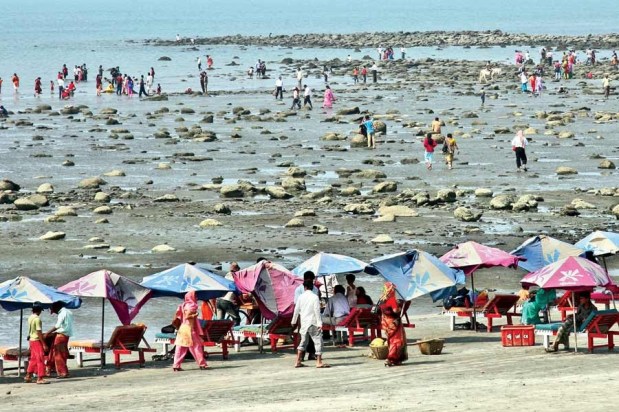
Bangladesh is possibly known to outside world for the longest unbreakable sea beach in the Bay of Bengal in Cox’s Bazar of Chittagong district and the Sundarbans natural forest where Royal Bengal Tigers and spotted Dears are seen. The Sundarbans is having largest amount of bio diversity and largest mangrove forest in the World. UNESCO declared Sundarbans as World Heritage. Another scenic beauty is located at Kua Kata in Patuakhali district. The sea beach at Kuakata is sandy but tourist can have rare view of sunrise and sunset over the Bay of Bengal. Story goes that Rakhine settlers were driven out of Arakan by the Mughals in eighteenth century who settled in KuaKata. They had begun digging on the seashore to get drinking waters. According to Firoz Mahmud, who served as Deputy Keeper of Bangladesh National Museum, discovery of Northern Black Polished Pottery leads to the clue to the earliest known archaeological site of Iron Age in Bangladesh in Mahasthangarh in Bogra while archeological excavation in Mainamati in Comilla provides history of south-eastern Bengal from the seventh to the twelfth century AD.

Possibly many people in Bangladesh are not aware of historical place in Dinajpur district which goes back to Pal and Sen dynasties. Tapan Dighi is situated in the village Tapan. There is myth that King Laxman Sen dug this lake while panoramic view is seen from Sarong Bari forest. Dinajpur Rajbari and Boll Ma Kali temple are worth seeing places in Dinajpur. Except tea gardens in Sylhet tourist may also find interest to see ornate tomb and mosque of Hazrat Shah Jalal, the tiny museum of Rajas containing belongings of local folk poet Hasan Raja and 3-doomed gateway stands at 17th century Shahi Edgah and a huge open-air hilltop mosque built by Emperor Aurangzeb. The sixty Dome mosque which is located at Bagerhat in Khulna which is known as 15th century Islamic edifice. It was established during Tughlaq dynasty in India. UNESCO also declared it as World Heritage. Mausoleum of Fakir Lalan Shah at Seuria in Kushtia is worth seeing place, particularly during Baul songs competition. A great mystic poet and lyricist presented numerous devotional and spiritual songs who died in 1890.A research center was built near the Mausoleum. Rabindranath Tagore collected his many songs and published in Bangla calendar year 1332.

The tourism industry in Bangladesh should be developed as it is lagging behind in competition with neighbouring countries like Nepal and India.
A sense of participation by Bangladeshis themselves in promoting tourism can hardly be overemphasised. Officials at the Ministry of Foreign affairs, the External Resources Division and the Ministry of Labour should be encouraged to know history of Bangladesh and acquaint themselves with historical places in promoting to foreigners during their postings in Bangladesh missions. These officials in fact are totally ignorant of rich cultural heritage of Bangladesh. While serving in Bangladesh Civil Service and Foreign Affairs Academy on deputation from the Ministry of Foreign affairs this writer introduced tours for the newly recruited foreign service officers in 1992. Foreign Service Academy was merged with BSC academy in 1985 by President Ershad on personal grudge against the then principal of Foreign Service Academy. Now Foreign Service Academy has got its status independent again.

There is hardly any need to emphasis to develop infrastructures linking Dhaka, Chittagong, Khulna and Rajshahi with historic places in Bangladesh to facilitate foreign tourist to travel comfortably. Equally important suggestion is that hotel management should consider in consultation with Bangladesh authorities to open casinos and big swimming pool in first class hotels. A big birds cage should be placed along the swimming pools. In this connection, this writer repeat what Somphot Piyaui, Managing Director of 5 star Dusi Thani hotel in Bangkok and proprietor of hundred trolley boats for fishing in Thailand, confided to this writer in first week of March of 1977 while he was on a visit to Bangladesh to open new hotel next to Hotel Intercontinental and joint venture in fishing in the Bay of Bengal to stop piracy by fishermen from Thailand. This writer was told that Malaysia, Egypt and a few other Muslim countries allow Casinos in hotels for foreign tourists which this writer witnessed in Malaysia during diplomatic assignment from 1977 to 1981. Another interesting suggestion came from him was that hotel management should consider importing “moving flower” which means young Thai girls to serve guests in the hotels. Somphot was of the opinion that people from Arab countries would rush to Bangladesh being a Muslim country instead of going to Thailand or other country. That would have opened door for petro-dollar to fly to Bangladesh. Incidentally, Minister of Civil Aviation and Tourism Air-Vice Marshal AG Mahmud, a diehard Muslim, rejected the proposal. This writer was the host officer to two-member delegation from Thailand led by Somphot Piyaui.

Another suggestion is that authorities should ensure with the cooperation of police authorities the safety of tourists in Cox’s Bazar, Kuakata, the Sunderbans and Coral Island in St. Martin in particular. This has become all the more priority in view of series of murder of foreigners, including staff of foreign embassy. The report released by New York based Human Rights watch in July 2017 that at least ninety people were victims of enforced disappearances in 2016 while countless extrajudicial killings and secret detention in Bangladesh placed Bangladesh in an adverse position. Twenty people, mostly foreigners had been killed in an attack on a café at Holey Artisan Bakery in Dhaka on 2 July of 2016 is another adverse circumstance which has caused negative impact on foreign tourist to visit Bangladesh. Therefore, law and order need to be improved in first place to open door to tourists to earn foreign exchange.

Remembering Nurjahan Begum

Published in the Financial Express on May 31, 2016

Born in East Bengal in 1925 during the British rule of India, Nurjahan Begum began her education in Calcutta in mid 40’s when her father Mohammad Nasiruddin brought out weekly journal Sawgat to inspire the writers and poets from Muslim community. Having graduating from Lady Brabourne College of Calcutta in 1944, Nurjahan Begum developed her  writing skills by contributing to Sawgat and helping her father in running the affairs of the journal. Sawgat earned fame in India by that time by introducing colourful pictures of events along with news. My father was its regular subscriber and I had the opportunity of reading those issues at our home in Kumarkhali.

Mohammad Nasiruddin brought out Weekly Begum from Calcutta (now spelt as Kolkata) to inspire the Muslim women to join the literary circle in July of 1947. Editor of the Begum was our legendary Poet Sufia Kamal. When Poet Sufia Kamal had left for Dhaka after partition of British India in August 1947 along with her husband Kamaluddin Ahmed, Nurjahan Begum was made the editor of Weekly Begum. Weekly Begum also followed the footprints of Sawgat by publishing photographs of women writers.
During her stay in Calcutta, Nurjahan Begum came in touch with Rebel Poet Kazi Nazrul Islam. Nasiruddin gave the poet a room in their house to lighten his financial crisis.
In Calcutta, Nurjahan Begum was involved as a volunteer in refugee camps during Hindu-Muslim riot in 1946.

The family of Nasiruddin moved to Dhaka in 1950 and settled at Sharat Gupta Road in Narinda. The weekly Begum began to be published from Patuatuli of old Dhaka. The weekly was instrumental in establishing women of our society as writers and poets. Begum club was established in 1954 and immediately became a hub for social and cultural activities of women in Dhaka. Poet Sufia Kamal was its adviser.
Nurjahan Begum was involved in social activities in independent Bangladesh as can be seen from her involvement at Narinda Mahila Samity as well as Wari Mahila Samity.
Nurjahan Begum was married to Rokonuzzaman Khan in 1952, who was feature and mufassil page editor of Daily Ittefaq. They were happily married and had two daughters: Flora Nasreen Khan (Shathi) and Rina Yasmin (Bithi).

Incidentally, I met Nurjahan Begum in November of 1962 when we were travelling to different parts of Sylhet along with a 18-member team of Central Kochi-Kachar Mela headed by founder-director of Central Kochi-Kanchar Mela Rokonuzzaman Khan. That was a memorable trip.

My family felt honoured by the invitation of Rokonuzzaman Khan at Sarat Gupta Road residence of his father-in-law where Nurjahan Begum entertained us on the eve of our departure to join my first diplomatic assignment in Bangladesh embassy in Kuala Lumpur, Malaysia in 1977.

Following the death of Rokonuzzaman, Nurjahan  Begum was invited by Central Kochi-Kanchar Mela to participate in its different functions. Of these functions this writer, as Joint Director of Central Kochi-Kanchar Mela, invited Nurjahan Begum to join the 46th anniversary of Central Kochi-Kanchar Mela on October 05, 2002 where she gave an inspirational speech for the members of Central Kochi-kanchar Mela to march forward with the ideals of Rokonuzzaman Khan, who was popularly known as Dadabhai. Minister Khurshid Jahan Haque presided over while Barrister Mainul Hosein was one of the special guests.

Nurjahan Begum also participated as a special guest on the occasion of 48th founding anniversary of Central  Kochi-Kanchar Mela while the chief guest was Mr. Morten Giersing, Representative of UNICEF in Bangladesh. Nurjahan Begum was invited by Central Kochi-Kanchar Mela on the occasion of its 50th founding anniversary to receive an award on behalf of Rokonuzzaman Khan.

Nurjahan Begum allowed this writer and artist Hashem Khan to bury Rokonuzzaman Khan inside the premises of Central Kochi-Kanchar Mela at Shegun Bagicha. Rokonuzzaman died in December of  1999 at the age of 74.

Nurjahan Begum was the chief guest at a function related to media and women organized by Bangladesh Centre for Development of Journalism and Communication at the Planning and Development Academy on October 24, 2003. It was presided over by Dr. Geeti Ara Nasrin. Here Nurjahan Begum emphasised on commitment and professionalism to carry out duties in the media. She pointed out that weekly Begum could complete its 56 years of publication amid many hindrances because of unwavering professional zeal. She said the history of women journalists in the country was quite long and urged the women in media to go ahead with a modern outlook with the changing needs of time. Nurjahan’s commitment to Weekly Begum was tremendous as had been reflected in 2003 when she was confronted with financial crisis. She had sought this writer’s assistance to pay back workers in printing press. I gave ten thousand taka to pay back workers which she paid back later. That showed her commitment to her journalistic career.

Weekly Begum is published now on the occasion of Eid only. Nurjahan Begum declared Mohammad Nasiruddin Smriti Bhavan as trust. She was awarded with Rokeya Padak in 1997 and Ekushey Padak by Bangladesh government in  2011.

Nurjahan Begum had been suffering from respiratory problem during winter for a long time. She was admitted to Square Hospital on May 04 with respiratory problem along with pneumonia and doctors gave up hope as this writer was told by her daughter Rina Yasmin. Nonagenarian Nurjahan Begum left this world on May 23 leaving behind two daughters, grand children and scores of admirers to mourn her death. May Allah grant her eternal peace.

Poet-journalist Kazi Nazrul Islam

The people of the sub-continent, particularly Bangladesh, owe much to legendary revolutionary poet Kazi Nazrul Islam towards liberation of the sub-continent from the clutches of the British by relentless struggle through his powerful writings. Had the sub-continent not been liberated from the British the scope of establishing Bangladesh would remain a dream. Kazi Nazrul Islam was the only poet who travelled to nook and corner of East Bengal before India was partitioned in 1947. Nazrul married a woman by the name Pramila of Comilla. Nazrul also studied in Darirampur High School in Trishal of Mymensingh of East Bengal before joining the British army in Karachi in 1917. This school has been turned into Jatiya Kabi Kazi Nazrul Islam University in honour of this legendary poet.

After serving the British army during the World War I, Kazi Nazrul Islam established himself as a journalist in Calcutta. He assailed the British Raj in India and preached revolution through his poetic works, such as Bidrohi (The Rebel) and Shikol Bhangar Gaan (The Song of Breaking Chains) as well as publication of the Dhumketu (The Comet). Nazrul published a bi-weekly magazine: Dhumketu in 1922. As its editor he wrote against the oppression and injustice of the British rulers. The magazine practically evoked sharp reaction from the British. While attracting a considerable readership, Nazrul was prosecuted on a sedition charge. He did not defend himself, but gave a long statement explaining his position, which was later published under the title Rajbandir Jabanbandi (Confessions of the Royal Prisoner). The statement is a piece of excellent literature. One is tempted to quote here: “I am on trial for sedition. The Royal Crown is pitted against the Comet’s flame. The accuser is King, scepter in hand; the accused is truth, justice in hand. The King is supported by his salaried servants; My Support is ever-awake God, who is truth eternal, and the King of Kings and the judge of judges. The King’s voice, however, is but a bubble, but mine is a limitless ocean, for I am Poet sent by God to express unexpected truths and to give shape to shapeless creation…..India is now in bondage. This is undiluted truth. But under the present administration, it is sedition to call a slave a slave and to describe wrong a wrong. Can such administration last long? Am I guilty simply because the anguished call of captive truth found expression in my voice? But mine is but the agonized cry of the oppressed universal soul. This cry cannot be suppressed by coercing me. It will ring again somebody else’s throat.” Indeed, the quality of the efforts that Nazrul put in to bring out a standard bi-weekly can be gauged from the memoirs of renowned writer Achintya Kumar Sengupta, who wrote: ‘on Saturday evenings, we would, like many others, wait at Jagubabu’s market for the hawker to come with his bundle of Dhumketu. As soon as he reached scramble started to reach for the paper, perhaps we thought the editorial pen had dipped in blood and not in ink. What a language? They were not written to be read alone or read once.” This reflects how powerful pen he used to hold.

While in jail Nazrul went on hunger strike. He resisted the requests of many friends to give up hunger strike. Poet Rabindranath Tagore whom Nazrul Islam treated as Guru, sent a telegram to Nazrul in jail, saying; ‘give up the hunger strike; our literature claims you.’ Nazrul Islam finally broke the hunger strike and got released from the jail on completion of one year term.

The next journalistic venture of Nazrul Islam was the publication of a weekly entitled Langal (The Plough) in 1925. This weekly projected the viewpoints of the Labor Swaraj Group of the Indian National Congress. This group was committed to the independence of India on the theory of equality of all men and women in political, social and economic terms. As many as 16 issues of this weekly were brought out. Langal was later changed into Gana-vanee (The Voice of the Masses). When Nazrul was editing the paper communal riots were order of the day in 1926. He wrote editorials voicing against religious fanaticism and underscoring the need of communal harmony in the country.

Kazi Nazrul Islam joined a daily newspaper called Nava Jug (New Age) of the distinguished lawyer-politician A K Fazlul Huq as its joint editor with Comrade Muzaffar Ahmad as Editor. Nazrul Islam proved his worth and competence in writing editorial columns as well as in copy-editing news and features. The style of the newspaper was new and the paper enjoyed considerable popularity. Founder of Krishak Praja Party A K Fazlul Huq, who was a practicing lawyer, founded the newspaper to project his image, while Nazrul Islam and Comrade Muzaffar Ahmad tended to disseminate the ideology and the message of the social revolution. Therefore, the owner of the newspaper and its editors were pole apart in their purposes. True, the cause of the toiling peasants and workers was editorially endorsed and projected. As was expected, the views of the newspaper incurred the displeasure of the British government. The newspaper ceased publication following decision of the British to forfeit the security deposit. The decision of the British government reflected a colonial trend of silencing the free press.

A K Fazlul Huq was persuaded to deposit a large amount of money to resume the publication as demanded by the administration, but Nazrul Islam refused to stay with the newspaper as his ideology and views were no longer in harmony with the desire of A K Fazlul Huq. Fazlul Huq resumed the publication of Navo Jug in 1935. Kazi Nazrul Islam had no option but to join the newspaper as its Chief Editor because he was passing through financial crisis and mental agony caused by the death of his beloved son: Bulbul, apart from partial paralysis  of his wife: Pramila Nazrul.

With virtually no experience and education in journalism, Kazi Nazrul Islam had left an indelible mark in journalism, while espousing the ethos of a people-centred, secular and anti-establishment journalism in this part of the world. My article on Nazrul and anti-establishment journalism was included in the book on Nazrul Islam published from Halle in Germany in 1998. This was first publication on Nazrul from Germany. The book was edited by Professor Dr Hans Harder who obtained Ph D on Bankim Chandra Chattopadhay’s  Shrimad Bhagavad Geeta. He speaks Bengali and writes as well. When Poet Rabindranath Tagore was in  the midst of popularity  in Bengali literature Kazi Nazrul Islam was accorded civic reception for his courageous stand against the British at Albert Hall of Calcutta on December 15 of 1929. Acharya Profullo Chandra Roy presided over and the keynote speaker was another revolutionary leader of Bengal Subhash Chandra Bose. The chairman of the reception committee was S Wajed Ali, another Bengali writer of repute, nana of Rokanuzzaman Khan, Dada Bhai of Kachi-Kanchar Mela. Liberation of the British India from the clutches of the British owes to Subhash Chandra Bose and Kazi Nazrul Islam, among others.

Published in the December 19, 2015 Financial Express.