Dilly-dallying with repatriation of Rohingya refugees

Dilly-dallying with repatriation of Rohingya refugees

Published in the Financial Express on February 17, 2018

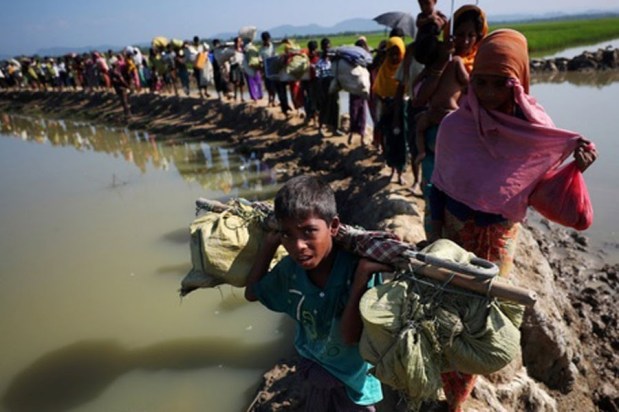
The ethnic cleansing operation carried out by the Myanmar security forces against the Rohinyas since August, last year caused the fastest growing humanitarian crisis that the United Nations has ever faced. Nearly 0.7 million Rohingyas have fled their homes in Rakhine state to take shelter in Bangladesh.

A ray of hope for the solution of the refugee crisis emerged when Myanmar and Bangladesh signed a bilateral agreement on November 23 last year for starting the repatriation process within two months.

The signing of the deal on the basis of 1992 pact has raised many questions as it did not address the issue of citizenship status of the refugees. It just stipulated that Rohingyas will be taken back on the basis of residency. This pact has stated that Myanmar would not take back anyone without proper document and secondly, those who are not willing to go back could not be forced to return to Myanmar.

Since 1993, all documents and identity cards of Rohingya were seized by the government in Myanmar. Their houses were destroyed by the military Junta and there does not exist any sign now to prove their residency.

On November 25, 2017 the first-ever conference of Bangladesh Ambassadors and High Commissioners and Permanent Representative in UN was held in Dhaka where retired Ambassadors were also present. While inaugurating the conference Prime Minister Sheikh Hasina has said, the government wants to resolve the crisis by keeping good relation with neighbouring countries. Foreign Minister Abul Hassan Mahmood Ali in his speech emphasised to seek support from international community to send Rohingyas back to Myanmar.

By now most of the countries have spoken against inhuman treatment meted out against Rohingyas in Myanmar while the United Nations and the Amnesty International have described the atrocities perpetrated against Rohingya as “ethnic cleansing”.

Meanwhile, many leaders from around the world, including Indonesian President and President of Switzerland visited Bangladesh to praise the government for offering shelter to Rohingya refugees.

Another heart-rending incident was revealed recently by an AP report which confirmed the existence of at least five mass graveyards in a village in Rakhaine State.

Now it become clear why Myanmar’s Ministry of Foreign Affairs, headed by Nobel laureate for Peace Aung San Suu Kyi, denied visa to fact-finding mission established on March 24, last year by the UN Human Rights council to investigate human rights abuses in Myanmar.

Significant development recently took place in Myanmar when Bill Richardson, a member of the Advisory Commission on Rakhine state headed by former Secretary General of the United Nations Kofi Annan had resigned on 25 January this year from the committee by saying “the commission was formed as an eye wash to deceive international community.”

Bill Richardson also blamed Aung San Suu Kyi “for furious response” to help releasing two Reuters Journalists while reporting on the Rakhine State. Bill Richardson was of the opinion that “Commission was likely to become cheerleading squared for government policy as opposed to proposing genuine policy changes that are desperately needed to assure peace, stability and development in Rakhine state.”

Richardson was former UN Ambassador of the United States and former Secretary of Energy under President Bill Clinton who travelled to Dhaka, Kabul and Pyongyang as an emissary to release imprisoned Americans in other countries. At his request an American girl Eliadah Mc Cord was released from Dhaka jail after serving four and a half years. Eliadah was convicted for smuggling of heroin.

In December last year, the US government imposed economic sanctions against 52 individuals, including Myanmar Army General Maung Maung Soe for abusing human rights.

China and India – both neighbours of Bangladesh – and Russia are not forthcoming to put public pressure on Myanmar government to resolve the Rohingya crisis. These countries have stakes in Myanmar. Japan has also pledged to strengthen ties with Myanmar. India is eager to develop relations with Myanmar. On September 06 last year, India and Myanmar signed eleven agreements during the visit of India’s Prime Minister Narendra Modi. India is assisting Myanmar armed forces as well.

The plan of sending Rohingya refugees from five transit camps of Bangladesh to Rakhine state of Myanmar without consultation with refugees, was not appreciated by Secretary-General of the United Nations. He is in fact in favour of ‘huge effort of reconciliation between two countries involving United Nations High Commission for Refugees.’ The US government also holds the same opinion on this matter.

Government of Bangladesh may consider direct talks with China and Russia to take initiatives so that Myanmar refugees can be sent back to their homes in Rakhaine State with proper safety and dignity and their citizenship can be restored.

The writer is a former diplomat of Bangladesh. He lives in Virginia and can be reached at – amjad.21@gmail.com

Coldest-ever weather and Trump’s chilling twitter message!

Coldest-ever weather and Trump’s chilling twitter message!

Published in the Financial Express on January 6, 2018

The coldest-ever weather and President Donald Trump’s twitter message hinting at pursuing a coercive foreign policy in the days ahead heralded the new year of 2018 for the United States.

In his twitter message on January 02 Trump apparently meddled in the internal affairs of Iran in the wake of the on-going protests by the Iranian people against the ruling regime. He has given full support to anti-government protests throughout Iran blaming former President Obama’s policies, saying corruption of Iran’s leadership has been fueled by the benefits of the nuclear deal negotiated by Obama administration. He also suggested he could compel US allies to reimpose sanctions against Iran. As a matter of fact, nuclear deal with Iran is an international agreement among five permanent members of the UN Security Council plus Germany. Therefore, it will not affect if United States goes alone against the deal.

At a press briefing, Trump’s Press Secretary Sarah Sander on January 03 said that the White House’s unyielding support for the demonstrators contrasted to the more reticent approach taken by Obama administration in 2009 during protests that became known as the Green Movement. Tens of thousands of Iranians participated in demonstrations in Iran to demand higher wages and to end corruption, apart from questioning the wisdom of Iran’s foreign policy in the Middle East where millions of dollars are being spent. By now, 23 Iranians got killed and hundreds have been put behind the bars. However, President Hassan Rouhani of Iran criticised some actions of the government, which indicated that some of the demands of the protesters were legitimate.

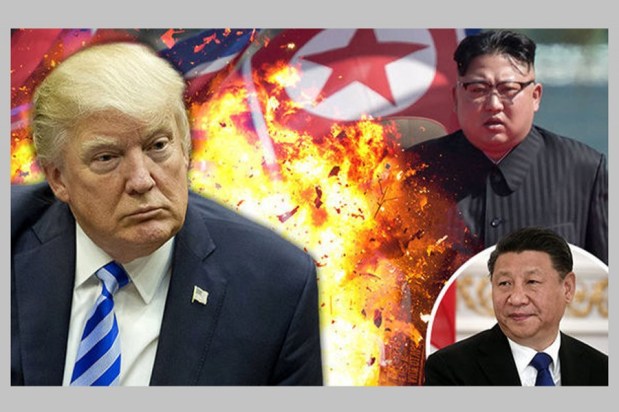
Another drama has unfolded over the issue of nuclearisation of North Korea under the very nose of President Trump. North Korean Leader Kim Jong Un has caused a stir the other day by saying that he had the nuclear button on his desk and that the entire United States was within its range, but he would not initiate attack unless North Korea faced any threat of attack. On the other hand, President Donald Trump in a twitter message on January 02 said that he too has his nuclear button on his desk, and it is more powerful and the button works. In fact, US President has no button on his desk unless he is authorized by the Congress to declare war.

Meanwhile, in a televised New Year message Kim Jong Un has made a conciliatory move to have dialogue with South Korea, an ally of the United States in Korean Peninsula. Presidential spokesperson from South Korea welcomed the proposal to hold talks about the Winter Olympic to be held in South Korea. Winter Olympic would be held in Pyeongching, a city about 50 miles off from the border dividing the Korean peninsula.

A dramatic development has taken place on another front. This relates to Pakistan. President Trump declared to cut foreign aid to Pakistan, amounting to $255 million, to punish Pakistan for the alleged ‘deceit and fraudulent tactics’ adopted by it with regard to terrorist organizations. Trump said “the United States had foolishly given Pakistan more than $33 billion in aid over the last 15 years, and they have given us nothing but lies and deceit, thinking of our leaders as fools. They gave safe haven to terrorists we hunt in Afghanistan….” Pakistan, on the other hand, said the remark by US leadership was completely incomprehensible as it contradicted facts.

Since President Trump’s declaration of Jerusalem as the capital of Israel, reaction from around the world has gone wild against him. As of now, only Guatemala has agreed to go along with the US decision to shift its embassy from Tel Aviv to Jerusalem. Now, President Trump in a twitter threatened to cut aid to Palestine in view of President Mahmood Abbas’s threat to disassociate Trump administration from negotiation on the Palestine-Israel issue. While threatening to cut aid, Trump said there was no reason why Washington should make any of the ‘massive future payments’ when the Palestinians were no longer willing to talk peace. It may be recalled that Mahmood Abbas said in Paris on December 23 that Palestinians would not accept any peace plan from the United States, while French President Macron declared that the US had marginalized itself in Israel-Palestine conflict. Having seen US President’s coercive diplomacy, Israel is making another unilateral move towards tightening its grip on Jerusalem. Israeli Parliament enacted a law on January 02 in this regard, while Israel’s ruling party unanimously voted to apply the law to Jewish settlers in the West Bank. PLO secretary general Saeb Erekat, who was the main negotiator with Israel in recent days, criticized President Trump of dictating negotiation.

Meanwhile, US ambassador to the United Nations Nikki Haley threatened to slash funding to the United Nations Palestine Refugee Agency (UNRWA) if the Palestinians refused to engage in peace negotiations. Established in 1949, UNRWA has been providing financial assistance to Palestinian refugees in Lebanon and Jordan, in particular. It is funded by voluntary contributions of the member countries of the UN as well as of individuals.

Trump will visit Asia when China is rising and North Korea intransigent

Trump will visit Asia when China is rising and North Korea intransigent

Published in the Financial Express on October 31, 2017

Donald Trump will undertake his first visit to Asia, as the President of the USA, from November 03 to November 14. As announced by the White House, President Trump, accompanied by First Lady Melanie, will make a 12-day visit to Japan, South Korea, China, Vietnam and the Philippines to persuade the leaders of these countries to put pressure on North Korea to curb its nuclear weapons programme and make the region a demilitarised zone.

Trump will apparently face difficulties in pursuing this goal in view of his past stance. He exchanged   inflammatory insults with North Korean leader  Kim Jung-Un and criticised President of South Korea Moon Jae-in for his conciliatory gesture towards North Korea and his readiness to hold dialogue with his northern neighbour. Trump threatened to cut trade deal with China which has already backfired.

Kim Jung-Un did not abandon nuclear weapons programme despite new economic sanctions imposed by the UN on North Korea following its sixth launching of nuclear device in the first week of September.

Foreign policy of North Korea took the present shape following NATO’s bombing of Serbia in 1999, in total disregard of the 1995 Dayton agreement to put an end to the three-and-a-half-year-long Bosnia war. Kosovo declared independence after the attack of Serbia by NATO with the instigation of the United States. Germany also joined in the chorus for the first time after its constitutional court allowed its armed forces in 1993 to participate in fighting outside Germany. The negative precedent set by NATO in Kosovo makes North Korea distrust the United States.

Another negative example was set by NATO and US when they bombed Libya as the Libyan leader Muammar Qaddafi gave up nuclear programme.

Against this backdrop, former President Jimmy Carter, who is now 93, has expressed his willingness, during talks with Park Han-Shik, a Professor of International Relations at Georgia University, in September this year, to mediate between the United States and North Korea to avert a nuclear war and save the world from any catastrophic disaster. President Jimmy Carter had been to North Korea in 1994 to negotiate with Kim Il-sung, grandfather of Kim Jung-Un, as an envoy of President Bill Clinton to shore up denuclearisation talks. In 2010, Jimmy Carter again visited North Korea to negotiate release of a jailed American.

In spite of a request by the White House to keep his mouth shut, President Jimmy Carter in an article to the Washington Post on October 04  wrote  that, the North Korean situation is the “most existential threat to the world peace and ask to implore Washington and Pyongyang to find a peaceful way to ease the escalating tension and reach a lasting peaceful agreement.” Jimmy Carter obviously wants to finish the task of denuclearisation of the Korean Peninsula without having a second Korean war.

During his Asian tour, President Trump will also attend Asia-Pacific Economic Cooperation (APEC) summit in Vietnam, apart from the summit of the Association of South East Asian Nations (ASEAN) in Manila.

ASIAN SCENARIO: Meanwhile, Trump has threatened to walk away from  the 2015 international nuclear agreement with Iran. If he carries out his threat, it will be a disaster indeed. Iran would be placed on carte blanche to resume nuclear activities without constraint. Trump’s national security team, including Secretary of State, Defence Secretary and Chairman of Joint Chief of Staff, supported the 2015deal. Meanwhile, Iran has expanded its sphere of influence in Iraq after the fall of Saddam Hussein, Syria, Lebanon and to some extent in Bahrain where majority population are Shiites. Russia is assisting Iran while Turkey, only Muslim country in NATO alliance, also joined hand with Iran following declaration of vote for independence by leader of Kurdish autonomous region in North of Iraq.

In Asia, China has become leading military and economic power. By renewing old Silk Road diplomacy China has expanded its sphere of influence in Asia. Similarly, Russia has also joined hands with China in the region, apart from Russia’s Eurasian economic union.

As for Afghanistan, President  Trump’s strategy would not succeed by deploying more troops. Cooperation between Pakistan and Afghanistan is a sine quo non-to stop Taliban rebellion. Over the last 16 years, war in Afghanistan has become the longest and costliest operation of the army of the United States. By now major portion of Afghanistan is under control of Taliban.  Quadrilateral Coordination Group, which comprises of Afghanistan (including Taliban), China, Pakistan and United States, should be revived to pave the way for peace in Afghanistan.

It will be interesting to watch the development in Asia following the visit of the continent by President Trump, against the backdrop of a tense situation in the Korean peninsula over the nuclear programme of North Korea.

Humayun Kabir, a consummate diplomat

Published in the Weekly Holiday – August 4, 2017

Distinguished diplomat Ambassador Humayun Kabir, scion of the renowned Syed Mohallah of Fakirhat in Bagerhat district, has had a distinguished career as a student of Dacca University in its heyday.

During his student career in English department of Dacca University fellow students from different colleges and faculties of Dacca University flocked to English department to listen to debates participated by Humayun Kabir. His presentation and intonation in the debate was charming and illuminating indeed, apart from his handsome manly figure.
According to Ambassador Arshad-Uz Zaman, who served as first Director-General of External Publicity Division in the Ministry of Foreign Affairs and Assistant Secretary General of OIC in Jeddah,Humayun Kabir entered competitive examination in 1961 and came out with flying colour and completing his training in Fletcher School of Diplomacy in the United States, he joined Pakistan Foreign Service and was posted at Paris and London.

Ambassador Humayun Kabir also obtained post-graduation from Harvard University in 1962. Although this writer has had privilege to serve under him about two years in the External Publicity Division of Bangladesh Foreign Ministry as Assistant Director, but I met him in Pakistan Foreign office in Islamabad in December of 1970 in examination hall where I was among the thirty examinees for a post of Information officer in CENTO. Humayun Kabir’s assignment there was as invigilator. At that time he was serving as Deputy Chief of Protocol.

Having arrived in Bangladesh from Pakistan Humayun Kabir replaced Ambassador Faruk Ahmed Chowdhury as Chief of Protocol in 1972.Shortly Humayun Kabir replaced Arshad-Uz Zaman as Director General of External Publicity Division. During the period of 1972-1973 Bangladesh was humming with hectic days as many foreign dignitaries and foreign journalists were arriving to see charismatic leader Bangabandhu Sheikh Mujibur Rahman and problems being faced following massive destruction of the country during the Liberation War. Ambassador Humayun Kabir turned out to be the best public relations personality in handling the international media personalities.

War ravaged country and unfounded rumour
Apart from reconstruction of the war ravaged country Bangladesh was faced with canards of killing Bihari on massive scale and famine in Bangladesh as a result of food crisis. Editor V.G Verghese of the Hindustan Times did not spare us from this canard. Both Ambassador Arshad-Uz Zaman and Ambassador Humayun Kabir in collaboration with Chief of Army Staff Maj-General K.M. Shafiullah briefed foreign journalists and took them to Bihari camps at Mohammadpur in Dhaka city. This writer undertook writings on the problem of Biharis which the Morning News carried out on 30 June of 1972, apart from briefing foreign journalists. Having published his impression V.G Verghese returned my article. His article which appeared on 8 July of 1972 mentioned that “Mujib government’s approach to it was a sad departure from the high idealism and humanitarianism that surrounded the birth of this new nation.”

This writer was assigned by Director-General Humayun Kabir to meet the needs of visiting foreign journalists, apart from organizing appointments with hierarchy, including Prime Minister Sheikh Mujibur Rahman, Vice-Chairman of Planning commission, Food secretary and Home secretary.

Andre Malraux and Robert Payne
I would like to narrate briefly visits of three important personalities to Bangladesh. One was an intellectual giant and humanist of the century Andre Malraux of French philosopher, Novelist, warrior and Cultural Minister , another celebrated writer and novelist Robert Payne and Deputy Foreign Editor of London Times Richard Harris .
I was assigned to accompany Andre Malraux to Chittagong where he was given civic reception following according honorary citizenship by Bangabandhu Sheikh Mujibur Rahman for his contribution towards Bangladesh Liberation War. Industrialist A.K. Khan entertained Andre Malraux at Kaptai Lake at his Yacht while Foreign Minister Dr.Kamal Hossain threw a gala dinner party in his honour at his official residence.

I spent two weeks with Robert Payne who interviewed Prime Minister Sheikh Mujibur Rahman. Robert Payne also interviewed Professor Nurullah of Dacca Engineering and Technology University which was previously named after Nawab Ahsan Ullah. Nurullah recorded on film the massacres of students and teachers at Jaganath Hall of Dacca University.

This writer accompanied Robert Payne in his meeting with eminent nuclear scientist Dr. Anwar Hossain, who later on became Chairman of the Bangladesh Atomic Energy Commission, and Deputy Chief of army Major General Ziaur Rahman.

I also accompanied with Robert Payne to meetings with different personalities, apart from visiting Kushtia which was described as thousand My Lai by World Bank and prison cell of Dhaka central Jail where Sheikh Mujibur Rahman spent most of his time during Pakistan regime. Major-General Ziaur Rahman, however, met Robert Payne at the office of Director-General Humayun Kabir in the Ministry of Foreign affairs. As directed by Foreign Secretary Enayet Karim I handed over book: Massacres by Robert Payne to Deputy Chief of Bangladesh army Major-General Ziaur Rahman two days ahead of meeting. Deputy Foreign Editor of London Times has had meeting with Prime Minister Sheikh Mujibur Rahman while he was travelling to Gopalganj by helicopter and Professor Abdur Razzak of Dhaka University, an intellectual giant and Foreign Secretary Enayet Karim and Director-General Humayun Kabir as well. On his return to London Richard Harris wrote a letter to Director-General Humayun Kabir in which he praised my assistance in organizing meetings and trips.

My assigned booklets
I was assigned to prepare two important booklets, “Bangabandhu Speaks” and “Operation: Death and Destruction” to handle war crime trial. The last booklet was withdrawn following tripartite agreement which was signed in New Delhi on 9 April of 1974 among Bangladesh, India and Pakistan. Two more books, each on Road to Freedom and Geography of Bangladesh in collaboration of Geography department of Dacca University were published during the tenure of Director-General Humayun Kabir. Incidentally, Mr. Humayun Kabir became speech-writer of Foreign Minister Abdus Samad Azad.

During the visit of Dr. Henry Kissinger, Secretary of State under President Ford, to Bangladesh from 31 October to 1 November of 1974 a large number of journalists arrived to cover his visit. Director General Humayun Kabir hosted a dinner for the visiting news media at Hotel Intercontinental. As host officer I had to check preparation and receiving journalists. And for Humayun Kabir it was a grim situation for he lost his father on the same night while the party was still in progress.

Prime Minister of Pakistan Zulfiqar Ali Bhutto visited Bangladesh in 1974 at the invitation of Prime Minister of Bangladesh Bangabandhu Sheikh Mujibur Rahman.Prime Minister hosted dinner in honour of Pakistan’s Prime Minister at Bangabhavan.And Humayun Kabir had the opportunity to demonstrate his brilliancy when he was asked by the Prime Minister to translate his after dinner speech. Humayun Kabir did it instantly. The audience including the visiting Prime Minister was spell bound at the way Humayun Kabir rendered the Bengali version of the speech in eloquent and articulate English. In 1974 Director-General Humayun Kabir possibly did not sleep well at night.

On many occasion this writer received telephone calls at midnight from Director-General Humayun Kabir about arrangement made for foreign correspondents to fly to North Bengal to see famine situation. On one occasion this writer joined them on helicopter flight to Khulna.

He presented credentials wearing Lungi, Panjabee and cane hat
Ambassador Humayun Kabir had established stunt in diplomatic arena by presenting credential to Imam Khomeini, supreme leader of Islamic Republic of Iran, as Bangladesh Ambassador. Instead of wearing western suit Humayun Kabir presented credential in 1979 wearing Lungi, Panjabee and cane hat to Imam Khomeini while presetting his credential to UN Secretary-General Perez de Culler in that dress in 1993. Ambassador Humayun Kabir drew the attention of western media widely while he faced criticism at home.

It may be worthwhile to mention that Bangladesh became non-permanent member of the UN Security Council by defeating Japan during the period of Bangladesh Nationalist Party under President Ziaur Rahman and as Deputy Permanent representative of Bangladesh Humayun Kabir covered Latin America to seek support for Bangladesh while Ambassador Arshad-Uz Zaman visited African states because both of them were linguist.
During the reign of Jatiya Party of Gen.Ershad, Humayun Kabir was made ineffective on personal grudge, so to say. Principal Humayun Kabir of Foreign Service Academy was made officer on special duty and academy was merged with Bangladesh Civil Service Academy at Shahbag in 1985. Humayun Kabir was made Bangladesh’s Permanent Representative to UN in 1993 during the period of Bangladesh Nationalist Party. His last assignment was Ambassador to the United States of America during the rule of President Bill Clinton. He had a mark in projecting favourable image of Bangladesh and in the process developed friendly relations with President Bill Clinton.

Ambassador Humayun Kabir was an amiable personality and friendly who was a brilliant linguist. He used to speak French and Spanish. Possibly he was the only diplomat who was decorated with Order of Civil Merit by the Government of Spain.
Since his retirement Ambassador Humayun Kabir dedicated himself to the alleviation of poverty of the tribal people at Bandarban and involved himself in the programme of afforestation and self-reliance project for them. This writer understands he was planning to establish a cottage at Cox’s Bazar. Ambassador Humayun Kabir died of cerebral malaria on 16 June in 2001 at Chittagong Medical college hospital. May Allah grant eternal peace unto him in heaven.

[Mohammad Amjad Hossain, retired diplomat from Bangladesh and former President of Nova chapter of Toastmaster International Club of America, writes from Virginia. Email: amjad.21@gmail.com]

Down the memory lane: Remembering Ambassador Nazrul Islam

A brilliant officer of Pakistan foreign service cadre joined Bangladesh foreign ministry on repatriation from Pakistan as Chief of Protocol in 1973 to replace Arshaduzzaman who was appointed Ambassador to Algeria. During his tenure as Chief of Protocol large number foreign dignitaries visited Bangladesh to see the newly emerged independent country following a bloody war of liberation.

The most important of those visitors was President Josef Broz Tito of Yugoslavia, who was one of the founder members of Non-Aligned Movement along with Pundit Jawaharlal Nehru of India, Soekarano of Indonesia and Gamal Abdel Nasser of Egypt. Yugoslav president was accompanied by a 90 member delegation, including foreign minister, defence minister and political secretary to the president. Josef Broz Tito and his personal staff members stayed in Bangabhavan while his ministers and other members of the delegation stayed in the state guest houses. The visit took place from 24-29 January 1973. This writer was in the foreign ministry’s external publicity division as an Assistant Director and his services used to be requisitioned by the Chief of Protocol when such dignitaries visited Bangladesh. During the visit I was located at Padma guest house as host officer to look after the delegation’s needs. I came to know from the Yugoslav defence minister that Tito’s birth day was on 26 January. To give him a surprise I arranged with guest house caretaker Harris to send a bouquet of flowers through the Yugoslav President’s political secretary Alexander Sarkorak next morning while he left for the Bangabhavan to say to the Yugoslav a happy birth day. For a few second he kept quiet and thanked me profoundly and invited me to visit Belgrade as his guest.

This event was reported to Chief of Protocol Nazrul Islam by Yugoslav President’s political secretary. After the departure of Yugoslav delegation Nazrul Islam gave briefings on the conduct of officers and arrangement made by the government. Nazrul Islam praised me eloquently for my initiative to give the bouquet of flowers to the most powerful man in Tito’s administration.

During the visit Tito invited Prime Minister Sheikh Mujibur Rahman to attend Non-Aligned summit in Algeria from 5-9 September of 1973.

The second important visitor was Pakistan’s prime minister Zulfiqar Ali Bhutto, who came at the invitation of Bangladesh Prime Minister. During his visit I was again requisitioned by the Chief of Protocol and was posted at Bangabhavan. At one time the Chief of Protocol rushed to my allotted room and instructed to book a call to Sylhet Deputy Commissioner and ask him to find Kaiser Rashid Chowdhury, former foreign service officer who served as Private Secretary to Mr. Zulfiqar Bhutto when he was the foreign minister and send him to Dacca to participate in the talks with Bangladesh as instructed by Prime Minister Sheikh Mujibur Rahman. Kaiser Rashid Chowdhury was attending the Kul Khani of his mother in Sylhet.

However, Kaiser Rashid Chowdhury flew to Dacca by next available Biman flight. Talks between Bangladesh and Pakistan were not successful on the question of asset sharing and taking back the Biharis from Bangladesh who opted for Pakistan.
Another important visitor was President Leopold Senghor of Senegal, a well known poet and statesman, from May 26—29 of 1974. I was placed as Protocol officer at Banghabavan as I spoke French. In his speech President Senghor praised Sheikh Mujibur Rahman for his steadfast courageous role for Bangladesh which had made him an institution. During state banquet I was assisting Madam Senghor. At the end of the visit President Leopold Senghor presented me a copy of his book: Nocturnes.

Chief of Protocol Nazrul Islam initiated letter of appreciation by Foreign Minister Dr. Kamal Hossain for working as protocol officers during the visit of a number of foreign dignitaries. I was one of the officers received appreciation letter from Foreign Minister Dr.Kamal Hossain. Nazrul Islam was in the habit of inviting me to accompany for lunch at his residence. On reaching the house his first duty was to enquire about his ailing mother if she was given medicine on time.

Incidentally, Nazrul Islam was a very good chess player. A chess board always remained on his desk in the office and whenever he managed some free time he tried to concentrate on a game of chess.

While serving as Ambassador in Kuwait, he was called back to headquarters to serve as Foreign Secretary in place of Mr. Fakhruddin Ahmad, who was in disagreement with President Gen. Ershad. Nazrul Islam joined on 9 May of 1987 as Foreign Secretary. During his tenure I was posted as First Secretary to Bangladesh embassy in Bucharest, Romania in July of 1987. In 1987 I was assigned to work in West Asia desk of Foreign Ministry because President Ershad decided to merge external publicity division of the foreign ministry with the ministry of information. That was another ill advised decision by President Ershad and it was reversed after he was deosed.

While I was serving as Deputy Director in Civil Service cum Foreign Service academy in Shahbagh in 1992, Nazrul Islam retired from foreign office. Actually, President Ershad had merged Foreign Service Academy with Civil Service Academy because of his personal grudge against then Principal of the Foreign Service Academy.

I decided to invite Ambassador Nazrul Islam for a talk on foreign policy for the benefit of the newly recruited foreign service officers. Nazrul Islam accepted my invitation and the officers who attended had appreciated his style of discussions. There was an evaluation system of guest lecturers by the newly recruited officers in the academy. This was strictly followed during the administration of Dr. Sadat Hossain, Director –General of Academy who retired as Chairman, Public Service Commission of Bangladesh.

While at the academy, I organized a seminar on climate change for the benefit of newly recruited foreign service officers in consultation with Dr. Fazlul Hasan Yusuf, Diector-Gerneral of the Academy who incidentally worked in Foreign Ministry at initial stage of the Ministry. Professor M. Aminul Islam of Geography Department of Dacca University presented the key note paper while Professor Dr. Ainun Nishat of Bangladesh University of Engineering and Technology and Dr. Atiq Rahman, Director, Bangladesh center for advanced studies were the discussants. Ambassador Nazrul Islam, former Foreign Secretary, presided.

While serving as Director in Europe desk in 1994 Ambassador Nazrul Islam used to drop in my office to have a chit chat over a cup of tea. Possibly in his mind he was thinking of serving as the country’s foreign minister which may have prompted him to join the Bangladesh Nationalist Party like Ambassador Rezaul Karim. Nazrul Islam had been maintaining a close liaison with his constituency when he was the foreign secretary. Similarly, Ambassador Rezaul Karim also maintained close touch with his Kushtia District after retirement.

Unfortunately, neither Ambassador Rezaul Karim, nor Ambassador Nazrul Islam succeeded in getting nominations from the BNP to contest election. Ambassador Nazrul Islam expired on 23 April of 1999. Although some of his colleagues in the Ministry called him an eccentric but he was humane and in fact was a humorous person. May Allah bless him in heaven.

Diplomats’ role during liberation war of Bangladesh

Published in the Weekly Holiday on April 07, 2017.

Diplomacy is the first defence while war is the second defence of the country’s sovereignty. The role of diplomats played in mobilizing public opinion around the world from April of 1971 following Pakistan army’s crackdown on unarmed people in erstwhile East Pakistan which is separated from Western part of Pakistan about 1200 miles over Indian territory. The role played by diplomats would be written in red letter the history of Independent Bangladesh.
Defection of Bangladeshi diplomats in Pakistan embassies around the world mobilized public opinion against Pakistan’s atrocities and genocidal activities in what was then East Pakistan. Even American diplomat, in particular, Archer Blood, American Consul-General in Dacca, who relentlessly highlighted the events in Bangladesh in his diplomatic cables though they were met with deafening silence in Washington.

Defections of Bengali diplomats
Eventually Blood lost his job in the State Department at the instigation of Henry Kissinger, National Security advisor under President Richard Nixon and Secretary of State to President Gerald Ford. Gary J Bass in the book: ‘The Blood Telegram’ which reflected the moral bankruptcy of US leaders, pointed out that Archer Blood was not allowed to protest to the Pakistan authorities but started sending in a blistering cables tagged selective genocide, urging his bosses to speak out against atrocities being committed by the Pakistani military regime.

On 6 April most staff members of the Dhaka American Consulate practically revolted against the Nixon administration by sending telegram “for silence in the face of atrocities”. Archer Blood is no more in this world but US embassy in Dhaka established a library in Archer Blood’s name to show respect. He was source of information to BBC and other news agencies for disseminating information at a time when Military government of Pakistan bundled 36 foreign correspondents out of Dhaka on 28 March 1971. He was recalled a few months later.

This is one side of story of the diplomats. On the other hand, Pakistan’s President Gen. Yahya Khan’s faith retaining unified Pakistan was shattered when 14 diplomats posted in Pakistan embassy in Washington, including present Finance Minister AMA Muhith, declared allegiance on 5 August, 1971 to the government of Bangladesh in exile. The declaration of allegiance had caused serious repercussions in Islamabad. That was reflected in the briefing session of the officers by Dr. Maqbool Bhatti, Director-General of External Publicity and National affairs on 16 August where this writer was present.

How Kolkata mission created
The Director General only regretted and wished them well as some Senior Bangladeshi diplomats were his batch mate in foreign service, and said that situation would be normal soon in East Pakistan. I was the only Bengali officer amidst the Punjabis and Sindhis present. Another Bengali officer Ezrajul Alam from Press Information department was appointed on an ad hoc basis a few months early. This writer left Islamabad on 27 August on leave via Karachi and Colombo in Sri Lanka because India had disallowed air traffic to overfly to Dhaka. This writer did not join after expiry of leave in November, 1971.

In fact the ball began to roll at the Pakistan Deputy High Commission in Calcutta (now Kolkata) when as many as 60 diplomats and non-diplomats under the leadership of Pakistan’s Deputy High Commissioner Hossain Ali declared allegiance to Bangladesh government in exile on 18 April. It happened just a day after the Bangladesh government in exile was formed under the leadership of Mr. Tajuddin Ahmad, an unsung hero.

Deputy High commissioner Hossain Ali’s decision was important as it facilitated Bangladesh government in exile to use the High Commission office as its secretariat. Hossain Ali also made history by hoisting Bangladesh flag in the chancery. Both Deputy High commissioner and third secretary Mr. Anwarul Karim Chowdhury worked tirelessly as spokespersons of Bangladesh government in exile. Pakistan government lodged protest to Indian government and sought assistance for repatriation of diplomats to Pakistan but without any success.

This was an all-time record in the history of diplomacy when diplomats and officials defected en masse to an emerging country. Second secretary Mohiuddin Ahmed from London defected on April 10 who was the first diplomat from London’s Pakistan embassy.

Top Bengali ambassadors joined
The name of Khwaja Mohammad Kaiser may be mentioned in this context who served as Pakistan Ambassador to China who remained in his post at the advice of the Bangladesh government in exile who repatriated to Bangladesh some time in 1972. Ambassador Kaiser was a close friend of Chinese Prime Minister Chou En Lai who gave him farewell dinner in his honor. Ambassador Abul Fateh was in Iraq as Pakistan Ambassador. Ambassador K.K. Panni from Manila and Ambassador Abdul Momen from Argentina defected as well. Pakistan government sent warrant of arrest against Ambassador Abul Fateh, who withdrew entire amount of twenty five thousand pounds from Embassy’s bank account and gave to Bangladesh government in exile through Indian Ambassador in Iraq.
The first in the series of defection began with K.M. Shehabuddin, Second Secretary and Amjadul Haq, Assistant Press Attache in New Delhi followed by A.H. Mahmood Ali in New York who is now serving as Foreign Minister of Sheikh Hasina’s Awami League government.

Among the high ranking diplomats, who declared their allegiance for Bangladesh, names of Abdul Fatah, Abdul Momin, K.K Panni and Abdul Momen are worth mentioning. All of them were holding Ambassadorial assignments.
Officially, the first Bangladesh mission was set up in Calcutta on 18 April, 1971 when Bengali diplomats stopped normal functioning at Pakistan Deputy High Commission and converted it into Bangladesh mission. It was followed by an Information Centre in New Delhi on 26 April with K.M.Shehabuddin as its chief.

Abu Sayeed Chowdhury, others
On December 06, 1971 Bangladesh government in exile decided to open trade missions in USSR, Romania, and Czechoslovakia etc. to establish commercial relations with different countries until Bangladesh is recognized by international community. The Government of India gave green signal to operate Bangladesh Trade Mission from Calcutta. That was indeed a success story of diplomacy in pre-liberation days.

The role played by Justice Abu Sayeed Choudhury, after quitting the position of head of Pakistan delegation to the United Nations Human Rights Commission in Geneva, was very effective indeed. Justice Abu Sayeed along with Bengali diplomats in different parts of the world played a significant role in mobilizing public opinion against genocide and in favour of recognition of Bangladesh. The role of first Foreign Secretary Mahbubul Alam Chashi, who resigned in protest from Pakistan Foreign service during the regime of Gen. Ayub Khan, has many caps to his credit in dealing with foreign policy during crucial days of Bangladesh. It would be unfair to ignore the role of Iqbal Ather, a Pakistani diplomat, who resigned in protest from Ambassadorship in Italy against repressive measures in erstwhile East Pakistan. Iqbal Ather joined the diplomatic corps of the newly independent Bangladesh and contributed towards improving the image of Bangladesh along with Ambassador Ataur Rahman in Arab and African countries.

Poet-journalist Kazi Nazrul Islam

The people of the sub-continent, particularly Bangladesh, owe much to legendary revolutionary poet Kazi Nazrul Islam towards liberation of the sub-continent from the clutches of the British by relentless struggle through his powerful writings. Had the sub-continent not been liberated from the British the scope of establishing Bangladesh would remain a dream. Kazi Nazrul Islam was the only poet who travelled to nook and corner of East Bengal before India was partitioned in 1947. Nazrul married a woman by the name Pramila of Comilla. Nazrul also studied in Darirampur High School in Trishal of Mymensingh of East Bengal before joining the British army in Karachi in 1917. This school has been turned into Jatiya Kabi Kazi Nazrul Islam University in honour of this legendary poet.

After serving the British army during the World War I, Kazi Nazrul Islam established himself as a journalist in Calcutta. He assailed the British Raj in India and preached revolution through his poetic works, such as Bidrohi (The Rebel) and Shikol Bhangar Gaan (The Song of Breaking Chains) as well as publication of the Dhumketu (The Comet). Nazrul published a bi-weekly magazine: Dhumketu in 1922. As its editor he wrote against the oppression and injustice of the British rulers. The magazine practically evoked sharp reaction from the British. While attracting a considerable readership, Nazrul was prosecuted on a sedition charge. He did not defend himself, but gave a long statement explaining his position, which was later published under the title Rajbandir Jabanbandi (Confessions of the Royal Prisoner). The statement is a piece of excellent literature. One is tempted to quote here: “I am on trial for sedition. The Royal Crown is pitted against the Comet’s flame. The accuser is King, scepter in hand; the accused is truth, justice in hand. The King is supported by his salaried servants; My Support is ever-awake God, who is truth eternal, and the King of Kings and the judge of judges. The King’s voice, however, is but a bubble, but mine is a limitless ocean, for I am Poet sent by God to express unexpected truths and to give shape to shapeless creation…..India is now in bondage. This is undiluted truth. But under the present administration, it is sedition to call a slave a slave and to describe wrong a wrong. Can such administration last long? Am I guilty simply because the anguished call of captive truth found expression in my voice? But mine is but the agonized cry of the oppressed universal soul. This cry cannot be suppressed by coercing me. It will ring again somebody else’s throat.” Indeed, the quality of the efforts that Nazrul put in to bring out a standard bi-weekly can be gauged from the memoirs of renowned writer Achintya Kumar Sengupta, who wrote: ‘on Saturday evenings, we would, like many others, wait at Jagubabu’s market for the hawker to come with his bundle of Dhumketu. As soon as he reached scramble started to reach for the paper, perhaps we thought the editorial pen had dipped in blood and not in ink. What a language? They were not written to be read alone or read once.” This reflects how powerful pen he used to hold.

While in jail Nazrul went on hunger strike. He resisted the requests of many friends to give up hunger strike. Poet Rabindranath Tagore whom Nazrul Islam treated as Guru, sent a telegram to Nazrul in jail, saying; ‘give up the hunger strike; our literature claims you.’ Nazrul Islam finally broke the hunger strike and got released from the jail on completion of one year term.

The next journalistic venture of Nazrul Islam was the publication of a weekly entitled Langal (The Plough) in 1925. This weekly projected the viewpoints of the Labor Swaraj Group of the Indian National Congress. This group was committed to the independence of India on the theory of equality of all men and women in political, social and economic terms. As many as 16 issues of this weekly were brought out. Langal was later changed into Gana-vanee (The Voice of the Masses). When Nazrul was editing the paper communal riots were order of the day in 1926. He wrote editorials voicing against religious fanaticism and underscoring the need of communal harmony in the country.

Kazi Nazrul Islam joined a daily newspaper called Nava Jug (New Age) of the distinguished lawyer-politician A K Fazlul Huq as its joint editor with Comrade Muzaffar Ahmad as Editor. Nazrul Islam proved his worth and competence in writing editorial columns as well as in copy-editing news and features. The style of the newspaper was new and the paper enjoyed considerable popularity. Founder of Krishak Praja Party A K Fazlul Huq, who was a practicing lawyer, founded the newspaper to project his image, while Nazrul Islam and Comrade Muzaffar Ahmad tended to disseminate the ideology and the message of the social revolution. Therefore, the owner of the newspaper and its editors were pole apart in their purposes. True, the cause of the toiling peasants and workers was editorially endorsed and projected. As was expected, the views of the newspaper incurred the displeasure of the British government. The newspaper ceased publication following decision of the British to forfeit the security deposit. The decision of the British government reflected a colonial trend of silencing the free press.

A K Fazlul Huq was persuaded to deposit a large amount of money to resume the publication as demanded by the administration, but Nazrul Islam refused to stay with the newspaper as his ideology and views were no longer in harmony with the desire of A K Fazlul Huq. Fazlul Huq resumed the publication of Navo Jug in 1935. Kazi Nazrul Islam had no option but to join the newspaper as its Chief Editor because he was passing through financial crisis and mental agony caused by the death of his beloved son: Bulbul, apart from partial paralysis  of his wife: Pramila Nazrul.

With virtually no experience and education in journalism, Kazi Nazrul Islam had left an indelible mark in journalism, while espousing the ethos of a people-centred, secular and anti-establishment journalism in this part of the world. My article on Nazrul and anti-establishment journalism was included in the book on Nazrul Islam published from Halle in Germany in 1998. This was first publication on Nazrul from Germany. The book was edited by Professor Dr Hans Harder who obtained Ph D on Bankim Chandra Chattopadhay’s  Shrimad Bhagavad Geeta. He speaks Bengali and writes as well. When Poet Rabindranath Tagore was in  the midst of popularity  in Bengali literature Kazi Nazrul Islam was accorded civic reception for his courageous stand against the British at Albert Hall of Calcutta on December 15 of 1929. Acharya Profullo Chandra Roy presided over and the keynote speaker was another revolutionary leader of Bengal Subhash Chandra Bose. The chairman of the reception committee was S Wajed Ali, another Bengali writer of repute, nana of Rokanuzzaman Khan, Dada Bhai of Kachi-Kanchar Mela. Liberation of the British India from the clutches of the British owes to Subhash Chandra Bose and Kazi Nazrul Islam, among others.

Published in the December 19, 2015 Financial Express.

Foreign policy of Bangladesh on a strategic tightrope

Geographically, Bangladesh is located in South Asia surrounded by India from three sides, Bay of Bengal on the east while Myanmar on south- east and separated from Nepal and Bhutan by chicken’s neck corridor of Siliguri. Bangladesh territory is not far off from China either. Bangladesh could link up with roads to China’s Kunming of Yunnan Province through Myanmar. Proposal for construction of road is under consideration of Myanmar government. Historically, Bengal (present Bangladesh) has had excellent relations with Chinese dynasties before the beginning of the Christian era. Bangladesh practically sandwiched between India and China, both rising power in Asia. Therefore, Bangladesh has no other option, but to do a strategic tightrope walk in maintaining foreign relations.

China has become economic and military power globally while India is not lagging behind China in flexing its economic and political power in South Asia. In terms of lands and population China is much bigger than to India. In South Asia Bangladesh is a relatively young country, but its socio-political and cultural development date back to a few hundred years. The struggle and sacrifices of millions of people gave birth to a new nation of Bangladesh on 16 December, 1971 with the help of Indian defense forces splitting Pakistan apart, the most traumatic development in the history of the South Asian sub-continent since partition of the British India in 1947.

Sacrifices by millions of Bengali people inside the country and diplomats of Bangladesh origin working in different foreign mission of Pakistan, who switched over their allegiance to exile government of Bangladesh, succeeded in mobilizing public opinion against military oppression and genocidal activities perpetrated by Pakistan army in erstwhile East Pakistan. The government in exile exerted continuous pressure on Indian leaders to assist Bangladeshis in their struggle for emancipation. The initial reaction from India was the support of a diplomatic and propaganda nature in addition to relief for the refugees. In view of the growing pressure on India’s economy because of influx of refugees from the erstwhile East Pakistan, India decided to intervene to complete the process of liberation when Mukti Bahini demonstrated its ability to survive the onslaught of the Pakistan army, which was in fact strong. Perhaps, the Indo-Soviet Treaty of Friendship and cooperation, which was signed on 8 August, 1971 gave moral boost to the Indian military strategists to take a decision for intervention. This treaty of friendship was perceived against the possible threat from China with whom Pakistan had maintained excellent relations. Apart from this perceived threat, President Nixon of America’s appeasement policy towards China via Pakistan caused serious suspicion in the Soviet Union and India too. This US-Pakistan-China axis was looked upon by India as a threat against the backdrop of the Indo-China war of 1962. As a matter of fact China adopted a restrained attitude towards the crisis in erstwhile East Pakistan.

It is common knowledge that without the assistance of Indian troops, it would not have been possible to liberate Bangladesh in nine months time, but it would not be fair to minimize the role of freedom fighters in the fight against the occupation forces. The freedom fighters, in cooperation with the general masses inside the territory of Bangladesh, facilitated the process of liberation. One is tempted to quote from Andre Malraux, a French thinker, warrior, statesman and novelist, whom this writer accompanied to Chittagong to inaugurate department of arts in Chittagong University, civic reception and a gala lunch hosted by Industrialist A. K Khan at his Yacht in Kapai Lake. At his press conference on 24 April 1973 before departure from Dacca when asked whether the Indian troops have been necessary in Bangladesh, Andre Malraux replied: “it is as if I were asked: were the American troops necessary in France? We do not know for sure. What is certain is that if there had been no French liberation fighters, there would have been no France; there would have been a colony. If you had not fought, the arrival of the Indian tanks would not have served at all because there would not have been a Bangladesh.” Andre Malraux was given honoree citizenship of Bangladesh for his contribution towards liberation of Bangladesh.

The close ties and cooperation between the two countries persisted during our liberation war and in the post-liberation era. However, some unresolved issues like Teesta water sharing and LBA implementation tend to strain the relations but that needs to be settled through bilateral talks.

As a friendly gesture Bangladesh recently offered India to use Chittagong and Mongla sea ports to allow transportation of goods to landlocked seven sister states of India, apart from using Ashuganj river port of Bangladesh for transport of heavy equipment for establishing an electricity plant in Tripura in India. We hope India will show equal friendliness by resolving outstanding issues.

China has been continuously showing interest in developing close bilateral relations with Bangladesh since she recognized Bangladesh in 1975. China’s role in developing infrastructure like roads, bridges, hydropower plant, fertilizer factory, water conservancy project are praiseworthy. Bangladesh is also dependent on China for its defense requirements. The Prime Minister of Bangladesh Sheikh Hasina had been to China in 2010 and 2014. Visits to China have strengthened relations for the benefit of Bangladesh and its people. Bangladesh had sought assistance from China for the construction of deep sea port in Sonadia Island near Cox’s Bazar. However, as of now no arrangement with China came to our notice for construction of deep sea port.

The present Bharatiya Janata Party (BJP) led by Prime Minister Narendra Modi has established good working relations with China which has been reflected in the visit of Chinese President Xi Ping to India on September 9.In fact, Narendra Modi has been courting partnership with Peoples Republic of China since his days as Chief Minister of Gujarat state.Narendra Modi’s foreign policy is stated to be partnership in international politics of 21st century for economic development. The 21st century is revolving around growing inter-dependence of the economies of the developed as well as developing countries. Inextricable linkages tie in the irrespective economics, finances, trade and development into a nexus that no country remains globally isolated and yet proper.

Bangladesh also can be seen in the context of geo-political dynamics of Asia because it provides channel of communication between South Asia and East Asia. Bangladesh being highly densely populated country and stead economic growth over 6 percent offers market both for India and China. Therefore, Bangladesh has no option but to make tight rope walk between India and China.

Myanmar on the road to democracy

myanmarThe people of Myanmar gave their verdict in the November 8 general election and have brought into being the process of democracy in 25 years through a free and fair election marked by sporadic violence, intimidation and voting fraud. As announced by the Election Commission, the National League for Democracy (NLD ) of Suu Kyi, a Nobel laureate for peace, won landslide victory in the lower house of parliament. Since the assassination of Gen Aung San in 1947, founder of modern Burma, who succeeded to liberate Burma from the subjugation of Imperial Japan and the British, the country had plunged into the hands of military junta. Gen Aung San was the father of Suu Kyi.

The first free and fair election in 1990 had seen the NLD winning the polls but the military junta did not recognise its results. The country went back to square one and leader of NLD Suu Kyi was interned in the house for an indefinite period. Several hundred political activists of the party were jailed. Freedom of speech and free press remained suspended. Torture on minority communities in Myanmar continued unabated. Persecution of Muslim Rohingya, one of the oldest minorities in Myanmar, was unprecedented.

In mid-80s, Suu Kyi joined politics to bring back democracy in Myanmar. She became a vocal critic of the military junta but without any effect.

Suu Kyi is a fragile but a very determined personality. Dr Michael Aris, her husband, could not join her wife in Rangoon when his cancer  was detected because the Burmese authorities did not give him visa. Similarly, Suu Kyi did not accept their offer to go to London. She thought that the military junta would not allow her to enter Yangon. Her husband expired in 1999.That was a great sacrifice by Suu Kyi for democracy. She enjoyed the pinnacle of glory when she was declared recipient of the Nobel Peace Prize in 1991 and her husband received the award in Norway on her behalf.

Having seen the results, the ruling Union Solidarity and Development Party congratulated Suu Kyi’s party for its landslide victory and assured that they would join the NLD for talks towards national reconciliation next week. It is heartening to hear that the military-backed government assured ‘to respect the country’s election results. Practically, the NLD would have a difficult time to change any law in parliament because the amended constitution of Myanmar of 2008 reserves 25 per cent seats for the military in the upper and lower houses. It also bars Suu Kyi from becoming President of Myanmar.

The country of 51 million had long been isolated from the international community under the repressive military junta. The credit for holding the present free and fair election in Myanmar goes to the US administration of President Barack Obama. The US was practically bent upon seeing the county become liberated from the military junta and conduct political reforms. In 2010, the military junta, led by Gen Thein Sein, released Suu Kyi from house arrest and other political prisoners gradually and relaxed restrictions on internet accesses and censorship. This was followed up by the visit of US secretary of state Hillary Clinton and President Obama as well. In fact, Obama visited Myanmar two times. The US administration also withdrew economic sanctions and provided $500 million in aid.

It would be interesting to watch reconciliation talks between the NLD and the ruling Union Solidarity and Development Party. Freedom of speech, free press and offering citizenship to persecuted Rohingya Muslims must be ensured and all political prisoners should be released without any condition. We hope the situation of 1990 would not be repeated this time and the country would be back to the path of democracy.

Published in the Friday, November 13, 2015 Financial Express

Weakness in Political System of Bangladesh

There is no denying the fact that road to democracy is an arduous task in the third world countries, particularly in South Asia. Democracy is synonymous with good governance and rule of law. Democracy generally means “government of the people, by the people and for the people” where people irrespective of caste, creed and colour have access to government and all citizens enjoy freedom and liberties. The government is accountable to people and transparent in governing the country.

As of now democracy has flourished in India and government in India is elected by the people and the people are governed according to rule of the game since partition of the British India in 1947. Possibly India had faced difficult times during emergency rule by former Prime Minister Indira Gandhi. State of emergency was imposed in India on 25 June, 1975 until 1977 during which the Prime Minister ruled by decree. Fundamental rights were suspended, political leaders arrested and a heavy censorship was imposed on the news media. That was black chapter in history of India. Here too guard of the political parties are changed following general election to the Parliament. The exception is the Indian National Congress whose leadership is shared by Nehru’s dynasty. Presently Indian National Congress is dominated by wife of Rajiv Gandhi, son of Indira Gandhi while Vice-Presidentship lies with Rahul Gandhi, son of Rajiv Gandhi. That means leadership goes to Rahul Gandhi ultimately. It means Nehru dynasty remains in the Party.

On the other hand, Pakistan has had turbulent history in democracy. Practically democracy remained absent in Pakistan for last 60 years until Benazir Bhutto got elected in Pakistan as Prime Minister through popular votes in 1988 who served two non-consecutive terms in 1988 to 1990 and 1993 to 1996. Major part of Pakistan’s history was under Martial law of the military regimes. Only recently transition to administration by elected representatives has been peaceful indeed. Incidentally, there has been no change in the hierarchy of the political parties in Pakistan. Nawaz Sharif has been the chief of Muslim League (Nawaz) for long time while chief of People’s Party has been maintaining dynasty.

In Sri Lanka, a neighbour of India, democracy remained on the dock under the leadership of President Rajapaksa who ruled the country for the last ten years ruthlessly. Practically, he was running dynasty, to say the least. Political guard in Sri Lanka has been changed during presidential election in January, 2015. Maithripala Sirisena won the election defeating Rajapaksha ending dynastic rule in Sri Lanka. Newly elected President declared to bring Sri Lanka under Parliamentary system and President would remain titular head. It is hoped that democracy will prevail in Sri Lanka in future.

In Maldives, which is located in South Asia and member of South Asian Association for Regional Cooperation, has been involved in dirty politics since the departure of authoritarian president Maumoon Abdul Gayoom after three decades of ruling. Abdullah Yameen, half brother of Abdul Gayoom, took power as President through conspiracy by ousting President Mohamed Nasheed. Now Gasim Ibrahim, resort tycoon and leader of the Jumhooree party and Mohamed Nazim, defence Minister until last month were subjected to harassment by the regime of Abdullah Yameen while Chief Justice of the Supreme court Ahmed Faiz Hussain was removed on charge of incompetence. Now immediate past President Mohamed Nasheed has been sentenced to 13 years in prison on charge of terrorism. The word “terrorism” has become political weapon in South Asia to crush political opponent.

Landlocked between India and China, two giants in Asia, Nepal has been passing through a critical history following the abolition of Kingship of King Gyanendra through United movement of 2006. Since dissolving the constitution assembly on 28 June, 2012 because of its failure to produce constitution of Nepal the country has been plunged in darkness of history. However, successful general elections on November, 2013, which was conducted by caretaker government headed by Chief Justice of Nepal, Khil Raj Regmi as interim Prime Minister, could possibly usher in democratic trend in Nepal. Titular head of Nepal President Ram Baran Yadav appointed Chief Justice as chief of caretaker government. Nepal congress and Communist party of Nepal-United Marxist-Leninist party along with Maoist formed a coalition government with Sushil Koirala as Prime Minister on 11 February, 2014.

Incidentally, no political parties in Bangladesh follow democratic norms in their own organizations. In 2008, leaders of Bangladesh Nationalist Party have declared Begum Khaled Zia as life long chair of the Party. By all means the decision by the members of the standing committee of BNP negates basic principles of democracy. The decision did not reflect the opinion of the general members of the party if any as such.

It is inherent weakness in the political system in Bangladesh. There is no need to bring any resolution either by the standing committee of BNP or presidium of Awami League to declare lifelong chief of the Party. In the existing system the top leaders of the parties will continue to preside over the destiny of the party until death. There is no provision to groom the next chief of the Party from among the dedicated and sincere activists. Therefore, chiefs of political parties will remain chiefs until they are incapacitated. None of the political parties hold election to elect Chairperson, president or Ameer and other members of the executive committee through secret ballot. Therefore, selection system itself is undemocratic. Neither Secretary-General of Awami League nor acting Secretary-General of Bangladesh Nationalist Party is member of the grassroots level of the Party. Secretary-General of Awami League has been spending most of the time in London who possibly never travel to district or upazila to organise the party. As of now there is no regular Secretary-General of BNP since the departure of M. A. Mannan. Acting Secretary-General of BNP had been under arrest. Only recently he has been granted bail.

At least on three counts Bangladesh Nationalist Party was severely criticised. First, selection of National Executive Council and standing committee were left with newly elected chairperson: Khaleda Zia instead of electing them through voting. Secondly, electing Tareq Rahman as Senior Vice-Chairman of the party which means designed him to become head of the party in the near future. That means he is being groomed as Zia dynasty. Thirdly, deletion from party’s charter of the provision against war criminals barred from joining BNP and contest election was severely under attack.

Another political party: Jatiya Party of Gen. Hussein Mohammad Ershad held its council convention of the Party in 2009.
Boycotting of the session of Parliament is undemocratic indeed which Bangladesh Nationalist Party did in the recent session of ninth Parliament. By boycotting sessions of the Parliament BNP betrayed the faith of voters in them. Both Awami League and Bangladesh Nationalist Party were oath bound to President Jimmy Carter. Both parties violated the commitment to President Jimmy Carter. President Jimmy Carter visited Bangladesh to promote democracy in Bangladesh and held talks with Sheikh Hasina and opposition leader of Bangladesh Nationalist Party in August, 2001. Both the leaders have committed to Jimmy Carter to renounce the use of hartals, violence and intimidation. In his statement following general election on first October, 2001 Jimmy Carter was  on record by saying “political leaders, including former Prime Minister Sheikh Hasina, also pledged not to boycott the next Parliament and to help ensure that the opposition plays a meaningful role in the new legislature, no matter which party formed the government. I have called on Khaleda Zia to respect fully the pre-electoral agreements to ensure a full and legitimate role for the opposition under the new government, especially in Parliament and with respect to the role of Speaker.”

General election took place on first October, 2001 under a neutral caretaker government which was declared by international observer as peaceful, free and fair election. Despite commitment to President Jimmy Carter Sheikh Hasina of Awami League boycotted the Parliament and made things undesirable in political arena. The same trend was followed by BNP leader Khaleda Zia during the ninth Parliament. Tit for tat game is not appreciable in political arena which means interest of the country does not receive priority by the political parties.

Having seen chaos in the countries in South Asia it is suggested that reform in political parties have become a priority issue. There is no alternative to reform. All political parties must reform themselves to be truly democratic. Chief of the political parties should not remain at the hierarchy for more than four years. When such person is nominated as the Prime Minister or President he or she should relinquish party post immediately to govern the country neutrally on non-party basis. In this case, Prime Minister and President of the country should be accountable to the people he or she represents, not to a political party he or she represents. Election to the party cadres should be held through ballot. A four or five member election commission should be constituted from retired or elderly personalities of the political parties to conduct election who will be barred from contesting any post.

Independence of judiciary is sine qua non to ensure justice and rule of law in the country.  Judiciary should be separated from executive branch. Article 22 of the Constitution spells out about separation of the judiciary from the administration, but no government in Bangladesh since independence of the country did so. The country needs a good government which follows rule of law and governs the country in a democratic manner.

Without reforming political parties, people cannot expect a good and honest government. Therefore, leaders of all political parties should resolve to restore confidence of the people in the parties. At the same time people should be educated about democracy, civil societies should be strengthened, and law enforcement agencies should maintain neutrality and human rights should be ensured. These are the basic requirement to strengthen democracy.  If the leaders do not behave in a democratic manner, the people of the country will themselves bring about drastic changes for their survival.  This writer concludes by quoting from President Woodrow Wilson, scholar-President of America, “Society, it must always be remembered, is vastly bigger and more important than its instrument, Government. Government should serve Society, by no means rule or dominate it. Government should not be made an end in itself; it is a means only, a means to be freely adapted to advance the best interests of the social organism. The State exists for the sake of Society, not Society for the sake of the State.” State machinery of Bangladesh government should take note of this to conduct its business.