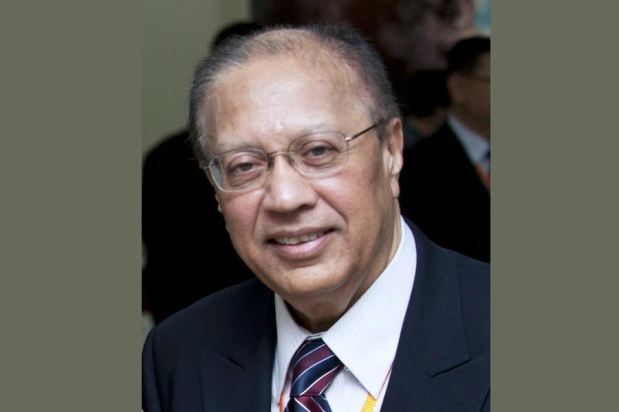
The portrait of an ambassador: Anwarul Karim Choudhury

The portrait of an ambassador: Anwarul Karim Choudhury

Published in the Financial Times:  December 9, 2017

Although I have had met Ambassador Anwarul Karim Choudhury on two occasions, I held him in high esteem for his sagacity to pursue diplomacy doggedly and for his personal amiable behaviour. Anwarul Karim Chowdhury had become a spokesperson for the government in exile of Bangladesh in Calcutta following his shifting of allegiance to the latter after quitting the post of third secretary at the Deputy High Commission of Pakistan in Calcutta along with Pakistan Deputy High Commissioner Hossain Ali on April 18 in 1972. For all practical purposes the Deputy High Commission had served as the office of the government in exile of Bangladesh led by Tajuddin Ahmed. The Pakistan government lodged a strong protest with the Indian government following hoisting Bangladesh’s flag at the Deputy High Commission by Ambassador Hossain Ali.

On his return to Bangladesh Anwarul Karim Chowdhury served as Director at the Ministry of Foreign Affairs in mid 70’s along with another stalwart Bangladeshi diplomat K.M. Shehabuddin. Shehabuddin also shifted his allegiance to the government in exile of Bangladesh quitting his post of Second Secretary at the Pakistan High Commission in New Delhi even before the government in exile was formed on April 17, 1972. It was my pleasure to invite both of them, apart from Mr. Akramul Qader, Section Officer who became Ambassador to Thailand and South Africa, to my residence at the city’s Bailey Road to join a farewell dinner before departing for Kuala Lumpur in Malaysia in April of 1977 to join the Bangladesh embassy there as third secretary under High Commissioner Maj Gen K.M. Shafiullah. That was my first interaction with Ambassador Anwarul Karim Chowdhury.

It is really heartening to note that Ambassador Anwarul Karim having served as Bangladesh’s emissary to under-developed countries in Africa was elevated to the position of Permanent Representative of the country to the United Nations from 1996 to 2001. During his tenure at the United Nations, Ambassador Anwarul Karim served as a coordinator of Least Developed Countries for about ten years. As coordinator of the Least Developed Countries he joined the five-member Bangladesh delegation to the G-8 Summit held in Cologne of Germany on June 7-8, 1999. The delegation was led by then Bangladesh Foreign Minister Abdus Samad Azad. This scribe also was one of the members of the delegation from the Bangladesh embassy in Bonn, including Ambassador Kazi Anwarul Masud. During presentation of the viewpoints of LDCs Abdus Samad Azad skipped some important points. Ambassador Anwarul Karim immediately pointed out the lapses. As a troika of the Least Developed Countries, Bangladesh put forth some points seeking commitments from industrially-developed countries to exempt debt burdens of the LDCs. It was a very successful effort as some under-developed countries in Africa were exempted from their debt burdens. The then US President Bill Clinton attended the G-8 summit.

After the summit, the foreign minister accompanied by members of the delegation along with newly-married wife visited the biggest historical cathedral in Cologne and the hilly region of Bonn in Petersburg plateau to have the glimpse of the romantic Rhine Valley of Bonn. Ambassador Anwarul Karim Chowdhury accepted the invitation to have lunch at my official residence in Bonn. The wife of the Foreign Minister was feted by my wife, because the wife of Ambassador Anwarul Masud was away to Bangladesh. That was the second time I interacted with Ambassador Anwarul Karim Chowdhury.

Ambassador Anwarul Karim Chowdhury also served as President of the Security Council, when Bangladesh became a non-permanent member of the Security Council from 2000 to 2001. We got commitment from the German government to support Bangladesh’s candidature for membership of the Security Council. This was the second time Bangladesh became a non-permanent member of the Security Council. From 1979 to 1980 Bangladesh became a non-permanent member of the Security Council for the first time by defeating Japan.

As President of the Security Council Ambassador Anwarul Karim Chowdhury succeeded in establishing the landmark resolution 1325 which reaffirmed the important role of women in prevention and resolution of conflicts, peace negotiation, peace building, peace keeping, humanitarian response and in post-conflict reconstruction and stressed the importance of their equal participation and full involvement in all efforts for maintenance and promotion of peace and security.

Being an amiable personality as a diplomat, Anwarul Karim Chowdhury has made tremendous impact on the international body which was reflected in his appointment as Chairman of the Second Council Committee on Sierra Leone and President of the UNICEF executive board. His leading role resulted in proclaiming by the United Nations the year 2000 as International Year for Cultural Peace and the period of 2001-2010 as the International Decade for a culture of peace and non-violence for the children of the world. Ambassador Anwarul Karim also led as a UN culture of peace emissary in May of 2010, because peace efforts continuously failed until people embraced humanity’s oneness.

Ambassador Anwarul Karim Chowdhury also served as High Representative of UN for the Least Developed Countries, Land Locked developing countries, Small Island developing states in March of 2002. From 1990-1993 Ambassador Anwarul Karim served as Director of UNICEF in Japan, Australia and New Zealand. Possibly Ambassador Anwarul Karim Chowdhury is the only Bangladeshi diplomat who got the honour of receiving the U Thant peace award, UNESCO Gandhi Gold medal for culture of peace while the Japan government conferred on him an honorary doctorate degree for his work on women’s issue, child rights and culture of peace and strengthening the United Nations. The government of Burkina Faso decorated him with the country’s highest honour L’ordre Nacionale on January 18 2007 for championing the cause of the most vulnerable countries.

Ambassador Anwarul Karim received Doctor of Humane Letters honoris causa degree from Saint Peter’s University of the United States of America in 2012 and served as an adjunct professor at the school of diplomacy at Seton Hill University of the USA. He is the founder of the New York-based Global Movement for culture of peace while he is the founding Co-Chair of the International Ecological Safety collaborative Organisation (IESO) with its headquarters in China.
 

Emerging tourism industry in Bangladesh

Emerging tourism industry in Bangladesh

Published in the Financial Express on November 30, 2017

There is any doubt that tourism has become industry in the 21st century in the world. Tourism has assumed one of the world’s fastest growing industry which has become a major source of income generation and major foreign exchange earner in many countries in the world. The United Nations World Tourism Organisation (UNTO) defines” tours as the activities of the person travelling to and staying in places outside their usual environment for not more than one consecutive year of leisure, business or other purposes.”

As a result, the United Nations World Tourism Organisation (UNWTO) started celebrating the World Tourist Day on September 27 since 1980. Therefore, Bangladesh has observed world tourist day jointly by the Ministry of Civil Aviation and Tourism, Bangladesh Parjatan Corporation and Bangladesh Tourism Board. According to policy guideline of Bangladesh Parjatan Corporation of 2010, tourism still remains at taking off level in Bangladesh. foreign exchange earnings from tourism sector in 2010 stands at 5562.70 million takas, but World Travel and Tourism Council (WTTC) reported tourism contributed to 296.6 billion taka which covers 1.9 per cent of GDP of Bangladesh in 2014. The World Travel and Tourism Council (WTTC), which was established with 32 business magnates in 1990, promotes awareness about economic contribution made by the travel and tourism industry. According to this Council, the travel and tourism industry in Bangladesh directly generated 1281500 jobs in 2012 which represents 1.8 per cent of the country’s total employment.

The government of Bangladesh plans to make middle income country. Therefore, government should pay more attention to develop tourism as an industry to generate foreign currency. Since mid 70’s several new industries have been developed in Bangladesh. Of which garment industry tops the list within couple of years followed by pharmaceutical, fisheries and ceramic industries.

Bangladesh is multiracial country where Muslims, Buddhists, Hindus and Christians have been residing for centuries and leaving behind many archeological sites of interest to witness indeed. Physiography of Bangladesh has been characterized by two distinct features: a broad deltaic plain, a small hilly region in Chittagong and Chittagong Hill Tracts while low hilly region of Sylhet in the north east. Landmass is made up of fertile alluvial low land known as Bangladesh plain.

Bangladesh inherited rich cultural heritage. The present Bangladesh was a part of ancient Bengal where foreign tourists, including Chinese traveller-historian, Fa-Xien, Tao Lin and Huen-Tsang visited Bengal in fourth and seventh centuries and Buddhist monks of ancient China of Tang dynasty visited the ancient Kingdoms of Samatata, Purnavardhana and Karnsuvarna in 627 AD. Detailed records of these Kingdoms are available in the records of the western regions of the Great Tang dynasty prepared by Monk Xuan Zang. Bengal was flourished during rule of Sultan Giyasuddin Azam Shah of Sonargaon. This has been reflected in writing of Ibn Batuta, the Moroccan traveller, who visited Sylhet to meet Great Sufi Hazrat Shah Jalal and Sonargaon. In fact, Ibn Batuta boarded a Chinese Junk at Sonargaon to travel to Java.

The history of present Bangladesh had been subjected to exploitation and suppression since seventh century when the first trade relations developed with Portugal, France, Holland and the British until 1947.Bangladesh was also exploited by Pakistan when she became part of Pakistan after partition in August of 1947.

The gentle alluvial plains of Bangladesh are the product of three mighty rivers of South Asia: The Ganges, the Brahmaputra and the Meghna while it is commonly divided into three major physiographic units — the hilly and foothill region, the coastal belt and the lower Gangetic plain.

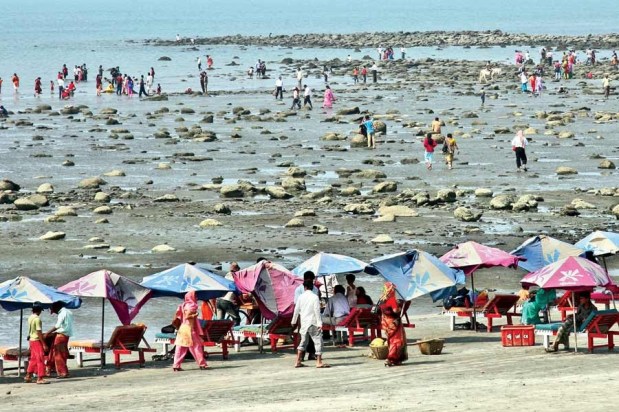
Bangladesh is possibly known to outside world for the longest unbreakable sea beach in the Bay of Bengal in Cox’s Bazar of Chittagong district and the Sundarbans natural forest where Royal Bengal Tigers and spotted Dears are seen. The Sundarbans is having largest amount of bio diversity and largest mangrove forest in the World. UNESCO declared Sundarbans as World Heritage. Another scenic beauty is located at Kua Kata in Patuakhali district. The sea beach at Kuakata is sandy but tourist can have rare view of sunrise and sunset over the Bay of Bengal. Story goes that Rakhine settlers were driven out of Arakan by the Mughals in eighteenth century who settled in KuaKata. They had begun digging on the seashore to get drinking waters. According to Firoz Mahmud, who served as Deputy Keeper of Bangladesh National Museum, discovery of Northern Black Polished Pottery leads to the clue to the earliest known archaeological site of Iron Age in Bangladesh in Mahasthangarh in Bogra while archeological excavation in Mainamati in Comilla provides history of south-eastern Bengal from the seventh to the twelfth century AD.

Possibly many people in Bangladesh are not aware of historical place in Dinajpur district which goes back to Pal and Sen dynasties. Tapan Dighi is situated in the village Tapan. There is myth that King Laxman Sen dug this lake while panoramic view is seen from Sarong Bari forest. Dinajpur Rajbari and Boll Ma Kali temple are worth seeing places in Dinajpur. Except tea gardens in Sylhet tourist may also find interest to see ornate tomb and mosque of Hazrat Shah Jalal, the tiny museum of Rajas containing belongings of local folk poet Hasan Raja and 3-doomed gateway stands at 17th century Shahi Edgah and a huge open-air hilltop mosque built by Emperor Aurangzeb. The sixty Dome mosque which is located at Bagerhat in Khulna which is known as 15th century Islamic edifice. It was established during Tughlaq dynasty in India. UNESCO also declared it as World Heritage. Mausoleum of Fakir Lalan Shah at Seuria in Kushtia is worth seeing place, particularly during Baul songs competition. A great mystic poet and lyricist presented numerous devotional and spiritual songs who died in 1890.A research center was built near the Mausoleum. Rabindranath Tagore collected his many songs and published in Bangla calendar year 1332.

The tourism industry in Bangladesh should be developed as it is lagging behind in competition with neighbouring countries like Nepal and India.
A sense of participation by Bangladeshis themselves in promoting tourism can hardly be overemphasised. Officials at the Ministry of Foreign affairs, the External Resources Division and the Ministry of Labour should be encouraged to know history of Bangladesh and acquaint themselves with historical places in promoting to foreigners during their postings in Bangladesh missions. These officials in fact are totally ignorant of rich cultural heritage of Bangladesh. While serving in Bangladesh Civil Service and Foreign Affairs Academy on deputation from the Ministry of Foreign affairs this writer introduced tours for the newly recruited foreign service officers in 1992. Foreign Service Academy was merged with BSC academy in 1985 by President Ershad on personal grudge against the then principal of Foreign Service Academy. Now Foreign Service Academy has got its status independent again.

There is hardly any need to emphasis to develop infrastructures linking Dhaka, Chittagong, Khulna and Rajshahi with historic places in Bangladesh to facilitate foreign tourist to travel comfortably. Equally important suggestion is that hotel management should consider in consultation with Bangladesh authorities to open casinos and big swimming pool in first class hotels. A big birds cage should be placed along the swimming pools. In this connection, this writer repeat what Somphot Piyaui, Managing Director of 5 star Dusi Thani hotel in Bangkok and proprietor of hundred trolley boats for fishing in Thailand, confided to this writer in first week of March of 1977 while he was on a visit to Bangladesh to open new hotel next to Hotel Intercontinental and joint venture in fishing in the Bay of Bengal to stop piracy by fishermen from Thailand. This writer was told that Malaysia, Egypt and a few other Muslim countries allow Casinos in hotels for foreign tourists which this writer witnessed in Malaysia during diplomatic assignment from 1977 to 1981. Another interesting suggestion came from him was that hotel management should consider importing “moving flower” which means young Thai girls to serve guests in the hotels. Somphot was of the opinion that people from Arab countries would rush to Bangladesh being a Muslim country instead of going to Thailand or other country. That would have opened door for petro-dollar to fly to Bangladesh. Incidentally, Minister of Civil Aviation and Tourism Air-Vice Marshal AG Mahmud, a diehard Muslim, rejected the proposal. This writer was the host officer to two-member delegation from Thailand led by Somphot Piyaui.

Another suggestion is that authorities should ensure with the cooperation of police authorities the safety of tourists in Cox’s Bazar, Kuakata, the Sunderbans and Coral Island in St. Martin in particular. This has become all the more priority in view of series of murder of foreigners, including staff of foreign embassy. The report released by New York based Human Rights watch in July 2017 that at least ninety people were victims of enforced disappearances in 2016 while countless extrajudicial killings and secret detention in Bangladesh placed Bangladesh in an adverse position. Twenty people, mostly foreigners had been killed in an attack on a café at Holey Artisan Bakery in Dhaka on 2 July of 2016 is another adverse circumstance which has caused negative impact on foreign tourist to visit Bangladesh. Therefore, law and order need to be improved in first place to open door to tourists to earn foreign exchange.

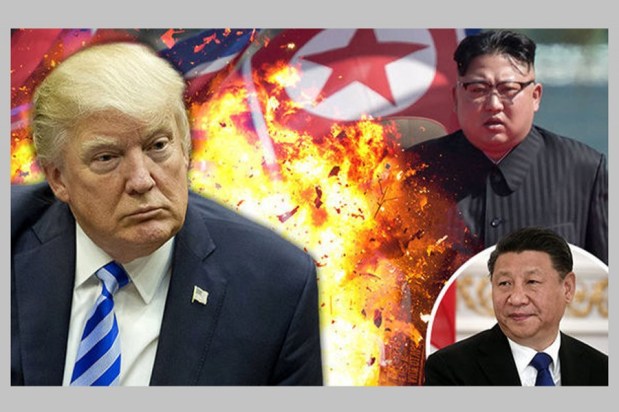
Trump will visit Asia when China is rising and North Korea intransigent

Trump will visit Asia when China is rising and North Korea intransigent

Published in the Financial Express on October 31, 2017

Donald Trump will undertake his first visit to Asia, as the President of the USA, from November 03 to November 14. As announced by the White House, President Trump, accompanied by First Lady Melanie, will make a 12-day visit to Japan, South Korea, China, Vietnam and the Philippines to persuade the leaders of these countries to put pressure on North Korea to curb its nuclear weapons programme and make the region a demilitarised zone.

Trump will apparently face difficulties in pursuing this goal in view of his past stance. He exchanged   inflammatory insults with North Korean leader  Kim Jung-Un and criticised President of South Korea Moon Jae-in for his conciliatory gesture towards North Korea and his readiness to hold dialogue with his northern neighbour. Trump threatened to cut trade deal with China which has already backfired.

Kim Jung-Un did not abandon nuclear weapons programme despite new economic sanctions imposed by the UN on North Korea following its sixth launching of nuclear device in the first week of September.

Foreign policy of North Korea took the present shape following NATO’s bombing of Serbia in 1999, in total disregard of the 1995 Dayton agreement to put an end to the three-and-a-half-year-long Bosnia war. Kosovo declared independence after the attack of Serbia by NATO with the instigation of the United States. Germany also joined in the chorus for the first time after its constitutional court allowed its armed forces in 1993 to participate in fighting outside Germany. The negative precedent set by NATO in Kosovo makes North Korea distrust the United States.

Another negative example was set by NATO and US when they bombed Libya as the Libyan leader Muammar Qaddafi gave up nuclear programme.

Against this backdrop, former President Jimmy Carter, who is now 93, has expressed his willingness, during talks with Park Han-Shik, a Professor of International Relations at Georgia University, in September this year, to mediate between the United States and North Korea to avert a nuclear war and save the world from any catastrophic disaster. President Jimmy Carter had been to North Korea in 1994 to negotiate with Kim Il-sung, grandfather of Kim Jung-Un, as an envoy of President Bill Clinton to shore up denuclearisation talks. In 2010, Jimmy Carter again visited North Korea to negotiate release of a jailed American.

In spite of a request by the White House to keep his mouth shut, President Jimmy Carter in an article to the Washington Post on October 04  wrote  that, the North Korean situation is the “most existential threat to the world peace and ask to implore Washington and Pyongyang to find a peaceful way to ease the escalating tension and reach a lasting peaceful agreement.” Jimmy Carter obviously wants to finish the task of denuclearisation of the Korean Peninsula without having a second Korean war.

During his Asian tour, President Trump will also attend Asia-Pacific Economic Cooperation (APEC) summit in Vietnam, apart from the summit of the Association of South East Asian Nations (ASEAN) in Manila.

ASIAN SCENARIO: Meanwhile, Trump has threatened to walk away from  the 2015 international nuclear agreement with Iran. If he carries out his threat, it will be a disaster indeed. Iran would be placed on carte blanche to resume nuclear activities without constraint. Trump’s national security team, including Secretary of State, Defence Secretary and Chairman of Joint Chief of Staff, supported the 2015deal. Meanwhile, Iran has expanded its sphere of influence in Iraq after the fall of Saddam Hussein, Syria, Lebanon and to some extent in Bahrain where majority population are Shiites. Russia is assisting Iran while Turkey, only Muslim country in NATO alliance, also joined hand with Iran following declaration of vote for independence by leader of Kurdish autonomous region in North of Iraq.

In Asia, China has become leading military and economic power. By renewing old Silk Road diplomacy China has expanded its sphere of influence in Asia. Similarly, Russia has also joined hands with China in the region, apart from Russia’s Eurasian economic union.

As for Afghanistan, President  Trump’s strategy would not succeed by deploying more troops. Cooperation between Pakistan and Afghanistan is a sine quo non-to stop Taliban rebellion. Over the last 16 years, war in Afghanistan has become the longest and costliest operation of the army of the United States. By now major portion of Afghanistan is under control of Taliban.  Quadrilateral Coordination Group, which comprises of Afghanistan (including Taliban), China, Pakistan and United States, should be revived to pave the way for peace in Afghanistan.

It will be interesting to watch the development in Asia following the visit of the continent by President Trump, against the backdrop of a tense situation in the Korean peninsula over the nuclear programme of North Korea.

Humayun Kabir, a consummate diplomat

Published in the Weekly Holiday – August 4, 2017

Distinguished diplomat Ambassador Humayun Kabir, scion of the renowned Syed Mohallah of Fakirhat in Bagerhat district, has had a distinguished career as a student of Dacca University in its heyday.

During his student career in English department of Dacca University fellow students from different colleges and faculties of Dacca University flocked to English department to listen to debates participated by Humayun Kabir. His presentation and intonation in the debate was charming and illuminating indeed, apart from his handsome manly figure.
According to Ambassador Arshad-Uz Zaman, who served as first Director-General of External Publicity Division in the Ministry of Foreign Affairs and Assistant Secretary General of OIC in Jeddah,Humayun Kabir entered competitive examination in 1961 and came out with flying colour and completing his training in Fletcher School of Diplomacy in the United States, he joined Pakistan Foreign Service and was posted at Paris and London.

Ambassador Humayun Kabir also obtained post-graduation from Harvard University in 1962. Although this writer has had privilege to serve under him about two years in the External Publicity Division of Bangladesh Foreign Ministry as Assistant Director, but I met him in Pakistan Foreign office in Islamabad in December of 1970 in examination hall where I was among the thirty examinees for a post of Information officer in CENTO. Humayun Kabir’s assignment there was as invigilator. At that time he was serving as Deputy Chief of Protocol.

Having arrived in Bangladesh from Pakistan Humayun Kabir replaced Ambassador Faruk Ahmed Chowdhury as Chief of Protocol in 1972.Shortly Humayun Kabir replaced Arshad-Uz Zaman as Director General of External Publicity Division. During the period of 1972-1973 Bangladesh was humming with hectic days as many foreign dignitaries and foreign journalists were arriving to see charismatic leader Bangabandhu Sheikh Mujibur Rahman and problems being faced following massive destruction of the country during the Liberation War. Ambassador Humayun Kabir turned out to be the best public relations personality in handling the international media personalities.

War ravaged country and unfounded rumour
Apart from reconstruction of the war ravaged country Bangladesh was faced with canards of killing Bihari on massive scale and famine in Bangladesh as a result of food crisis. Editor V.G Verghese of the Hindustan Times did not spare us from this canard. Both Ambassador Arshad-Uz Zaman and Ambassador Humayun Kabir in collaboration with Chief of Army Staff Maj-General K.M. Shafiullah briefed foreign journalists and took them to Bihari camps at Mohammadpur in Dhaka city. This writer undertook writings on the problem of Biharis which the Morning News carried out on 30 June of 1972, apart from briefing foreign journalists. Having published his impression V.G Verghese returned my article. His article which appeared on 8 July of 1972 mentioned that “Mujib government’s approach to it was a sad departure from the high idealism and humanitarianism that surrounded the birth of this new nation.”

This writer was assigned by Director-General Humayun Kabir to meet the needs of visiting foreign journalists, apart from organizing appointments with hierarchy, including Prime Minister Sheikh Mujibur Rahman, Vice-Chairman of Planning commission, Food secretary and Home secretary.

Andre Malraux and Robert Payne
I would like to narrate briefly visits of three important personalities to Bangladesh. One was an intellectual giant and humanist of the century Andre Malraux of French philosopher, Novelist, warrior and Cultural Minister , another celebrated writer and novelist Robert Payne and Deputy Foreign Editor of London Times Richard Harris .
I was assigned to accompany Andre Malraux to Chittagong where he was given civic reception following according honorary citizenship by Bangabandhu Sheikh Mujibur Rahman for his contribution towards Bangladesh Liberation War. Industrialist A.K. Khan entertained Andre Malraux at Kaptai Lake at his Yacht while Foreign Minister Dr.Kamal Hossain threw a gala dinner party in his honour at his official residence.

I spent two weeks with Robert Payne who interviewed Prime Minister Sheikh Mujibur Rahman. Robert Payne also interviewed Professor Nurullah of Dacca Engineering and Technology University which was previously named after Nawab Ahsan Ullah. Nurullah recorded on film the massacres of students and teachers at Jaganath Hall of Dacca University.

This writer accompanied Robert Payne in his meeting with eminent nuclear scientist Dr. Anwar Hossain, who later on became Chairman of the Bangladesh Atomic Energy Commission, and Deputy Chief of army Major General Ziaur Rahman.

I also accompanied with Robert Payne to meetings with different personalities, apart from visiting Kushtia which was described as thousand My Lai by World Bank and prison cell of Dhaka central Jail where Sheikh Mujibur Rahman spent most of his time during Pakistan regime. Major-General Ziaur Rahman, however, met Robert Payne at the office of Director-General Humayun Kabir in the Ministry of Foreign affairs. As directed by Foreign Secretary Enayet Karim I handed over book: Massacres by Robert Payne to Deputy Chief of Bangladesh army Major-General Ziaur Rahman two days ahead of meeting. Deputy Foreign Editor of London Times has had meeting with Prime Minister Sheikh Mujibur Rahman while he was travelling to Gopalganj by helicopter and Professor Abdur Razzak of Dhaka University, an intellectual giant and Foreign Secretary Enayet Karim and Director-General Humayun Kabir as well. On his return to London Richard Harris wrote a letter to Director-General Humayun Kabir in which he praised my assistance in organizing meetings and trips.

My assigned booklets
I was assigned to prepare two important booklets, “Bangabandhu Speaks” and “Operation: Death and Destruction” to handle war crime trial. The last booklet was withdrawn following tripartite agreement which was signed in New Delhi on 9 April of 1974 among Bangladesh, India and Pakistan. Two more books, each on Road to Freedom and Geography of Bangladesh in collaboration of Geography department of Dacca University were published during the tenure of Director-General Humayun Kabir. Incidentally, Mr. Humayun Kabir became speech-writer of Foreign Minister Abdus Samad Azad.

During the visit of Dr. Henry Kissinger, Secretary of State under President Ford, to Bangladesh from 31 October to 1 November of 1974 a large number of journalists arrived to cover his visit. Director General Humayun Kabir hosted a dinner for the visiting news media at Hotel Intercontinental. As host officer I had to check preparation and receiving journalists. And for Humayun Kabir it was a grim situation for he lost his father on the same night while the party was still in progress.

Prime Minister of Pakistan Zulfiqar Ali Bhutto visited Bangladesh in 1974 at the invitation of Prime Minister of Bangladesh Bangabandhu Sheikh Mujibur Rahman.Prime Minister hosted dinner in honour of Pakistan’s Prime Minister at Bangabhavan.And Humayun Kabir had the opportunity to demonstrate his brilliancy when he was asked by the Prime Minister to translate his after dinner speech. Humayun Kabir did it instantly. The audience including the visiting Prime Minister was spell bound at the way Humayun Kabir rendered the Bengali version of the speech in eloquent and articulate English. In 1974 Director-General Humayun Kabir possibly did not sleep well at night.

On many occasion this writer received telephone calls at midnight from Director-General Humayun Kabir about arrangement made for foreign correspondents to fly to North Bengal to see famine situation. On one occasion this writer joined them on helicopter flight to Khulna.

He presented credentials wearing Lungi, Panjabee and cane hat
Ambassador Humayun Kabir had established stunt in diplomatic arena by presenting credential to Imam Khomeini, supreme leader of Islamic Republic of Iran, as Bangladesh Ambassador. Instead of wearing western suit Humayun Kabir presented credential in 1979 wearing Lungi, Panjabee and cane hat to Imam Khomeini while presetting his credential to UN Secretary-General Perez de Culler in that dress in 1993. Ambassador Humayun Kabir drew the attention of western media widely while he faced criticism at home.

It may be worthwhile to mention that Bangladesh became non-permanent member of the UN Security Council by defeating Japan during the period of Bangladesh Nationalist Party under President Ziaur Rahman and as Deputy Permanent representative of Bangladesh Humayun Kabir covered Latin America to seek support for Bangladesh while Ambassador Arshad-Uz Zaman visited African states because both of them were linguist.
During the reign of Jatiya Party of Gen.Ershad, Humayun Kabir was made ineffective on personal grudge, so to say. Principal Humayun Kabir of Foreign Service Academy was made officer on special duty and academy was merged with Bangladesh Civil Service Academy at Shahbag in 1985. Humayun Kabir was made Bangladesh’s Permanent Representative to UN in 1993 during the period of Bangladesh Nationalist Party. His last assignment was Ambassador to the United States of America during the rule of President Bill Clinton. He had a mark in projecting favourable image of Bangladesh and in the process developed friendly relations with President Bill Clinton.

Ambassador Humayun Kabir was an amiable personality and friendly who was a brilliant linguist. He used to speak French and Spanish. Possibly he was the only diplomat who was decorated with Order of Civil Merit by the Government of Spain.
Since his retirement Ambassador Humayun Kabir dedicated himself to the alleviation of poverty of the tribal people at Bandarban and involved himself in the programme of afforestation and self-reliance project for them. This writer understands he was planning to establish a cottage at Cox’s Bazar. Ambassador Humayun Kabir died of cerebral malaria on 16 June in 2001 at Chittagong Medical college hospital. May Allah grant eternal peace unto him in heaven.

[Mohammad Amjad Hossain, retired diplomat from Bangladesh and former President of Nova chapter of Toastmaster International Club of America, writes from Virginia. Email: amjad.21@gmail.com]

Down the memory lane: Remembering Ambassador Nazrul Islam

A brilliant officer of Pakistan foreign service cadre joined Bangladesh foreign ministry on repatriation from Pakistan as Chief of Protocol in 1973 to replace Arshaduzzaman who was appointed Ambassador to Algeria. During his tenure as Chief of Protocol large number foreign dignitaries visited Bangladesh to see the newly emerged independent country following a bloody war of liberation.

The most important of those visitors was President Josef Broz Tito of Yugoslavia, who was one of the founder members of Non-Aligned Movement along with Pundit Jawaharlal Nehru of India, Soekarano of Indonesia and Gamal Abdel Nasser of Egypt. Yugoslav president was accompanied by a 90 member delegation, including foreign minister, defence minister and political secretary to the president. Josef Broz Tito and his personal staff members stayed in Bangabhavan while his ministers and other members of the delegation stayed in the state guest houses. The visit took place from 24-29 January 1973. This writer was in the foreign ministry’s external publicity division as an Assistant Director and his services used to be requisitioned by the Chief of Protocol when such dignitaries visited Bangladesh. During the visit I was located at Padma guest house as host officer to look after the delegation’s needs. I came to know from the Yugoslav defence minister that Tito’s birth day was on 26 January. To give him a surprise I arranged with guest house caretaker Harris to send a bouquet of flowers through the Yugoslav President’s political secretary Alexander Sarkorak next morning while he left for the Bangabhavan to say to the Yugoslav a happy birth day. For a few second he kept quiet and thanked me profoundly and invited me to visit Belgrade as his guest.

This event was reported to Chief of Protocol Nazrul Islam by Yugoslav President’s political secretary. After the departure of Yugoslav delegation Nazrul Islam gave briefings on the conduct of officers and arrangement made by the government. Nazrul Islam praised me eloquently for my initiative to give the bouquet of flowers to the most powerful man in Tito’s administration.

During the visit Tito invited Prime Minister Sheikh Mujibur Rahman to attend Non-Aligned summit in Algeria from 5-9 September of 1973.

The second important visitor was Pakistan’s prime minister Zulfiqar Ali Bhutto, who came at the invitation of Bangladesh Prime Minister. During his visit I was again requisitioned by the Chief of Protocol and was posted at Bangabhavan. At one time the Chief of Protocol rushed to my allotted room and instructed to book a call to Sylhet Deputy Commissioner and ask him to find Kaiser Rashid Chowdhury, former foreign service officer who served as Private Secretary to Mr. Zulfiqar Bhutto when he was the foreign minister and send him to Dacca to participate in the talks with Bangladesh as instructed by Prime Minister Sheikh Mujibur Rahman. Kaiser Rashid Chowdhury was attending the Kul Khani of his mother in Sylhet.

However, Kaiser Rashid Chowdhury flew to Dacca by next available Biman flight. Talks between Bangladesh and Pakistan were not successful on the question of asset sharing and taking back the Biharis from Bangladesh who opted for Pakistan.
Another important visitor was President Leopold Senghor of Senegal, a well known poet and statesman, from May 26—29 of 1974. I was placed as Protocol officer at Banghabavan as I spoke French. In his speech President Senghor praised Sheikh Mujibur Rahman for his steadfast courageous role for Bangladesh which had made him an institution. During state banquet I was assisting Madam Senghor. At the end of the visit President Leopold Senghor presented me a copy of his book: Nocturnes.

Chief of Protocol Nazrul Islam initiated letter of appreciation by Foreign Minister Dr. Kamal Hossain for working as protocol officers during the visit of a number of foreign dignitaries. I was one of the officers received appreciation letter from Foreign Minister Dr.Kamal Hossain. Nazrul Islam was in the habit of inviting me to accompany for lunch at his residence. On reaching the house his first duty was to enquire about his ailing mother if she was given medicine on time.

Incidentally, Nazrul Islam was a very good chess player. A chess board always remained on his desk in the office and whenever he managed some free time he tried to concentrate on a game of chess.

While serving as Ambassador in Kuwait, he was called back to headquarters to serve as Foreign Secretary in place of Mr. Fakhruddin Ahmad, who was in disagreement with President Gen. Ershad. Nazrul Islam joined on 9 May of 1987 as Foreign Secretary. During his tenure I was posted as First Secretary to Bangladesh embassy in Bucharest, Romania in July of 1987. In 1987 I was assigned to work in West Asia desk of Foreign Ministry because President Ershad decided to merge external publicity division of the foreign ministry with the ministry of information. That was another ill advised decision by President Ershad and it was reversed after he was deosed.

While I was serving as Deputy Director in Civil Service cum Foreign Service academy in Shahbagh in 1992, Nazrul Islam retired from foreign office. Actually, President Ershad had merged Foreign Service Academy with Civil Service Academy because of his personal grudge against then Principal of the Foreign Service Academy.

I decided to invite Ambassador Nazrul Islam for a talk on foreign policy for the benefit of the newly recruited foreign service officers. Nazrul Islam accepted my invitation and the officers who attended had appreciated his style of discussions. There was an evaluation system of guest lecturers by the newly recruited officers in the academy. This was strictly followed during the administration of Dr. Sadat Hossain, Director –General of Academy who retired as Chairman, Public Service Commission of Bangladesh.

While at the academy, I organized a seminar on climate change for the benefit of newly recruited foreign service officers in consultation with Dr. Fazlul Hasan Yusuf, Diector-Gerneral of the Academy who incidentally worked in Foreign Ministry at initial stage of the Ministry. Professor M. Aminul Islam of Geography Department of Dacca University presented the key note paper while Professor Dr. Ainun Nishat of Bangladesh University of Engineering and Technology and Dr. Atiq Rahman, Director, Bangladesh center for advanced studies were the discussants. Ambassador Nazrul Islam, former Foreign Secretary, presided.

While serving as Director in Europe desk in 1994 Ambassador Nazrul Islam used to drop in my office to have a chit chat over a cup of tea. Possibly in his mind he was thinking of serving as the country’s foreign minister which may have prompted him to join the Bangladesh Nationalist Party like Ambassador Rezaul Karim. Nazrul Islam had been maintaining a close liaison with his constituency when he was the foreign secretary. Similarly, Ambassador Rezaul Karim also maintained close touch with his Kushtia District after retirement.

Unfortunately, neither Ambassador Rezaul Karim, nor Ambassador Nazrul Islam succeeded in getting nominations from the BNP to contest election. Ambassador Nazrul Islam expired on 23 April of 1999. Although some of his colleagues in the Ministry called him an eccentric but he was humane and in fact was a humorous person. May Allah bless him in heaven.

Diplomats’ role during liberation war of Bangladesh

Published in the Weekly Holiday on April 07, 2017.

Diplomacy is the first defence while war is the second defence of the country’s sovereignty. The role of diplomats played in mobilizing public opinion around the world from April of 1971 following Pakistan army’s crackdown on unarmed people in erstwhile East Pakistan which is separated from Western part of Pakistan about 1200 miles over Indian territory. The role played by diplomats would be written in red letter the history of Independent Bangladesh.
Defection of Bangladeshi diplomats in Pakistan embassies around the world mobilized public opinion against Pakistan’s atrocities and genocidal activities in what was then East Pakistan. Even American diplomat, in particular, Archer Blood, American Consul-General in Dacca, who relentlessly highlighted the events in Bangladesh in his diplomatic cables though they were met with deafening silence in Washington.

Defections of Bengali diplomats
Eventually Blood lost his job in the State Department at the instigation of Henry Kissinger, National Security advisor under President Richard Nixon and Secretary of State to President Gerald Ford. Gary J Bass in the book: ‘The Blood Telegram’ which reflected the moral bankruptcy of US leaders, pointed out that Archer Blood was not allowed to protest to the Pakistan authorities but started sending in a blistering cables tagged selective genocide, urging his bosses to speak out against atrocities being committed by the Pakistani military regime.

On 6 April most staff members of the Dhaka American Consulate practically revolted against the Nixon administration by sending telegram “for silence in the face of atrocities”. Archer Blood is no more in this world but US embassy in Dhaka established a library in Archer Blood’s name to show respect. He was source of information to BBC and other news agencies for disseminating information at a time when Military government of Pakistan bundled 36 foreign correspondents out of Dhaka on 28 March 1971. He was recalled a few months later.

This is one side of story of the diplomats. On the other hand, Pakistan’s President Gen. Yahya Khan’s faith retaining unified Pakistan was shattered when 14 diplomats posted in Pakistan embassy in Washington, including present Finance Minister AMA Muhith, declared allegiance on 5 August, 1971 to the government of Bangladesh in exile. The declaration of allegiance had caused serious repercussions in Islamabad. That was reflected in the briefing session of the officers by Dr. Maqbool Bhatti, Director-General of External Publicity and National affairs on 16 August where this writer was present.

How Kolkata mission created
The Director General only regretted and wished them well as some Senior Bangladeshi diplomats were his batch mate in foreign service, and said that situation would be normal soon in East Pakistan. I was the only Bengali officer amidst the Punjabis and Sindhis present. Another Bengali officer Ezrajul Alam from Press Information department was appointed on an ad hoc basis a few months early. This writer left Islamabad on 27 August on leave via Karachi and Colombo in Sri Lanka because India had disallowed air traffic to overfly to Dhaka. This writer did not join after expiry of leave in November, 1971.

In fact the ball began to roll at the Pakistan Deputy High Commission in Calcutta (now Kolkata) when as many as 60 diplomats and non-diplomats under the leadership of Pakistan’s Deputy High Commissioner Hossain Ali declared allegiance to Bangladesh government in exile on 18 April. It happened just a day after the Bangladesh government in exile was formed under the leadership of Mr. Tajuddin Ahmad, an unsung hero.

Deputy High commissioner Hossain Ali’s decision was important as it facilitated Bangladesh government in exile to use the High Commission office as its secretariat. Hossain Ali also made history by hoisting Bangladesh flag in the chancery. Both Deputy High commissioner and third secretary Mr. Anwarul Karim Chowdhury worked tirelessly as spokespersons of Bangladesh government in exile. Pakistan government lodged protest to Indian government and sought assistance for repatriation of diplomats to Pakistan but without any success.

This was an all-time record in the history of diplomacy when diplomats and officials defected en masse to an emerging country. Second secretary Mohiuddin Ahmed from London defected on April 10 who was the first diplomat from London’s Pakistan embassy.

Top Bengali ambassadors joined
The name of Khwaja Mohammad Kaiser may be mentioned in this context who served as Pakistan Ambassador to China who remained in his post at the advice of the Bangladesh government in exile who repatriated to Bangladesh some time in 1972. Ambassador Kaiser was a close friend of Chinese Prime Minister Chou En Lai who gave him farewell dinner in his honor. Ambassador Abul Fateh was in Iraq as Pakistan Ambassador. Ambassador K.K. Panni from Manila and Ambassador Abdul Momen from Argentina defected as well. Pakistan government sent warrant of arrest against Ambassador Abul Fateh, who withdrew entire amount of twenty five thousand pounds from Embassy’s bank account and gave to Bangladesh government in exile through Indian Ambassador in Iraq.
The first in the series of defection began with K.M. Shehabuddin, Second Secretary and Amjadul Haq, Assistant Press Attache in New Delhi followed by A.H. Mahmood Ali in New York who is now serving as Foreign Minister of Sheikh Hasina’s Awami League government.

Among the high ranking diplomats, who declared their allegiance for Bangladesh, names of Abdul Fatah, Abdul Momin, K.K Panni and Abdul Momen are worth mentioning. All of them were holding Ambassadorial assignments.
Officially, the first Bangladesh mission was set up in Calcutta on 18 April, 1971 when Bengali diplomats stopped normal functioning at Pakistan Deputy High Commission and converted it into Bangladesh mission. It was followed by an Information Centre in New Delhi on 26 April with K.M.Shehabuddin as its chief.

Abu Sayeed Chowdhury, others
On December 06, 1971 Bangladesh government in exile decided to open trade missions in USSR, Romania, and Czechoslovakia etc. to establish commercial relations with different countries until Bangladesh is recognized by international community. The Government of India gave green signal to operate Bangladesh Trade Mission from Calcutta. That was indeed a success story of diplomacy in pre-liberation days.

The role played by Justice Abu Sayeed Choudhury, after quitting the position of head of Pakistan delegation to the United Nations Human Rights Commission in Geneva, was very effective indeed. Justice Abu Sayeed along with Bengali diplomats in different parts of the world played a significant role in mobilizing public opinion against genocide and in favour of recognition of Bangladesh. The role of first Foreign Secretary Mahbubul Alam Chashi, who resigned in protest from Pakistan Foreign service during the regime of Gen. Ayub Khan, has many caps to his credit in dealing with foreign policy during crucial days of Bangladesh. It would be unfair to ignore the role of Iqbal Ather, a Pakistani diplomat, who resigned in protest from Ambassadorship in Italy against repressive measures in erstwhile East Pakistan. Iqbal Ather joined the diplomatic corps of the newly independent Bangladesh and contributed towards improving the image of Bangladesh along with Ambassador Ataur Rahman in Arab and African countries.

Remembering Nurjahan Begum

Published in the Financial Express on May 31, 2016

Born in East Bengal in 1925 during the British rule of India, Nurjahan Begum began her education in Calcutta in mid 40’s when her father Mohammad Nasiruddin brought out weekly journal Sawgat to inspire the writers and poets from Muslim community. Having graduating from Lady Brabourne College of Calcutta in 1944, Nurjahan Begum developed her  writing skills by contributing to Sawgat and helping her father in running the affairs of the journal. Sawgat earned fame in India by that time by introducing colourful pictures of events along with news. My father was its regular subscriber and I had the opportunity of reading those issues at our home in Kumarkhali.

Mohammad Nasiruddin brought out Weekly Begum from Calcutta (now spelt as Kolkata) to inspire the Muslim women to join the literary circle in July of 1947. Editor of the Begum was our legendary Poet Sufia Kamal. When Poet Sufia Kamal had left for Dhaka after partition of British India in August 1947 along with her husband Kamaluddin Ahmed, Nurjahan Begum was made the editor of Weekly Begum. Weekly Begum also followed the footprints of Sawgat by publishing photographs of women writers.
During her stay in Calcutta, Nurjahan Begum came in touch with Rebel Poet Kazi Nazrul Islam. Nasiruddin gave the poet a room in their house to lighten his financial crisis.
In Calcutta, Nurjahan Begum was involved as a volunteer in refugee camps during Hindu-Muslim riot in 1946.

The family of Nasiruddin moved to Dhaka in 1950 and settled at Sharat Gupta Road in Narinda. The weekly Begum began to be published from Patuatuli of old Dhaka. The weekly was instrumental in establishing women of our society as writers and poets. Begum club was established in 1954 and immediately became a hub for social and cultural activities of women in Dhaka. Poet Sufia Kamal was its adviser.
Nurjahan Begum was involved in social activities in independent Bangladesh as can be seen from her involvement at Narinda Mahila Samity as well as Wari Mahila Samity.
Nurjahan Begum was married to Rokonuzzaman Khan in 1952, who was feature and mufassil page editor of Daily Ittefaq. They were happily married and had two daughters: Flora Nasreen Khan (Shathi) and Rina Yasmin (Bithi).

Incidentally, I met Nurjahan Begum in November of 1962 when we were travelling to different parts of Sylhet along with a 18-member team of Central Kochi-Kachar Mela headed by founder-director of Central Kochi-Kanchar Mela Rokonuzzaman Khan. That was a memorable trip.

My family felt honoured by the invitation of Rokonuzzaman Khan at Sarat Gupta Road residence of his father-in-law where Nurjahan Begum entertained us on the eve of our departure to join my first diplomatic assignment in Bangladesh embassy in Kuala Lumpur, Malaysia in 1977.

Following the death of Rokonuzzaman, Nurjahan  Begum was invited by Central Kochi-Kanchar Mela to participate in its different functions. Of these functions this writer, as Joint Director of Central Kochi-Kanchar Mela, invited Nurjahan Begum to join the 46th anniversary of Central Kochi-Kanchar Mela on October 05, 2002 where she gave an inspirational speech for the members of Central Kochi-kanchar Mela to march forward with the ideals of Rokonuzzaman Khan, who was popularly known as Dadabhai. Minister Khurshid Jahan Haque presided over while Barrister Mainul Hosein was one of the special guests.

Nurjahan Begum also participated as a special guest on the occasion of 48th founding anniversary of Central  Kochi-Kanchar Mela while the chief guest was Mr. Morten Giersing, Representative of UNICEF in Bangladesh. Nurjahan Begum was invited by Central Kochi-Kanchar Mela on the occasion of its 50th founding anniversary to receive an award on behalf of Rokonuzzaman Khan.

Nurjahan Begum allowed this writer and artist Hashem Khan to bury Rokonuzzaman Khan inside the premises of Central Kochi-Kanchar Mela at Shegun Bagicha. Rokonuzzaman died in December of  1999 at the age of 74.

Nurjahan Begum was the chief guest at a function related to media and women organized by Bangladesh Centre for Development of Journalism and Communication at the Planning and Development Academy on October 24, 2003. It was presided over by Dr. Geeti Ara Nasrin. Here Nurjahan Begum emphasised on commitment and professionalism to carry out duties in the media. She pointed out that weekly Begum could complete its 56 years of publication amid many hindrances because of unwavering professional zeal. She said the history of women journalists in the country was quite long and urged the women in media to go ahead with a modern outlook with the changing needs of time. Nurjahan’s commitment to Weekly Begum was tremendous as had been reflected in 2003 when she was confronted with financial crisis. She had sought this writer’s assistance to pay back workers in printing press. I gave ten thousand taka to pay back workers which she paid back later. That showed her commitment to her journalistic career.

Weekly Begum is published now on the occasion of Eid only. Nurjahan Begum declared Mohammad Nasiruddin Smriti Bhavan as trust. She was awarded with Rokeya Padak in 1997 and Ekushey Padak by Bangladesh government in  2011.

Nurjahan Begum had been suffering from respiratory problem during winter for a long time. She was admitted to Square Hospital on May 04 with respiratory problem along with pneumonia and doctors gave up hope as this writer was told by her daughter Rina Yasmin. Nonagenarian Nurjahan Begum left this world on May 23 leaving behind two daughters, grand children and scores of admirers to mourn her death. May Allah grant her eternal peace.

Poet-journalist Kazi Nazrul Islam

The people of the sub-continent, particularly Bangladesh, owe much to legendary revolutionary poet Kazi Nazrul Islam towards liberation of the sub-continent from the clutches of the British by relentless struggle through his powerful writings. Had the sub-continent not been liberated from the British the scope of establishing Bangladesh would remain a dream. Kazi Nazrul Islam was the only poet who travelled to nook and corner of East Bengal before India was partitioned in 1947. Nazrul married a woman by the name Pramila of Comilla. Nazrul also studied in Darirampur High School in Trishal of Mymensingh of East Bengal before joining the British army in Karachi in 1917. This school has been turned into Jatiya Kabi Kazi Nazrul Islam University in honour of this legendary poet.

After serving the British army during the World War I, Kazi Nazrul Islam established himself as a journalist in Calcutta. He assailed the British Raj in India and preached revolution through his poetic works, such as Bidrohi (The Rebel) and Shikol Bhangar Gaan (The Song of Breaking Chains) as well as publication of the Dhumketu (The Comet). Nazrul published a bi-weekly magazine: Dhumketu in 1922. As its editor he wrote against the oppression and injustice of the British rulers. The magazine practically evoked sharp reaction from the British. While attracting a considerable readership, Nazrul was prosecuted on a sedition charge. He did not defend himself, but gave a long statement explaining his position, which was later published under the title Rajbandir Jabanbandi (Confessions of the Royal Prisoner). The statement is a piece of excellent literature. One is tempted to quote here: “I am on trial for sedition. The Royal Crown is pitted against the Comet’s flame. The accuser is King, scepter in hand; the accused is truth, justice in hand. The King is supported by his salaried servants; My Support is ever-awake God, who is truth eternal, and the King of Kings and the judge of judges. The King’s voice, however, is but a bubble, but mine is a limitless ocean, for I am Poet sent by God to express unexpected truths and to give shape to shapeless creation…..India is now in bondage. This is undiluted truth. But under the present administration, it is sedition to call a slave a slave and to describe wrong a wrong. Can such administration last long? Am I guilty simply because the anguished call of captive truth found expression in my voice? But mine is but the agonized cry of the oppressed universal soul. This cry cannot be suppressed by coercing me. It will ring again somebody else’s throat.” Indeed, the quality of the efforts that Nazrul put in to bring out a standard bi-weekly can be gauged from the memoirs of renowned writer Achintya Kumar Sengupta, who wrote: ‘on Saturday evenings, we would, like many others, wait at Jagubabu’s market for the hawker to come with his bundle of Dhumketu. As soon as he reached scramble started to reach for the paper, perhaps we thought the editorial pen had dipped in blood and not in ink. What a language? They were not written to be read alone or read once.” This reflects how powerful pen he used to hold.

While in jail Nazrul went on hunger strike. He resisted the requests of many friends to give up hunger strike. Poet Rabindranath Tagore whom Nazrul Islam treated as Guru, sent a telegram to Nazrul in jail, saying; ‘give up the hunger strike; our literature claims you.’ Nazrul Islam finally broke the hunger strike and got released from the jail on completion of one year term.

The next journalistic venture of Nazrul Islam was the publication of a weekly entitled Langal (The Plough) in 1925. This weekly projected the viewpoints of the Labor Swaraj Group of the Indian National Congress. This group was committed to the independence of India on the theory of equality of all men and women in political, social and economic terms. As many as 16 issues of this weekly were brought out. Langal was later changed into Gana-vanee (The Voice of the Masses). When Nazrul was editing the paper communal riots were order of the day in 1926. He wrote editorials voicing against religious fanaticism and underscoring the need of communal harmony in the country.

Kazi Nazrul Islam joined a daily newspaper called Nava Jug (New Age) of the distinguished lawyer-politician A K Fazlul Huq as its joint editor with Comrade Muzaffar Ahmad as Editor. Nazrul Islam proved his worth and competence in writing editorial columns as well as in copy-editing news and features. The style of the newspaper was new and the paper enjoyed considerable popularity. Founder of Krishak Praja Party A K Fazlul Huq, who was a practicing lawyer, founded the newspaper to project his image, while Nazrul Islam and Comrade Muzaffar Ahmad tended to disseminate the ideology and the message of the social revolution. Therefore, the owner of the newspaper and its editors were pole apart in their purposes. True, the cause of the toiling peasants and workers was editorially endorsed and projected. As was expected, the views of the newspaper incurred the displeasure of the British government. The newspaper ceased publication following decision of the British to forfeit the security deposit. The decision of the British government reflected a colonial trend of silencing the free press.

A K Fazlul Huq was persuaded to deposit a large amount of money to resume the publication as demanded by the administration, but Nazrul Islam refused to stay with the newspaper as his ideology and views were no longer in harmony with the desire of A K Fazlul Huq. Fazlul Huq resumed the publication of Navo Jug in 1935. Kazi Nazrul Islam had no option but to join the newspaper as its Chief Editor because he was passing through financial crisis and mental agony caused by the death of his beloved son: Bulbul, apart from partial paralysis  of his wife: Pramila Nazrul.

With virtually no experience and education in journalism, Kazi Nazrul Islam had left an indelible mark in journalism, while espousing the ethos of a people-centred, secular and anti-establishment journalism in this part of the world. My article on Nazrul and anti-establishment journalism was included in the book on Nazrul Islam published from Halle in Germany in 1998. This was first publication on Nazrul from Germany. The book was edited by Professor Dr Hans Harder who obtained Ph D on Bankim Chandra Chattopadhay’s  Shrimad Bhagavad Geeta. He speaks Bengali and writes as well. When Poet Rabindranath Tagore was in  the midst of popularity  in Bengali literature Kazi Nazrul Islam was accorded civic reception for his courageous stand against the British at Albert Hall of Calcutta on December 15 of 1929. Acharya Profullo Chandra Roy presided over and the keynote speaker was another revolutionary leader of Bengal Subhash Chandra Bose. The chairman of the reception committee was S Wajed Ali, another Bengali writer of repute, nana of Rokanuzzaman Khan, Dada Bhai of Kachi-Kanchar Mela. Liberation of the British India from the clutches of the British owes to Subhash Chandra Bose and Kazi Nazrul Islam, among others.

Published in the December 19, 2015 Financial Express.

Foreign policy of Bangladesh on a strategic tightrope

Geographically, Bangladesh is located in South Asia surrounded by India from three sides, Bay of Bengal on the east while Myanmar on south- east and separated from Nepal and Bhutan by chicken’s neck corridor of Siliguri. Bangladesh territory is not far off from China either. Bangladesh could link up with roads to China’s Kunming of Yunnan Province through Myanmar. Proposal for construction of road is under consideration of Myanmar government. Historically, Bengal (present Bangladesh) has had excellent relations with Chinese dynasties before the beginning of the Christian era. Bangladesh practically sandwiched between India and China, both rising power in Asia. Therefore, Bangladesh has no other option, but to do a strategic tightrope walk in maintaining foreign relations.

China has become economic and military power globally while India is not lagging behind China in flexing its economic and political power in South Asia. In terms of lands and population China is much bigger than to India. In South Asia Bangladesh is a relatively young country, but its socio-political and cultural development date back to a few hundred years. The struggle and sacrifices of millions of people gave birth to a new nation of Bangladesh on 16 December, 1971 with the help of Indian defense forces splitting Pakistan apart, the most traumatic development in the history of the South Asian sub-continent since partition of the British India in 1947.

Sacrifices by millions of Bengali people inside the country and diplomats of Bangladesh origin working in different foreign mission of Pakistan, who switched over their allegiance to exile government of Bangladesh, succeeded in mobilizing public opinion against military oppression and genocidal activities perpetrated by Pakistan army in erstwhile East Pakistan. The government in exile exerted continuous pressure on Indian leaders to assist Bangladeshis in their struggle for emancipation. The initial reaction from India was the support of a diplomatic and propaganda nature in addition to relief for the refugees. In view of the growing pressure on India’s economy because of influx of refugees from the erstwhile East Pakistan, India decided to intervene to complete the process of liberation when Mukti Bahini demonstrated its ability to survive the onslaught of the Pakistan army, which was in fact strong. Perhaps, the Indo-Soviet Treaty of Friendship and cooperation, which was signed on 8 August, 1971 gave moral boost to the Indian military strategists to take a decision for intervention. This treaty of friendship was perceived against the possible threat from China with whom Pakistan had maintained excellent relations. Apart from this perceived threat, President Nixon of America’s appeasement policy towards China via Pakistan caused serious suspicion in the Soviet Union and India too. This US-Pakistan-China axis was looked upon by India as a threat against the backdrop of the Indo-China war of 1962. As a matter of fact China adopted a restrained attitude towards the crisis in erstwhile East Pakistan.

It is common knowledge that without the assistance of Indian troops, it would not have been possible to liberate Bangladesh in nine months time, but it would not be fair to minimize the role of freedom fighters in the fight against the occupation forces. The freedom fighters, in cooperation with the general masses inside the territory of Bangladesh, facilitated the process of liberation. One is tempted to quote from Andre Malraux, a French thinker, warrior, statesman and novelist, whom this writer accompanied to Chittagong to inaugurate department of arts in Chittagong University, civic reception and a gala lunch hosted by Industrialist A. K Khan at his Yacht in Kapai Lake. At his press conference on 24 April 1973 before departure from Dacca when asked whether the Indian troops have been necessary in Bangladesh, Andre Malraux replied: “it is as if I were asked: were the American troops necessary in France? We do not know for sure. What is certain is that if there had been no French liberation fighters, there would have been no France; there would have been a colony. If you had not fought, the arrival of the Indian tanks would not have served at all because there would not have been a Bangladesh.” Andre Malraux was given honoree citizenship of Bangladesh for his contribution towards liberation of Bangladesh.

The close ties and cooperation between the two countries persisted during our liberation war and in the post-liberation era. However, some unresolved issues like Teesta water sharing and LBA implementation tend to strain the relations but that needs to be settled through bilateral talks.

As a friendly gesture Bangladesh recently offered India to use Chittagong and Mongla sea ports to allow transportation of goods to landlocked seven sister states of India, apart from using Ashuganj river port of Bangladesh for transport of heavy equipment for establishing an electricity plant in Tripura in India. We hope India will show equal friendliness by resolving outstanding issues.

China has been continuously showing interest in developing close bilateral relations with Bangladesh since she recognized Bangladesh in 1975. China’s role in developing infrastructure like roads, bridges, hydropower plant, fertilizer factory, water conservancy project are praiseworthy. Bangladesh is also dependent on China for its defense requirements. The Prime Minister of Bangladesh Sheikh Hasina had been to China in 2010 and 2014. Visits to China have strengthened relations for the benefit of Bangladesh and its people. Bangladesh had sought assistance from China for the construction of deep sea port in Sonadia Island near Cox’s Bazar. However, as of now no arrangement with China came to our notice for construction of deep sea port.

The present Bharatiya Janata Party (BJP) led by Prime Minister Narendra Modi has established good working relations with China which has been reflected in the visit of Chinese President Xi Ping to India on September 9.In fact, Narendra Modi has been courting partnership with Peoples Republic of China since his days as Chief Minister of Gujarat state.Narendra Modi’s foreign policy is stated to be partnership in international politics of 21st century for economic development. The 21st century is revolving around growing inter-dependence of the economies of the developed as well as developing countries. Inextricable linkages tie in the irrespective economics, finances, trade and development into a nexus that no country remains globally isolated and yet proper.

Bangladesh also can be seen in the context of geo-political dynamics of Asia because it provides channel of communication between South Asia and East Asia. Bangladesh being highly densely populated country and stead economic growth over 6 percent offers market both for India and China. Therefore, Bangladesh has no option but to make tight rope walk between India and China.

Climate change is real: Time to act decisively

climate-change1
About 200 countries are participating in the the United Nations Conference on Climate Change, which began in Paris on November 30. The leaders included President Barack Obama of the United States, President Xi Jinping of China and Prime Minister Narendra Modi of india. All these three countries are major contributors to pollution of the globe.

As a result of widespread degradation of environment in the form of trillions of tons of melting ice, a rise in the sea level by a couple of inches, droughts in many parts of the world, heat wave, monster storms, devastating floods, forest fires, and a series of tornadoes have endangered the planet. Over and above, overpopulation, desertification, deforestation and endangered species pose environment problem too.
The United Nations Framework Convention on Climate change (UNFCCC) in Rio de Janeiro conference in June of 1992, also known as the Earth Summit, adopted a resolution to stabilise atmospheric concentration of Greenhouse gases at a level that would prevent dangerous interference with the climate. This was followed by another climate summit in Kyoto in Japan on December 11 of 1997. The Kyoto protocol planned to reduce Greenhouse gas emissions on a global scale. Industrialised countries were committed to stabilisation or reduction of 5 per cent in their emissions from 2008 to 2012.

Biggest polluter, the United States, under the leadership of President George W. Bush, had walked out of the Kyoto protocol. Another international summit on climate change took place in Copenhagen in 2009. The Copenhagen accord agreed to stabilise Greenhouse gas concentration in the atmosphere at a level that would prevent dangerous anthropogenic interference with the climate system while agreeing to reduce global emissions to hold the increase in global temperature below 2 degree Celsius.

Despite the adoption of binding agreement in two significant international conferences, there has been no improvement of global climate. Extreme hot weather, burning of forests, melting of ice in the Arctic, flooding and less snowfalls are major indicators of global warming. According to a recent article published in Digests, global climate has been affected as a result of temperature in the Earth’s surface which increased by 0.6 Celsius over the last two centuries. Most of the warming observed in the past 50 years is attributed to human activities, in particular to burning of fossil fuels. The current increase in global temperature goes beyond natural climate variability. Changes in the Arctic climate which has been recorded twice will also affect rest of the world. It may be noted that Digests is published under the Green Facts Scientific Board.

Therefore, the claim by most lawmakers of the Republican Party that global climate change is a hoax is divorced from reality. A glaring example is the United States. Hurricane Sandy, worsened by sea level rise in New Jersey in 2012, had caused more than $ 67 billion in damage and claimed 159 lives, apart from losses in business worth $ 30 billion. A drought is still hurting people in California, apart from burning of forests, including Washington State.

This writer organised a seminar on climate change at the BCS and Foreign Service Academy in 1993 for the benefit of newly recruited foreign service officers.  Presided over by retired Foreign Secretary Nazrul Islam, the seminar was participated, among others,  by Professor Kazi Zaker Hossain of the department of Zoology of Dhaka University, Professor Aminul Islam of the Geography department of Dhaka University, Dr Ainun Nishat of Bangladesh University of Engineering and Dr A Atiq Rahman, Director, Bangladesh Centre for Advanced studies, who was also a consultant for Centre of Research, Oxford University. They said that the problems of CO2 emissions and pollution are mainly the product of the industrialised world. They correctly feared that countries like China, India and Brazil would become big polluters.

 This writer also  took part as a member of the Bangladesh delegation at the UN climate change conference in Bonn in June in 1998.

The French summit meeting on climate change is facing problems from developing countries, led by India, to strike a binding deal. Being the world’s third largest Greenhouse gas polluter, Indian Prime Minister Modi said, “Climate change was not of our making and it is the result of global warming that came from the prosperity and progress of an industrial age powered by fossil fuel”. But the fact remains that one of India’s largest and most productive coal fields at Jharia in northern part of India has been burning for many years. It has become one of the longest burning fires in the world. Modi instructed officials to put out the fires before joining the summit in France to attend COP 21. Jharia is one of thousands of coalfields on fire that are polluting the climate.

For a welcome change in US attitude, President Obama is taking climate change very seriously. As the leader of the world’s largest economy and the second largest emitter, he by took responsibility to do something about it. Similarly, Chinese President Xi Jinping took up climate change seriously. It is very important for China and the United States to be firmly committed to the right direction of building a new model of cooperation.

Both the US and China agreed on November 11,  2014 to reduce greenhouse gas emission by 26 to 28 per cent by 2025 while China announced to peak CO2 emissions around 2030 and to increase non-fossil fuel share of all energies to around 20 per cent by 2030. Xi also announced during his state visit to the US in September this year that China would assist poor countries to improve climate change by offering $ 3.1 billion. The pledge by 19 countries, including the US, to double their investment by 2020 to $ 20 billion would help poor countries in making a transition to a new economic model that relies less on the use of carbon. Similarly, the US State Department pledged $ 248 million to help the world’s least developed countries (LDCs) not to rely on use of carbon. Microsoft founder Bill Gates also pledged to invest in moving clean-energy technologies from laboratories to market places. The US also contributes $ 10 billion to the UN Green Climate Fund to help less developed countries towards transition to cleaner fuel and to pay for loss and damage.

It is hoped that developing countries would follow the industrialised states in controlling pollution of climate because scientific research has revealed that the destructive effects of climate change have already begun to sweep the planet. The developing countries should join hands with industrially developed countries to find a binding agreement at the summit which will end on December 11.